Physical Address
304 North Cardinal St.
Dorchester Center, MA 02124
Physical Address
304 North Cardinal St.
Dorchester Center, MA 02124

Deer tattoos have quietly become one of the most requested nature-inspired designs in tattoo studios. They carry a calm, graceful energy that works for almost any body placement, and they can be styled in dozens of ways without ever feeling repetitive. This blog rounds up 25 deer tattoo ideas, each built around a different composition, shading technique, and mood, so there’s something here whether the goal is a delicate wrist piece or a bold statement on the back.
Across cultures, deer are often linked to gentleness, intuition, and quiet strength. Celtic folklore ties them to the otherworld and spiritual guidance, while in many Native American traditions they represent alertness and sensitivity to one’s surroundings. Their antlers, shed and regrown each year, are frequently read as a symbol of renewal and personal growth. For readers who want to dig deeper into the cultural history behind the animal, the Wikipedia entry on deer offers a solid starting point on their biology and the folklore built around them over centuries.
Because deer carry this mix of softness and quiet power, they translate beautifully into ink. Below are 25 tattoo ideas that each take the deer in a completely different visual direction.
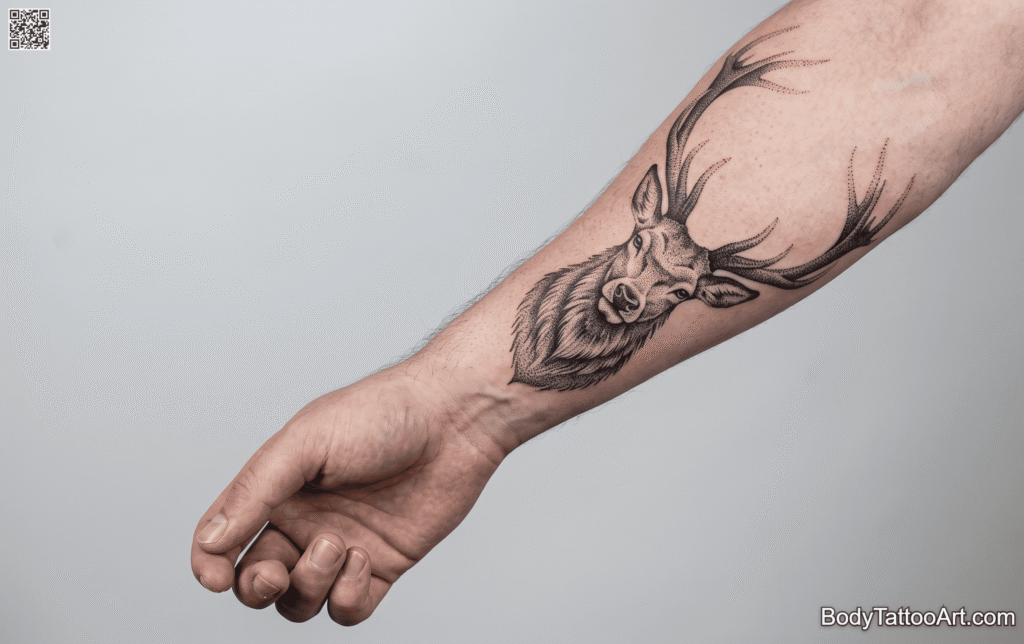
A stag’s head rendered entirely in tiny dots, with the antlers built up in dense clusters that thin out toward the tips. The gradual fade in dot density gives the piece a soft, almost foggy quality, like the deer is stepping out of mist.
Placement: Forearm
Style: Dotwork Deer Tattoos
Why it stands out: The shading is done without a single solid line, which makes the whole design feel textured and alive.
Ideal for: Fans of patient, detail-heavy tattoo work.
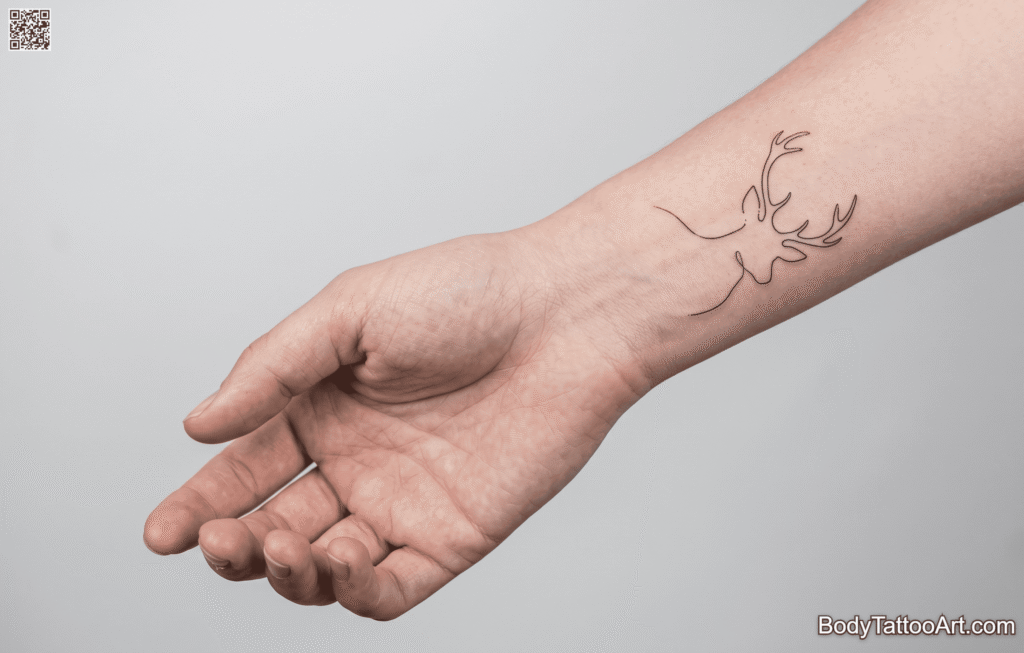
A single continuous line traces the outline of a standing deer, no shading, no filler detail. The line occasionally breaks for a breathing effect, giving the design a light, unfinished charm.
Placement: Wrist
Style: Fine line Deer Tattoos
Why it stands out: The broken-line technique keeps it from looking stiff or overly clean.
Ideal for: Minimalist lovers and first-time tattoo clients.
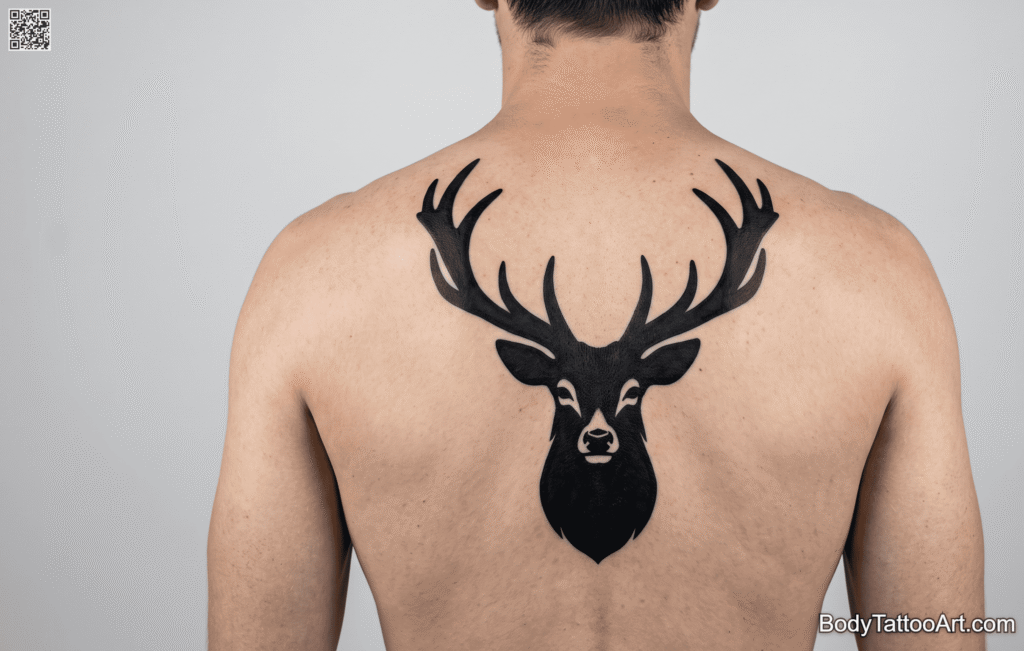
A deer head done in thick blackwork, with almost no negative space left inside the antlers or face. The weight of the ink gives it a graphic, poster-like presence.
Placement: Upper back
Style: Blackwork Deer Tattoos
Why it stands out: The near-total black fill makes it read clearly even from a distance, unlike most detailed deer designs.
Ideal for: Bold tattoo fans who want something that commands attention.
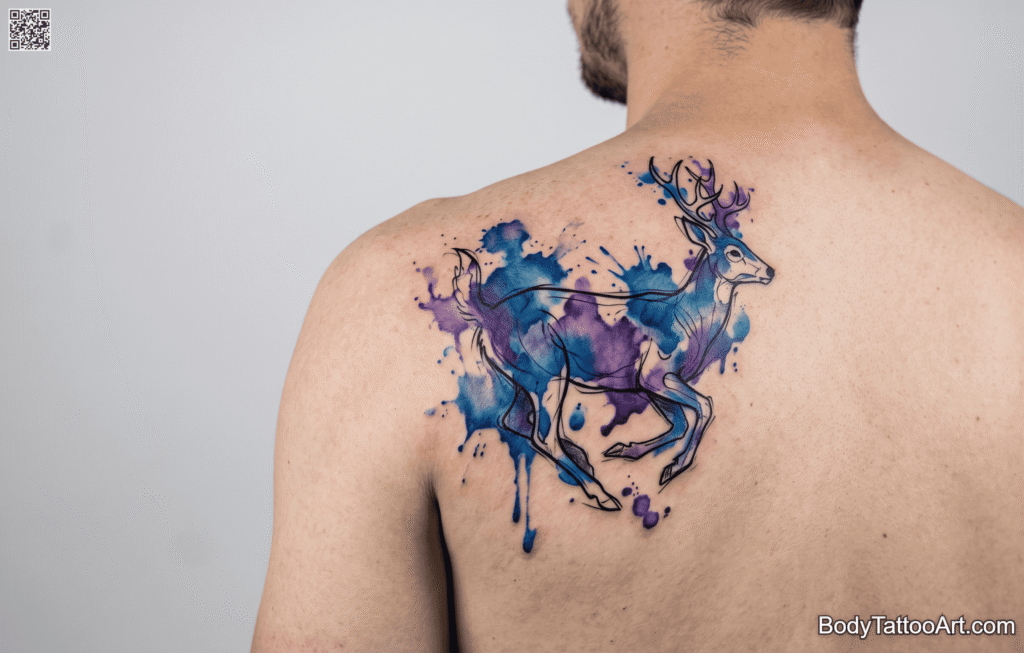
A deer mid-leap, outlined loosely in black with loose washes of blue and violet bleeding outward like spilled paint. The color intentionally overshoots the linework for a splattered effect.
Placement: Shoulder blade
Style: Watercolor Deer Tattoos
Why it stands out: The color splashes make the deer feel like it’s caught mid-motion rather than posed.
Ideal for: People who like soft color work over solid blackwork.
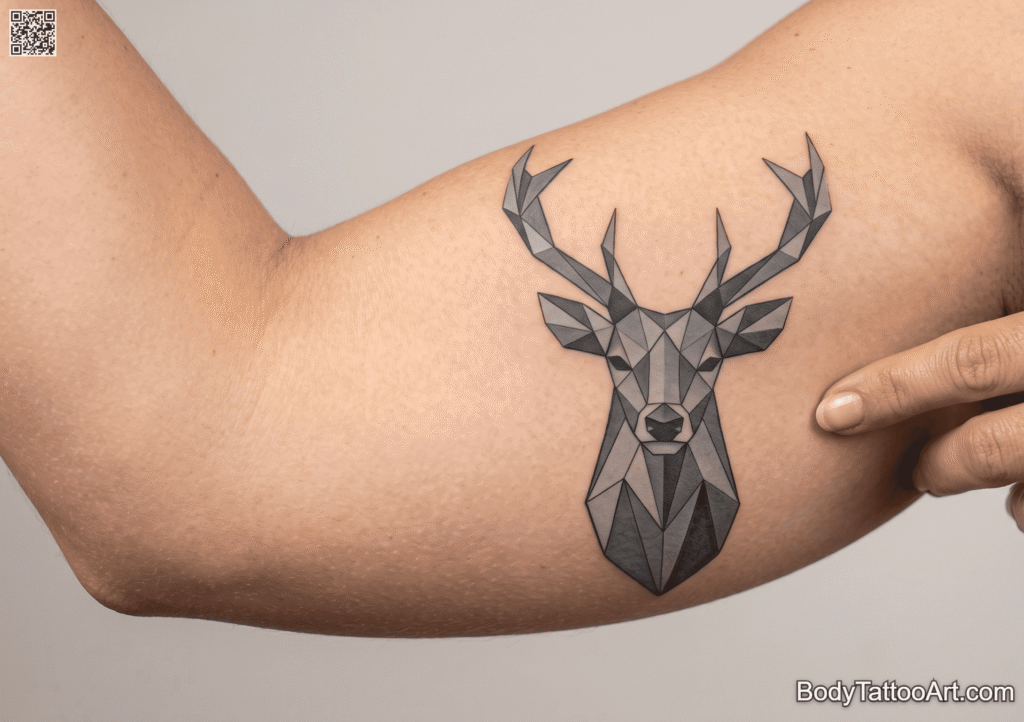
A deer head built entirely from angular triangular facets, each shaded a slightly different tone to create a faceted, crystal-like look.
Placement: Bicep
Style: Geometric Deer Tattoos
Why it stands out: The gradient across the triangles gives it a 3D, almost sculpted appearance.
Ideal for: Fans of modern, structured tattoo designs.
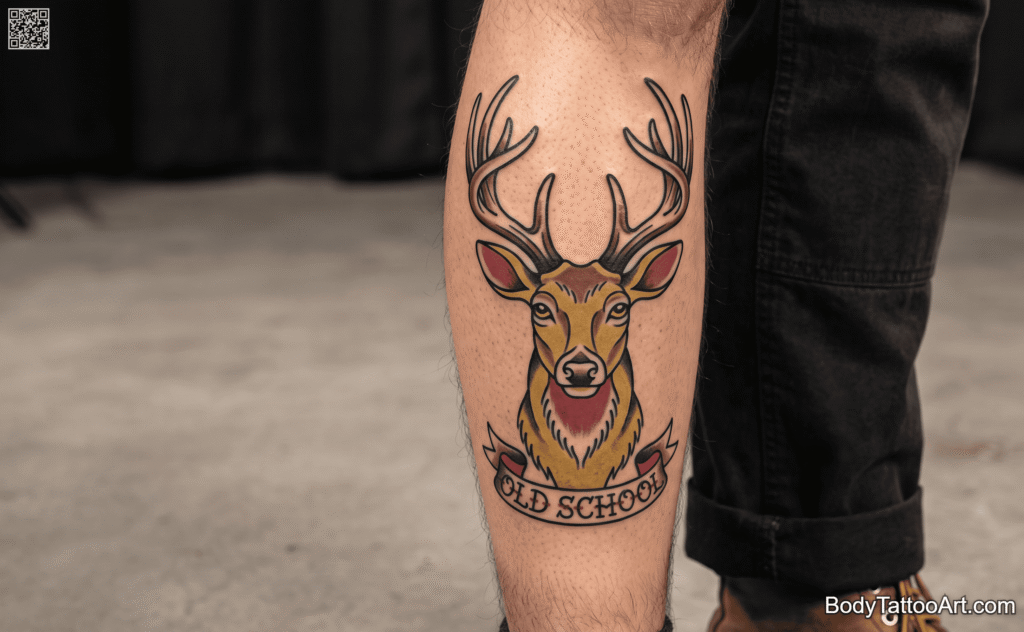
A bold traditional-style deer head with thick black outlines and flat color fills in muted red and mustard yellow, done in a classic old-school tattoo look.
Placement: Calf
Style: Traditional Deer Tattoos
Why it stands out: The flat color blocks and heavy outlines give it a vintage flash-sheet feel.
Ideal for: Traditional tattoo collectors and old-school style fans.
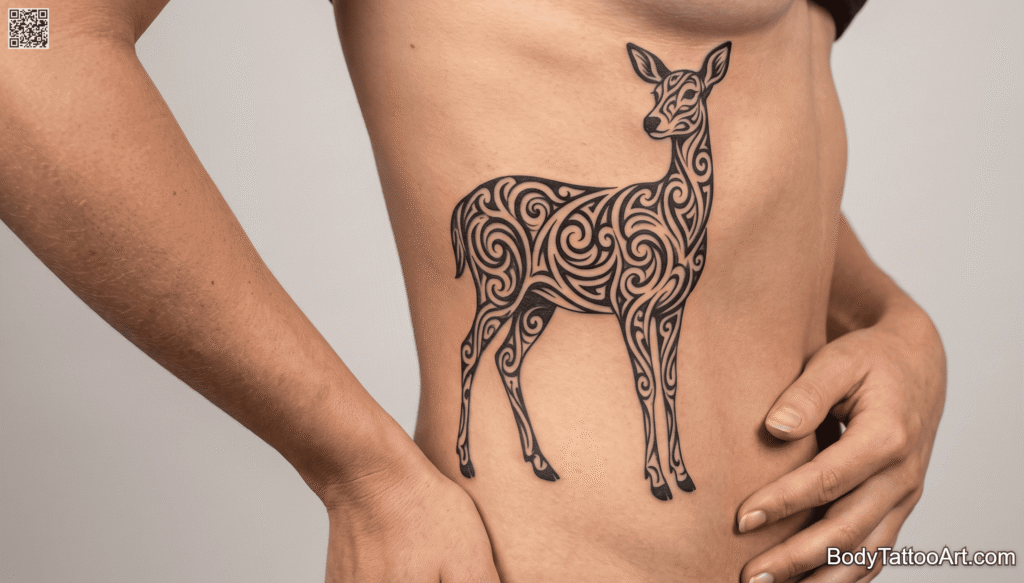
A doe’s body filled edge to edge with a tight tribal-style pattern of flowing curved lines, all contained within the animal’s silhouette.
Placement: Ribcage
Style: Tribal Deer Tattoos
Why it stands out: The pattern moves with the natural curve of the doe’s body instead of sitting flat on top of it.
Ideal for: People drawn to rhythmic, pattern-based tattoo work.
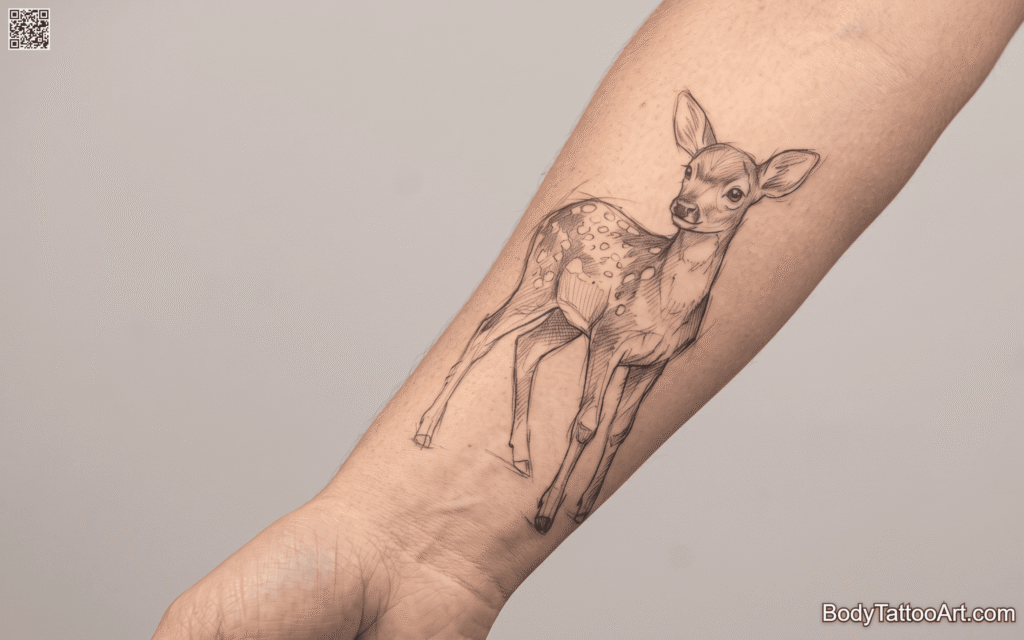
A young deer drawn as if straight from a sketchbook, with visible pencil-like cross-hatching, uneven line weight, and a few intentionally unfinished patches.
Placement: Inner forearm
Style: Sketch Deer Tattoos
Why it stands out: The raw, unpolished look makes it feel more like art than a typical tattoo.
Ideal for: Fans of illustrative, hand-drawn style tattoos.
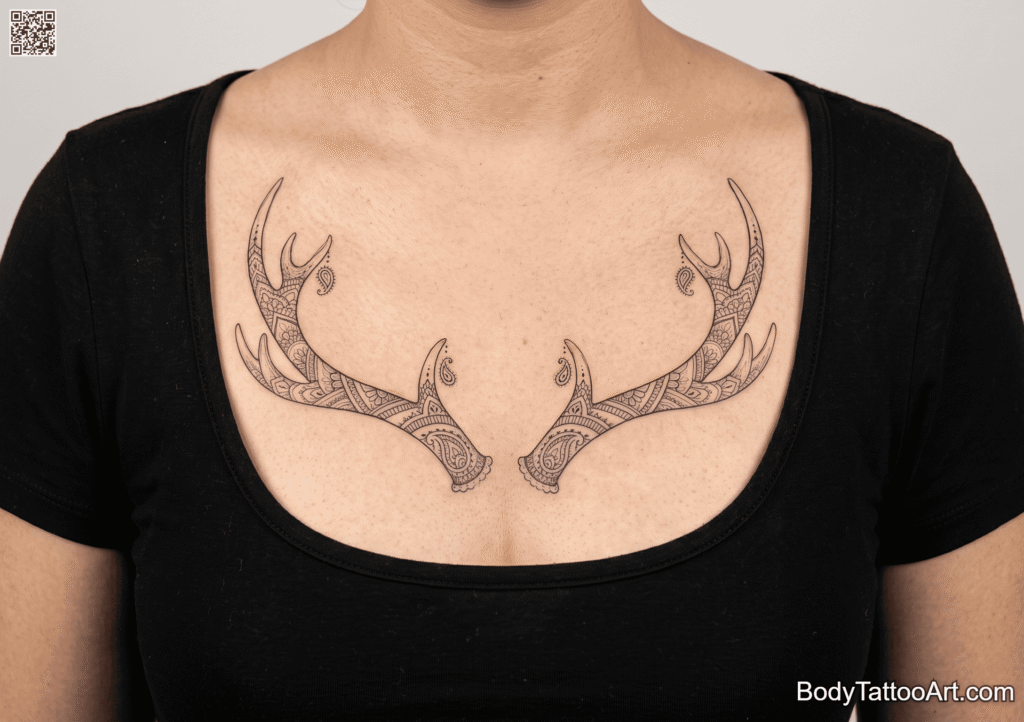
Just the antlers, rendered large and symmetrical, filled with fine mehndi-inspired linework and small paisley details along the branches.
Placement: Sternum
Style: Ornamental linework Deer Tattoos
Why it stands out: Turning just the antlers into the full design keeps the focus on their natural branching shape.
Ideal for: People who want a deer tattoo without a full face or body.
A deer outline where half the body fades into scattered fine lines and dot clusters, as if dissolving into the skin.
Placement: Outer thigh
Style: Negative space with fine line fade Deer Tattoos
Why it stands out: The dissolving effect gives it a dreamlike, temporary quality despite being permanent ink.
Ideal for: Fans of surreal or conceptual tattoo art.
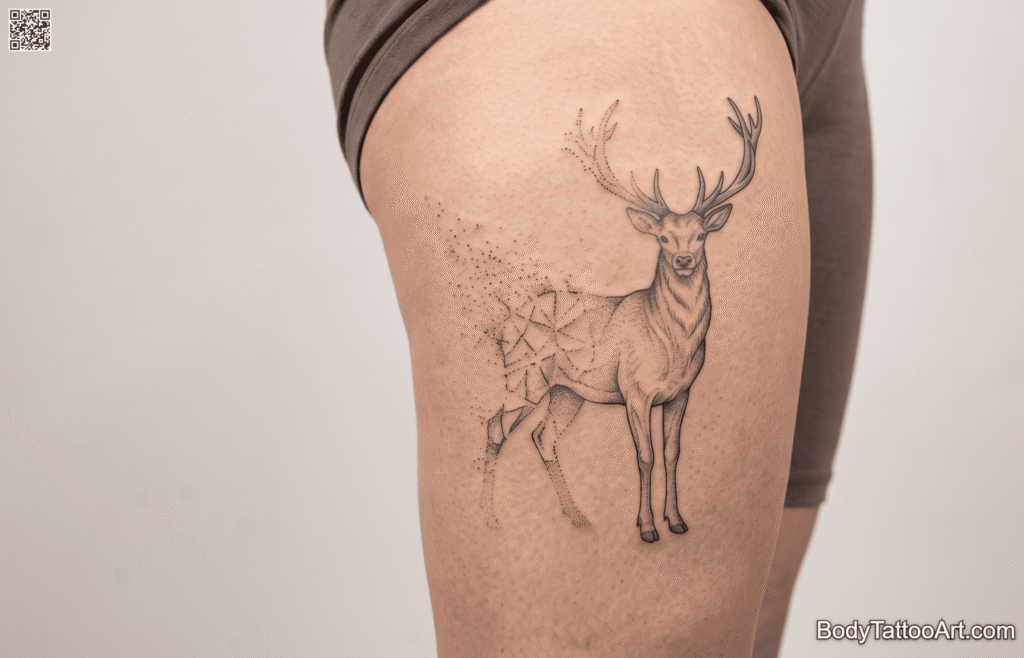
Readers who enjoyed this fading effect might also like the similar dissolve technique used in the wolf tattoo design roundup, where the same style is applied to a much fiercer animal.
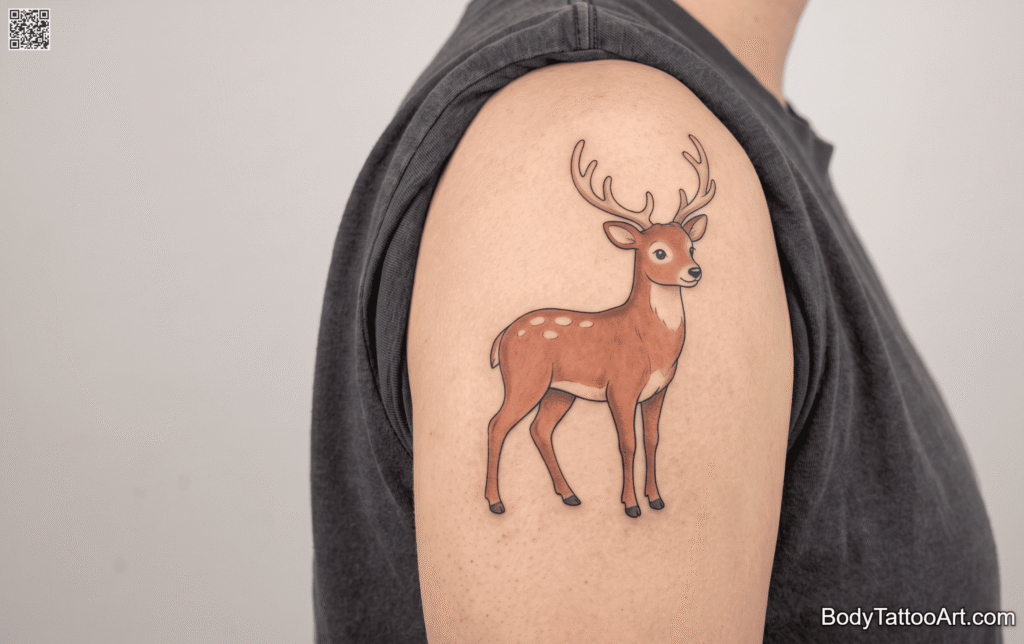
A deer illustrated in a soft, rounded style reminiscent of children’s book art, with big gentle eyes and simplified, smooth shapes.
Placement: Shoulder
Style: Illustrative Deer Tattoos
Why it stands out: The friendly, storybook proportions make it feel warm rather than wild.
Ideal for: People who want a softer, more whimsical animal tattoo.
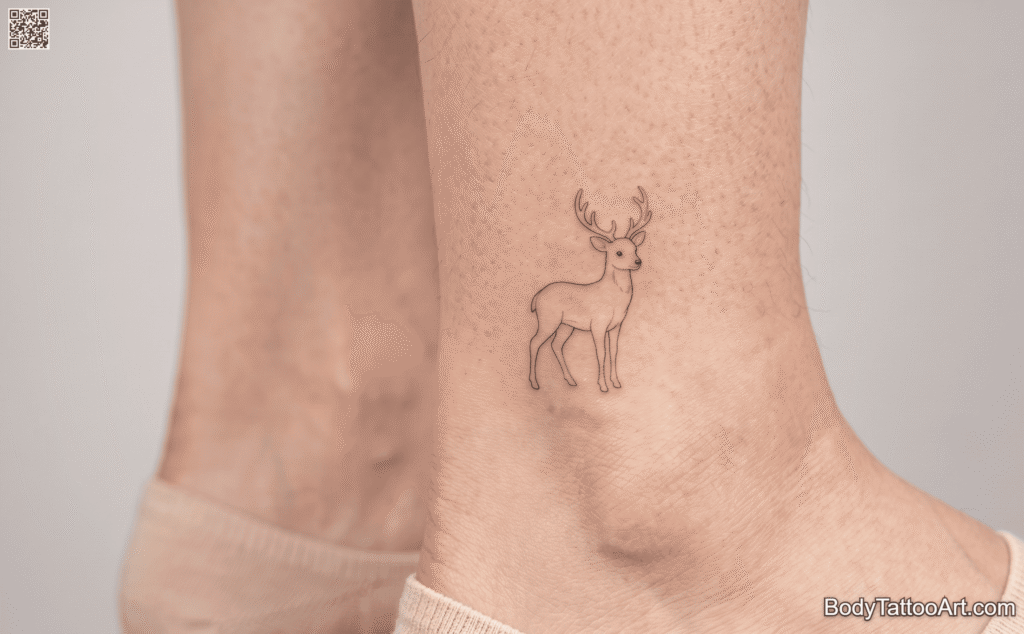
A tiny doe done entirely in single needle work, with hair-thin lines so delicate the design almost looks drawn in pencil rather than tattooed.
Placement: Ankle
Style: Single needle fine line Deer Tattoos
Why it stands out: The extreme thinness of the lines makes the piece look almost weightless on the skin.
Ideal for: People who want a discreet, delicate tattoo.
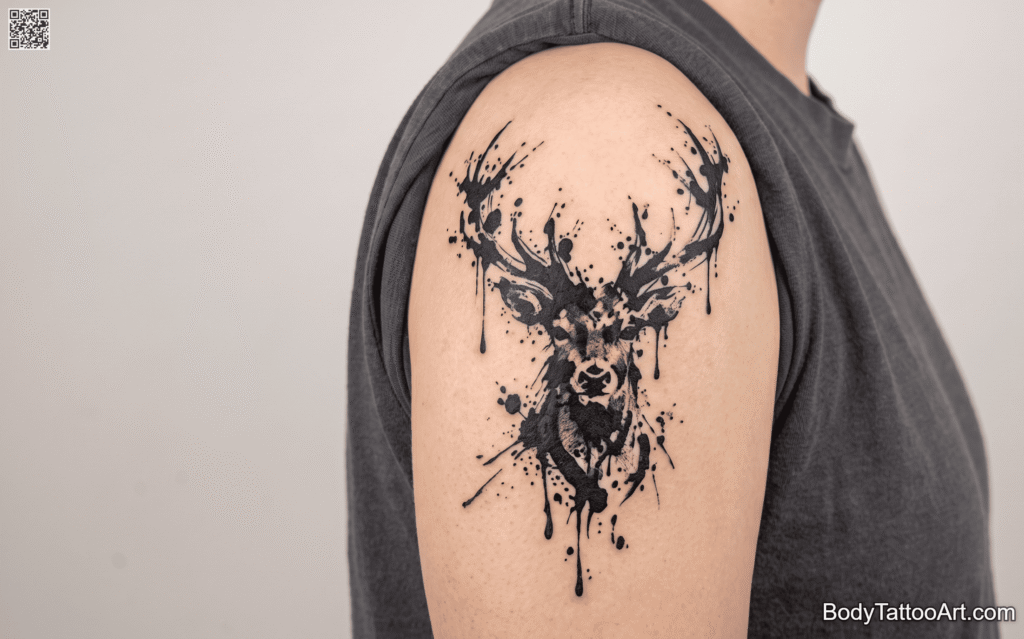
A buck’s head built from rough, energetic ink splatters and drips instead of clean outlines, giving it a chaotic, expressive energy.
Placement: Upper arm
Style: Abstract ink splatter Deer Tattoos
Why it stands out: The lack of clean lines makes the design feel spontaneous rather than planned.
Ideal for: Fans of expressive, non-traditional tattoo art.
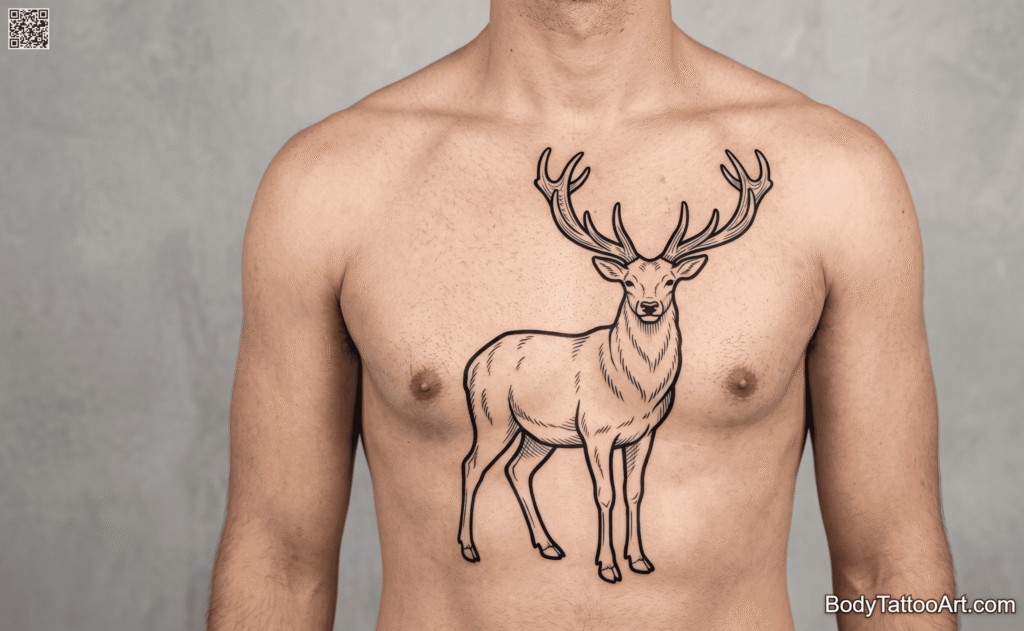
A stag drawn with thick, confident black outlines and almost no interior shading, similar in spirit to classic woodblock print art.
Placement: Chest
Style: Bold outline illustrative Deer Tattoos
Why it stands out: The simplicity of the linework lets the antler shape do all the visual work.
Ideal for: People who like strong, graphic tattoos with minimal detail.
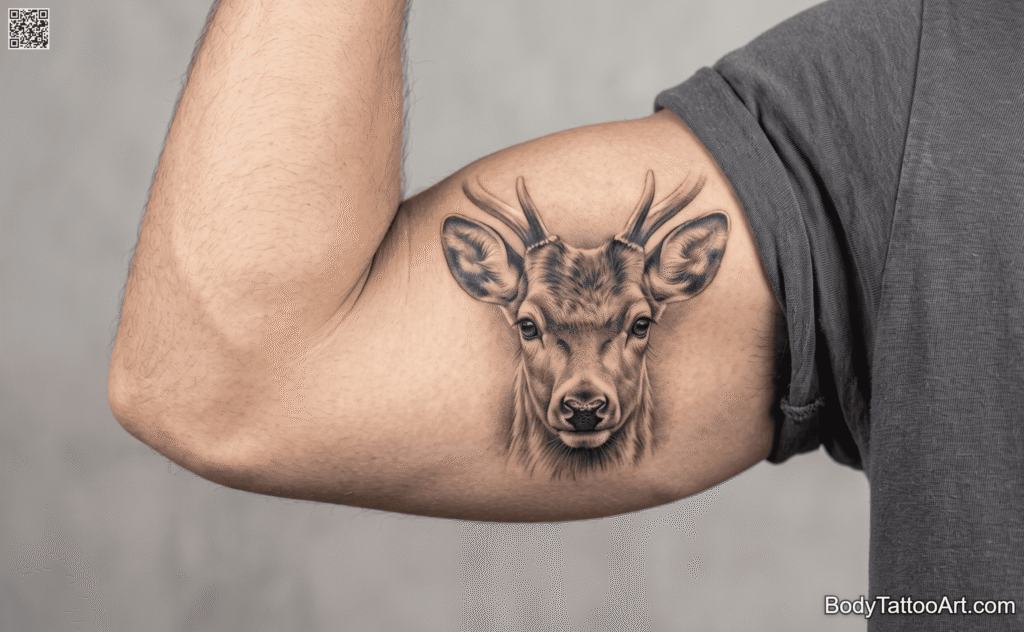
A close-up, realistic deer face done entirely in soft grey-wash shading, with detailed fur texture and a gentle, direct gaze.
Placement: Bicep
Style: Grey-wash realism Deer Tattoos
Why it stands out: The soft shading makes the eyes feel genuinely expressive rather than just decorative.
Ideal for: People who want a lifelike, portrait-style animal tattoo.
Those drawn to this kind of realism often browse the lion tattoo collection next, where the same grey-wash technique is used to give big cats a similarly soft expression.
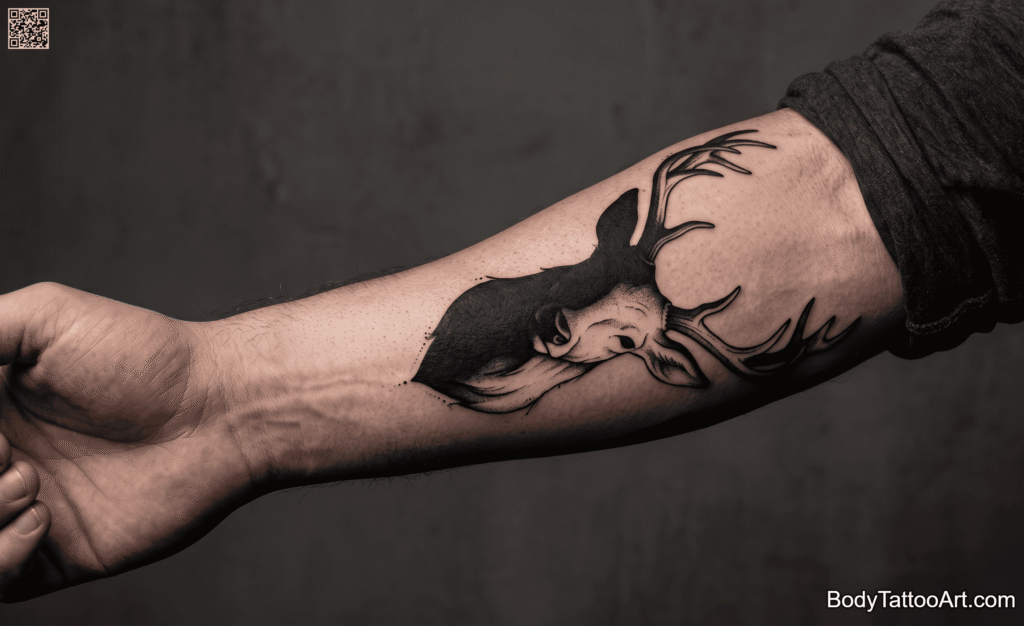
A deer head split sharply between deep black shadow on one side and bare untouched skin on the other, with barely any mid-tones.
Placement: Forearm
Style: Chiaroscuro blackwork Deer Tattoos
Why it stands out: The stark light-and-dark split gives it a dramatic, almost cinematic look.
Ideal for: People who like high-drama, high-contrast tattoo styles.
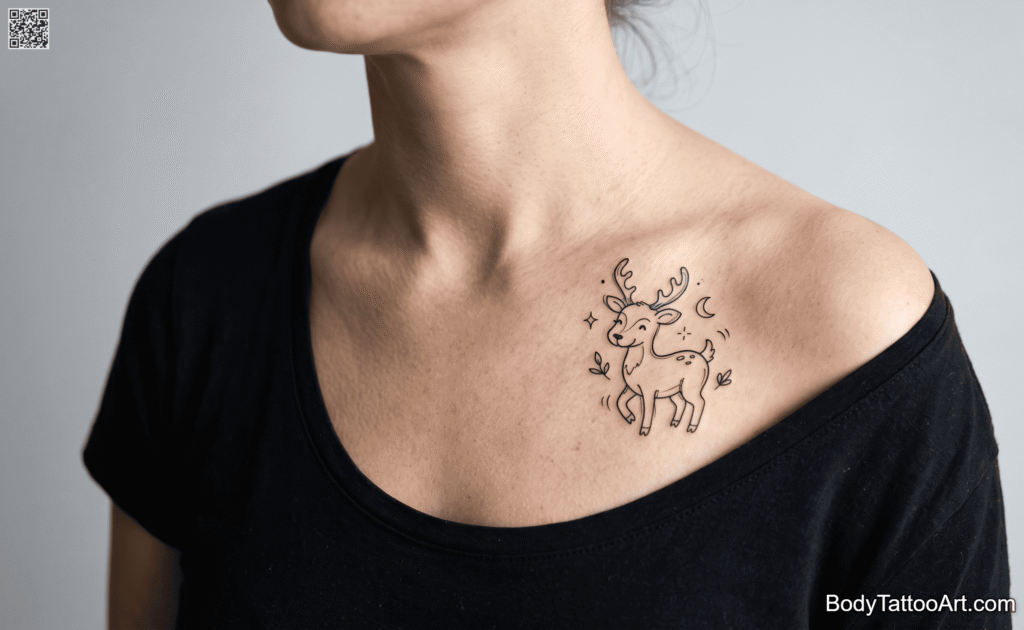
A playful, slightly wobbly line drawing of a deer with small hand-drawn style flourishes, giving it a casual, sketchbook-doodle charm.
Placement: Collarbone
Style: Doodle line art Deer Tattoos
Why it stands out: The imperfect, hand-drawn wobble makes it feel personal rather than mass-produced.
Ideal for: People who want a fun, low-key tattoo with personality.
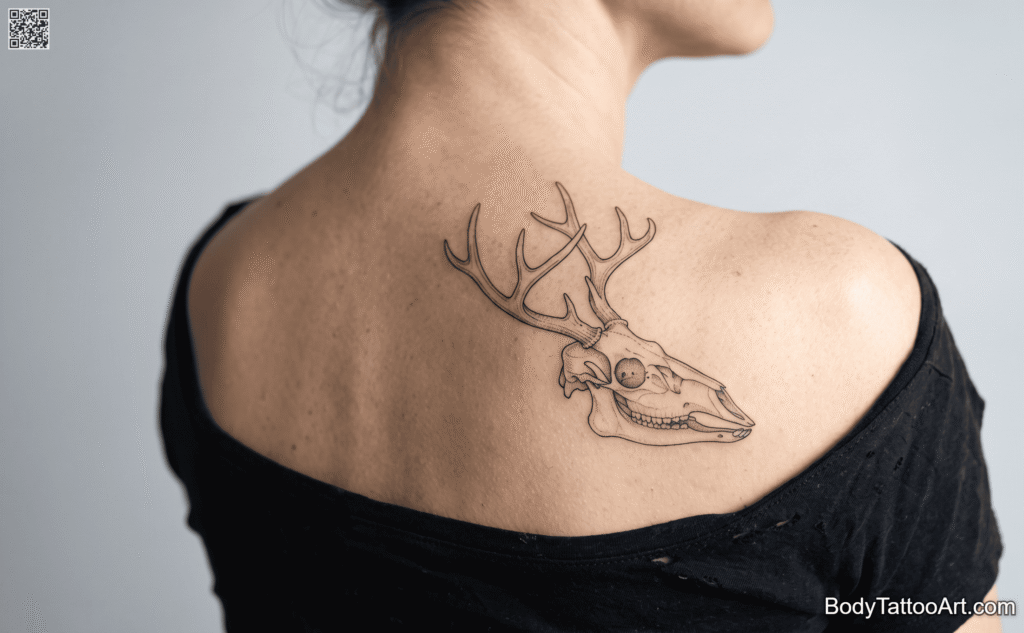
A side-profile deer skull with antlers, done in clean fine linework with light cross-hatching for depth, avoiding any harsh or graphic detail.
Placement: Shoulder blade
Style: Fine line with cross-hatching Deer Tattoos
Why it stands out: The side-profile angle keeps the design elegant rather than intense.
Ideal for: Fans of nature-meets-mortality symbolism in tattoo art.
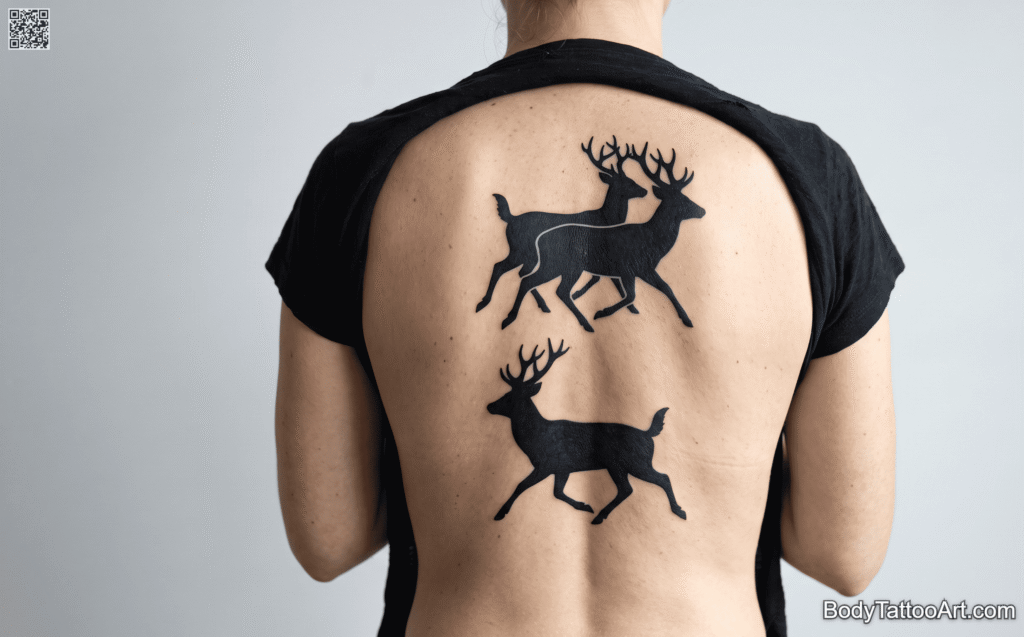
Two deer silhouettes in mid-stride, solid black, layered slightly apart so one appears to be just behind the other.
Placement: Spine
Style: Blackwork silhouette Deer Tattoos
Why it stands out: The layered spacing creates a subtle sense of movement without any shading at all.
Ideal for: People who want a clean, symmetrical spine piece.
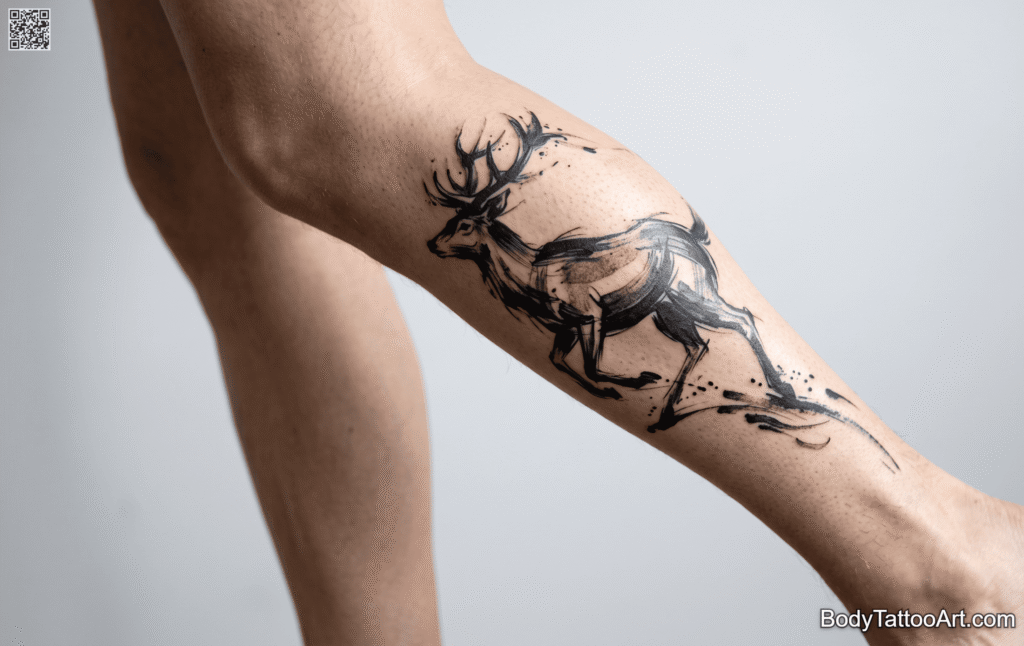
A deer captured mid-run with loose, energetic brush-stroke lines instead of a solid outline, as if painted quickly with ink and a wide brush.
Placement: Outer calf
Style: Brushstroke illustrative Deer Tattoos
Why it stands out: The loose brush texture gives the design a sense of speed and motion.
Ideal for: People who want an animal tattoo that feels dynamic rather than still.
Fans of dynamic, motion-based ink often check out the eagle tattoo blog afterward, since it uses a similar brushstroke approach for wing movement.
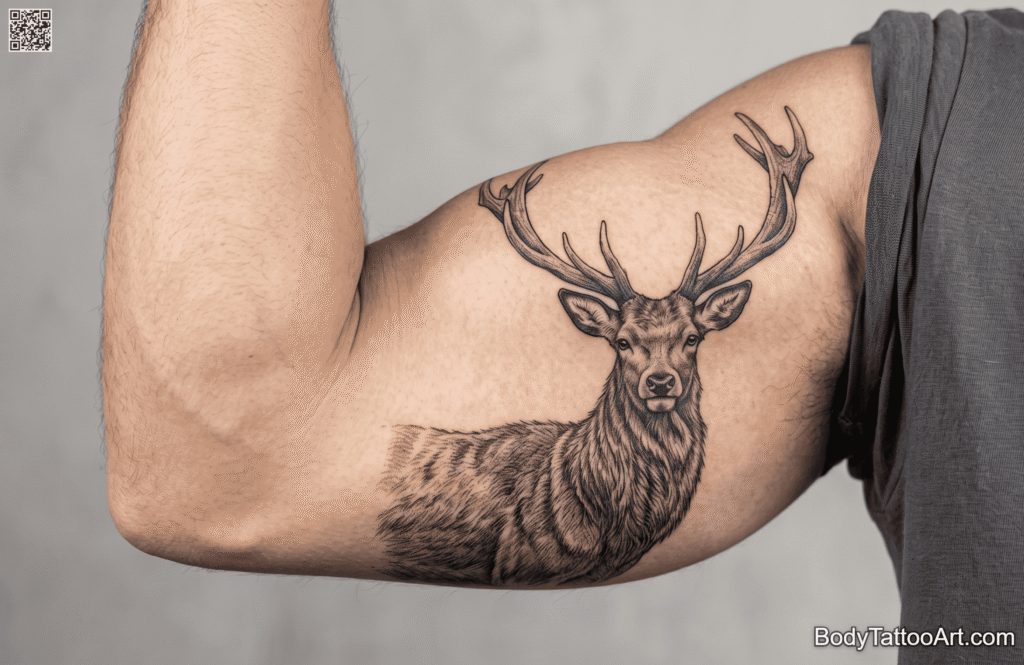
An older, weathered-looking stag with heavy cross-hatched shading throughout, giving the fur and antlers a rough, textured, aged feel.
Placement: Inner bicep
Style: Cross-hatch realism Deer Tattoos
Why it stands out: The dense hatching gives the deer a worn, wisdom-like presence rather than a youthful one.
Ideal for: People who want a mature, textured take on the classic stag design.
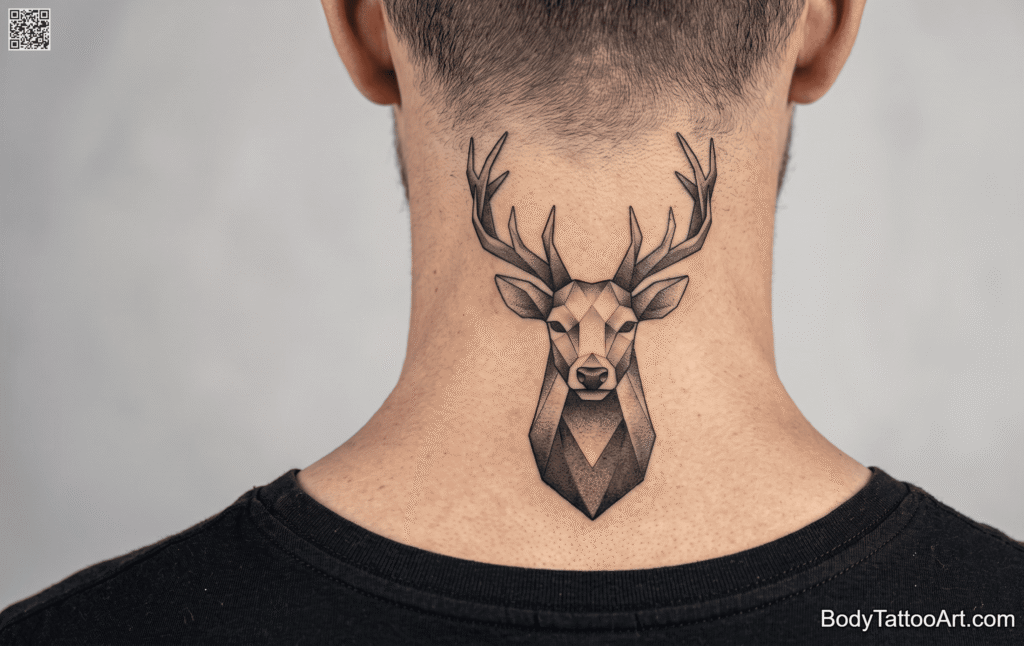
A geometric buck head built from smooth blended gradients rather than sharp triangle facets, shifting from dark charcoal to near-white across the design.
Placement: Nape of neck
Style: Geometric gradient shading Deer Tattoos
Why it stands out: The smooth gradient gives the geometric shape a softer, almost glowing quality.
Ideal for: People who like geometric tattoos without harsh, sharp edges.
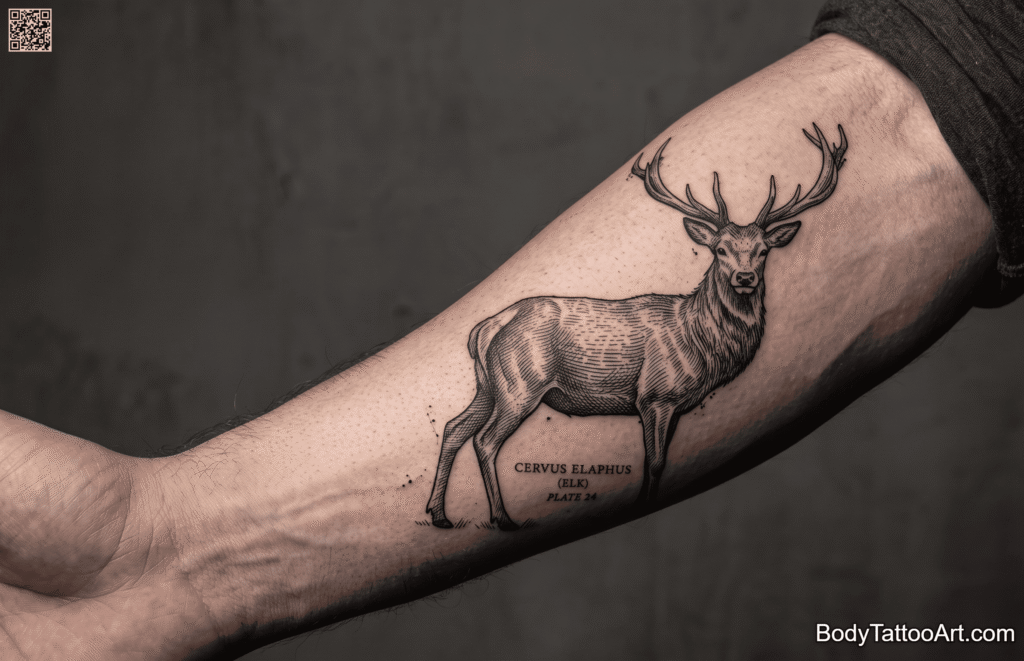
A doe made from tightly packed parallel etching lines, similar to old engraving illustrations, giving it a vintage textbook look.
Placement: Inner forearm
Style: Etching linework Deer Tattoos
Why it stands out: The engraving-style lines make it look like it was lifted from an old field guide.
Ideal for: Fans of vintage, scientific illustration style tattoos.
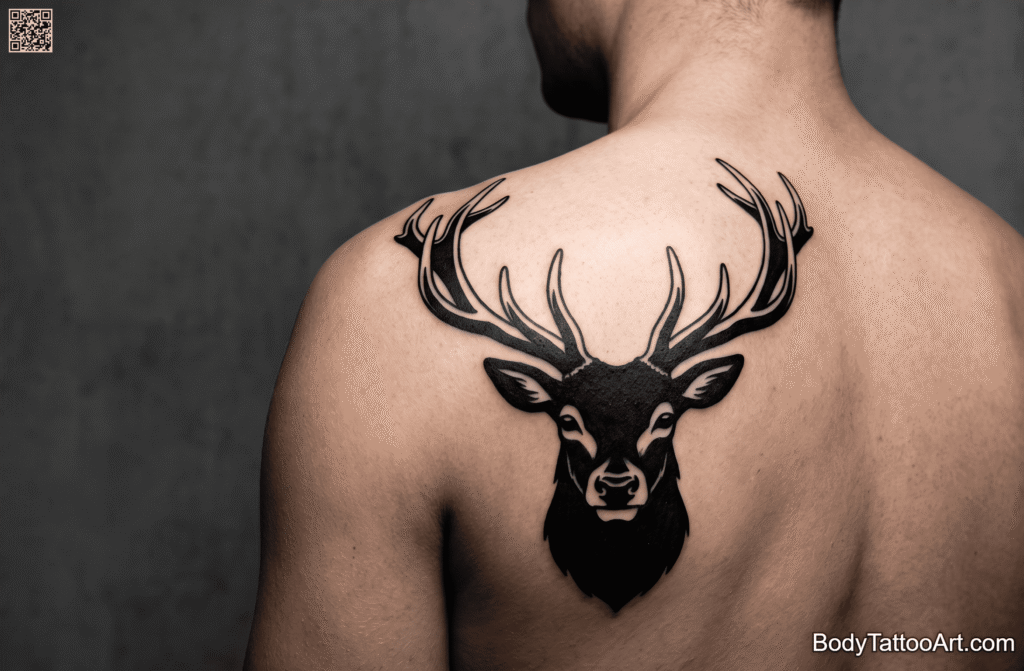
A front-facing deer head done in thick, confident blackwork with heavy negative space left inside the antlers for contrast.
Placement: Back of shoulder
Style: Blackwork with negative space Deer Tattoos
Why it stands out: The mix of heavy black fill and untouched skin creates strong visual contrast in one small area.
Ideal for: People who want a bold design that still has breathing room.
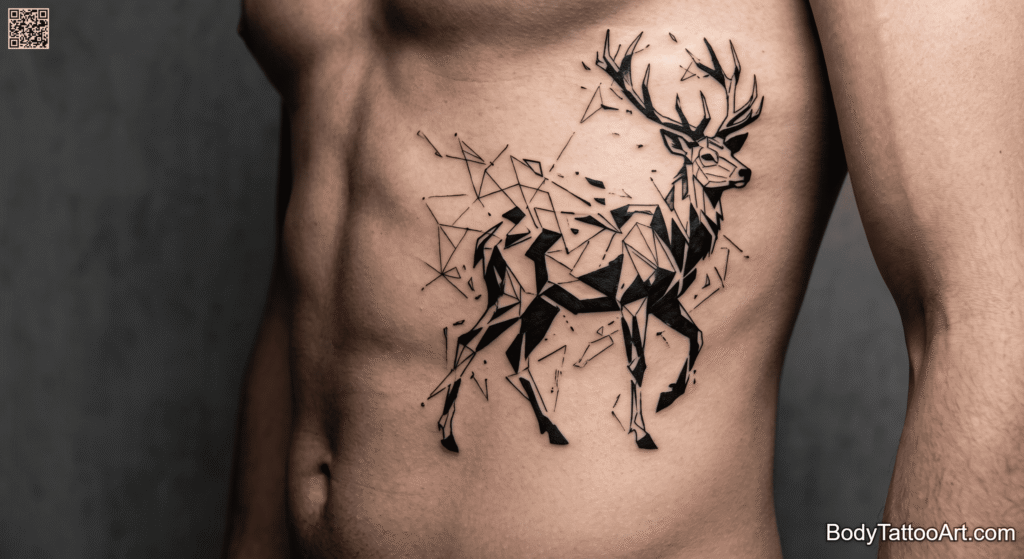
A deer shape broken into scattered angular fragments, some pieces solid black and others left as thin outlines, as if the design is caught mid-shatter.
Placement: Ribcage
Style: Abstract fragmented geometric Deer Tattoos
Why it stands out: The broken, fragmented composition makes it one of the most unconventional deer designs on this list.
Ideal for: People who want an experimental, art-forward tattoo.
Those who like this experimental approach of Deer Tattoos may also enjoy the dragon tattoo collection, where fragmented and abstract composition is used to break up a much larger creature. Readers wanting something softer after all this can look at the rose tattoo ideas for a gentler floral contrast, and the lotus tattoo blog pairs well for anyone building out a nature-themed collection.
Deer tattoos work across almost every style on this list, from soft watercolor to heavy blackwork, which is part of why they remain such a popular choice. Whatever the mood, there’s a version of the deer here that can fit it.