Physical Address
304 North Cardinal St.
Dorchester Center, MA 02124
Physical Address
304 North Cardinal St.
Dorchester Center, MA 02124

There’s a reason lily tattoos keep showing up on mood boards, Pinterest saves, and tattoo studio walls. The lily is one of those flowers that just works — on any skin tone, in any style, at any size. It has long elegant petals, a natural curve to its stem, and a silhouette that tattoo artists genuinely love working with.
Similar to Jasmine tattoos, this collection of 24 lily tattoos covers the full range . From single-needle minimalism to heavy blackwork, there’s something here for every taste.
Lily tattoos feature the lily flower as the central subject. But “lily” covers a wide family of flowers — tiger lilies with their spotted, swept-back petals, calla lilies with their single elegant trumpet shape, water lilies flat and serene on an imagined surface, stargazer lilies with dramatic petal curves and visible stamens. Each variety brings a completely different visual personality to a tattoo design.
What makes lily tattoos particularly versatile is their structure. The long petals, prominent stamens, and natural stem give artists a lot of material to work with. A lily can be rendered in hyper-realistic shading, reduced to a single clean outline, abstracted into geometric shapes, or built entirely from dots. The flower adapts without losing its identity.
Lilies have carried significance across cultures for thousands of years. In ancient Greek and Roman traditions, the lily was associated with goddesses and purity. In Chinese culture, certain lilies represent good fortune and the bond between mothers and children. In Christian iconography, the white lily has long been tied to the Virgin Mary.
In tattoo culture, the meaning of a lily tattoo is largely personal. Some people choose it for its beauty alone. Others connect with specific varieties — a tiger lily for its wildness, a calla lily for its elegance, a water lily for its calm. Dark, heavily inked lily tattoos have taken on associations with resilience, while delicate fine line lilies tend to read as refined and intentional.
The flower means what the person wearing it decides it means.
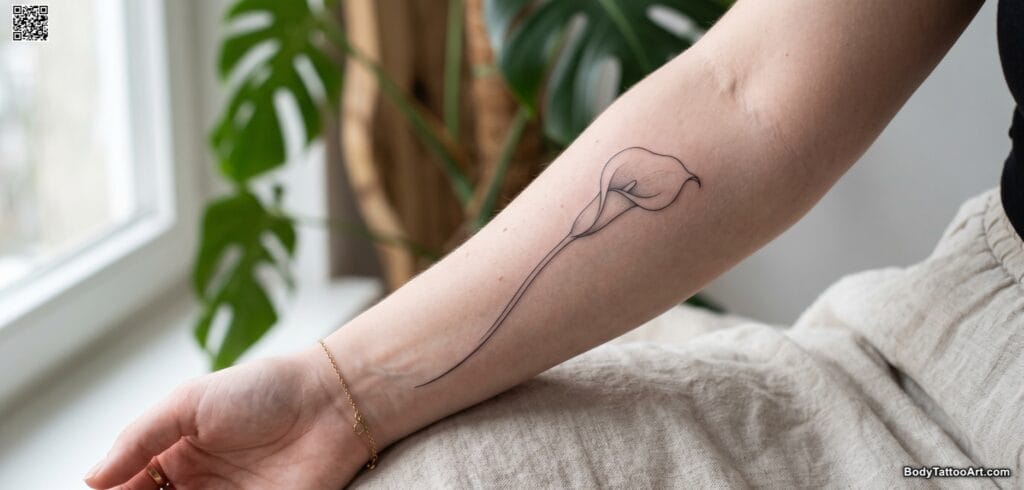
A single calla lily rendered in clean, confident linework — the long trumpet bloom at the top, a gently curving stem below, and nothing added to fill the space. The linework stays consistent and thin throughout, with just the faintest grey shading inside the trumpet to give it depth. The composition is vertical and elegant, designed to follow the natural line of the body.
Placement: Inner forearm / Shin
Style: Fine line minimalist
Why it stands out: The restraint is everything here. No filler, no extra elements — just the calla lily in its most essential form. The shape alone does the work.
Ideal for: Minimalists, people wanting a first tattoo, those who love clean botanical illustration.
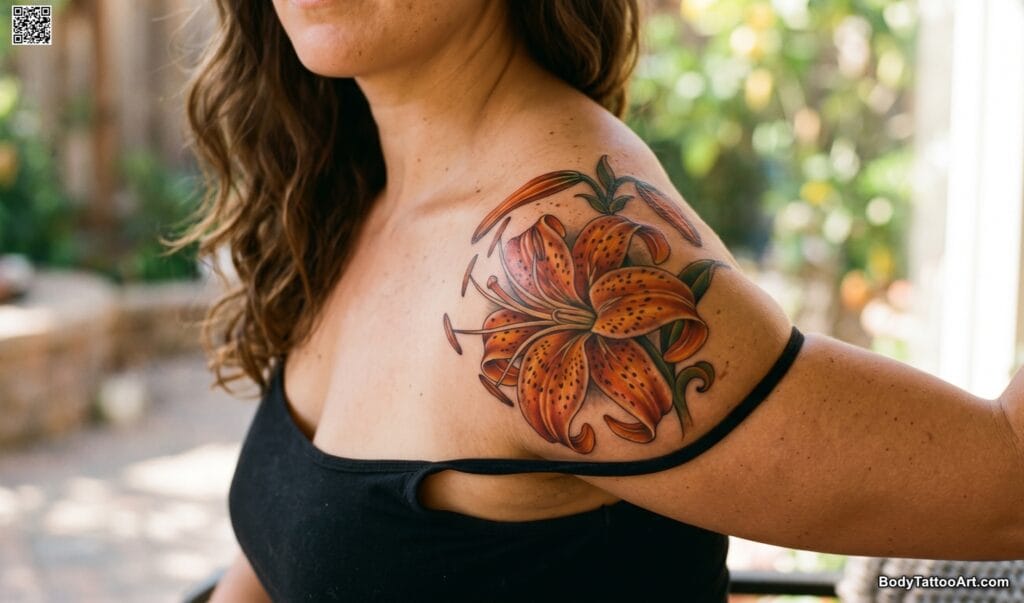
A tiger lily in full bloom, petals dramatically swept back and covered in fine stipple dots that form the characteristic dark spots. The stamens extend outward with visible detail at the tips, and the petals curve away from the center with natural energy. The shading is done in warm amber and deep orange tones, giving the whole piece a rich, sun-warmed quality.
Placement: Shoulder / Upper arm
Style: Botanical color realism
Why it stands out: The spotted petals of a tiger lily are genuinely unlike any other flower in tattoo design — the dot-pattern markings give the artist a natural texture to work with that creates immediate visual complexity.
Ideal for: Color tattoo lovers, people drawn to botanically accurate designs, those wanting something warm and vivid.
A close-up composition that shows only the inner structure of a lily — the stamens, the pistil, and the very base of the petals where they originate. No full bloom visible, no stem. The stamens are long and detailed, with visible pollen heads rendered in careful grey-wash shading. It looks like a macro photograph of the flower’s most intimate part.
Placement: Inner wrist / Behind the knee
Style: Photorealistic grey-wash
Why it stands out: Cropping into the lily’s inner structure rather than showing the full flower is a bold compositional decision that transforms a familiar subject into something almost abstract.
Ideal for: Realism collectors, people who appreciate unexpected compositions, those wanting something small but deeply detailed.

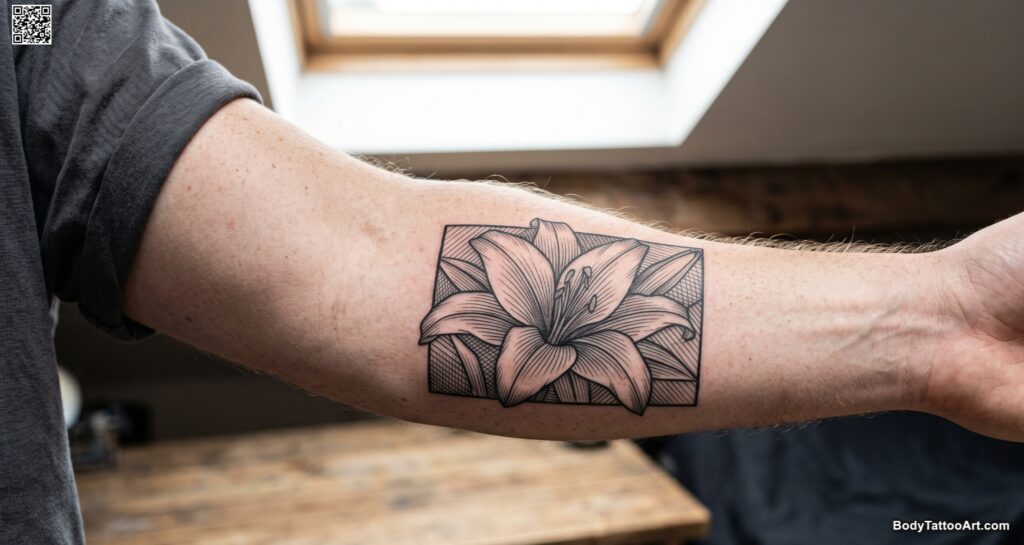
The lily is drawn inside a vertical rectangular panel with clean straight edges. The flower fills the frame exactly, petals touching the borders on all sides. Inside the panel, the lily is rendered in precise linework with structured, geometric shading — parallel hatching lines rather than soft gradients. The result feels like an architectural drawing of a flower.
Placement: Forearm / Calf
Style: Geometric illustrative
Why it stands out: The rectangular frame gives the lily a formal, gallery-like quality. It looks less like a tattoo and more like a framed botanical print pressed into the skin.
Ideal for: Design and architecture lovers, people drawn to structured illustrative work, those building a geometric sleeve
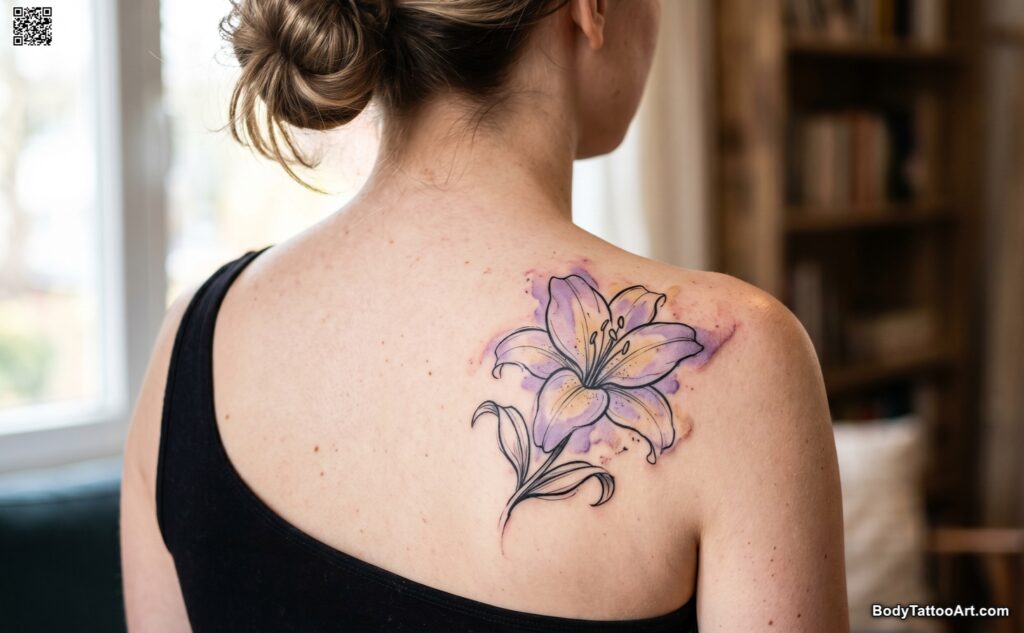
A loose, gestural lily outline in black sits at the center while color spills outward — soft lavender and pale yellow bleeding past the petal edges without following any lines. The color washes are uneven and watercolor-like, overlapping in some areas and fading to nothing in others. The black outline keeps the flower recognizable while the color gives it movement.
Placement: Shoulder blade / Thigh
Style: Watercolor with linework
Why it stands out: The contrast between the structured black outline and the freely spreading color creates a visual energy that static illustrations can’t match. It looks painted, not printed.
Ideal for: Color tattoo lovers, people who want something expressive and artistic, those drawn to painterly aesthetics.
The lily shape is formed entirely by the black ink around it — the petals and inner structure are unpainted skin, carved out of a solid black background oval. The stamens appear as thin black lines running through the unpainted space. It takes a second look for the eye to read the flower, and that moment of recognition is the whole point.
Placement: Upper arm / Outer calf
Style: Blackwork negative space
Why it stands out: Inverting the usual logic of a floral tattoo — where the flower is the ink rather than the absence of it — creates an optical puzzle that rewards attention. Few people attempt this with a lily.
Ideal for: Blackwork collectors, people who love conceptually unusual design, those wanting something that looks completely different from most floral tattoos.

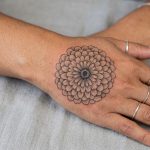
A water lily viewed from directly above, as if looking down at it floating on still water. Built entirely from stipple dots with no linework — the dots cluster densely toward the center and thin out toward the petal tips. The overall effect is soft and luminous, each petal catching imagined light differently. The circular, mandala-like composition sits perfectly in a round placement.
Placement: Back of hand / Sternum / Knee
Style: Dotwork stippling
Why it stands out: The top-down perspective is unusual for lily tattoos and gives this piece a calm, meditative quality. The pure dot technique creates gradients that feel impossibly smooth.
Ideal for: Dotwork lovers, people drawn to centered circular compositions, those wanting something with a quiet, contemplative energy.

A lily done in classic American traditional style — thick bold outlines, flat fields of saturated color (deep red petals, solid green stem and leaves), minimal shading, and strong graphic contrast. The petals have a slightly stylized, almost cartoon-like quality that is entirely intentional. Every line is heavy and confident.
Placement: Upper arm / Calf
Style: American traditional
Why it stands out: Traditional style tattoos are built to last. The thick lines and flat color hold up beautifully over decades, and the bold graphic quality of a traditional lily is immediately striking even at a distance.
Ideal for: Traditional tattoo fans, people building a traditional sleeve, those who want tattoos with long-term staying power.

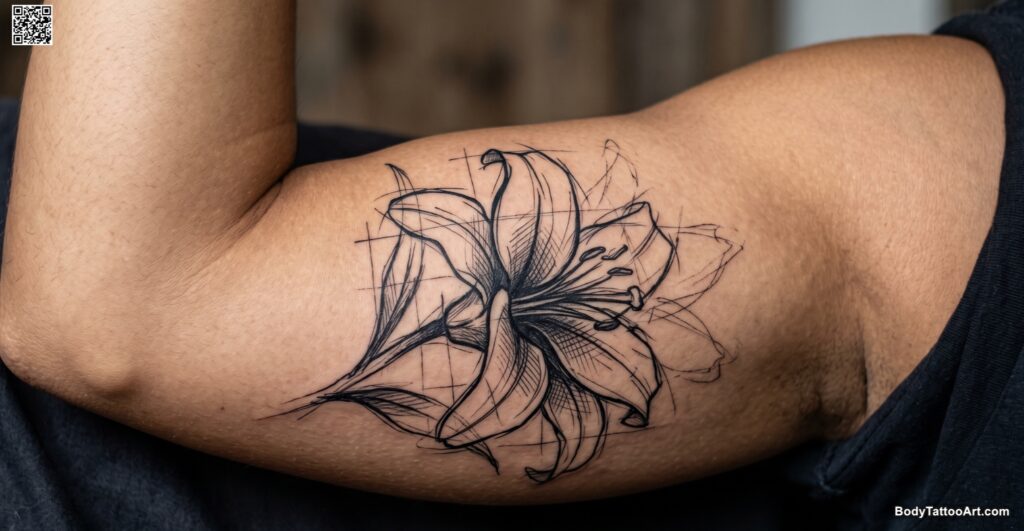
A lily that looks like it was drawn onto the skin mid-sketch — some petals fully defined, others barely suggested with loose pencil-like marks. Cross-hatching builds shadow in some areas while other areas are left completely open. There are visible correction marks and overlapping lines that read as part of the aesthetic rather than mistakes. Raw, honest, and full of personality.
Placement: Forearm / Inner bicep
Style: Sketch / illustrative
Why it stands out: The intentional incompleteness makes this design feel alive. It looks like someone’s sketchbook page transferred directly onto skin — personal and unrepeatable.
Ideal for: Artists and illustrators, people who dislike overly polished tattoo aesthetics, those wanting something that feels handmade.
A single lily hangs upside down, stem pointing upward and bloom facing toward the ground. The petals fall open under their own imagined weight, edges curling slightly downward. The shading is grey-wash and soft, with the deepest tones inside the flower where the petals join. The inverted orientation immediately stops the eye — it just looks different.
Placement: Nape of neck / Inner arm
Style: Fine line grey-wash
Why it stands out: Inverting the flower subverts the most basic convention of floral tattoo design. The downward-hanging bloom creates a visual tension that an upright lily simply cannot.
Ideal for: People who want subtle rule-breaking design, fine line collectors, those drawn to compositions that do something unexpected.

A fully solid black silhouette of a lily in bloom — zero interior detail, no shading, just the complete outer shape filled with flat black ink. The design stands or falls entirely on the quality of the silhouette outline. Every curve of every petal has to be deliberate. The result is graphic, bold, and clean.
Placement: Ankle / Behind the ear / Shoulder
Style: Blackwork silhouette
Why it stands out: Silhouette tattoos demand a perfect outline. A great lily silhouette proves that sometimes the shape alone, without any detail, is enough to make something beautiful.
Ideal for: Bold minimalists, people who love graphic design aesthetics, those wanting a design that looks strong at any size.

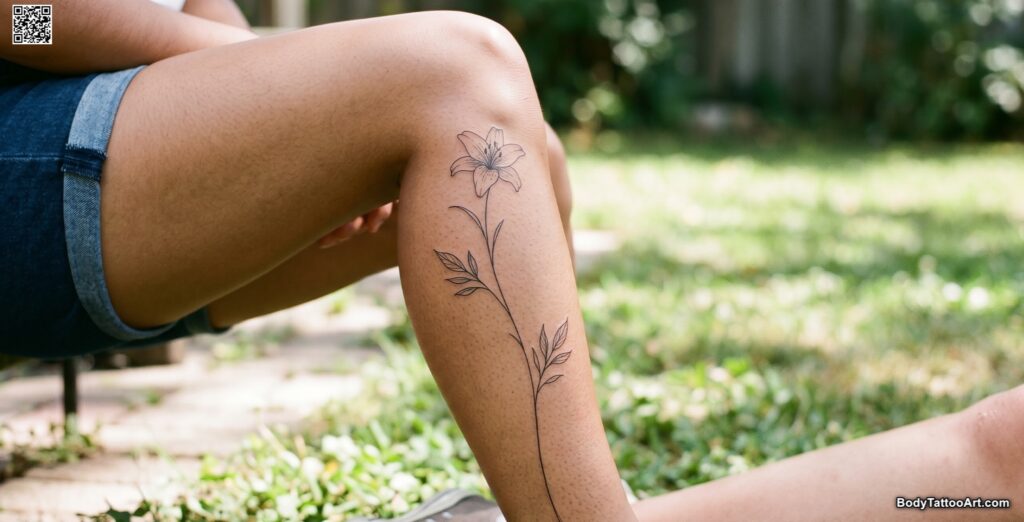
The focus here is the stem — long, slightly curved, taking up most of the tattoo’s length. A single modest bloom sits at the very top, and two or three small leaves branch off at intervals down the stem. The linework is fine and consistent, and the proportions deliberately favor the stem over the flower. The overall shape is tall and slender, almost architectural.
Placement: Spine / Shin / Inner leg
Style: Fine line botanical
Why it stands out: Most lily tattoos center the bloom. Here, the stem is the subject. The unusual proportions create a long, elegant vertical piece that sits beautifully along the body’s natural lines.
Ideal for: People wanting vertical placements, botanical illustration lovers, those who appreciate understated and proportionally unusual design.
Bold, expressive brushstroke-style marks build the lily’s petals — wide strokes of black ink applied with visible direction and energy. The petals aren’t smooth or refined; they have raw edges and visible brushstroke texture. The composition is loose but the lily shape is unmistakable. It looks like a piece of Japanese sumi-e ink painting pressed into the skin.
Placement: Upper back / Thigh / Ribcage
Style: Brushstroke blackwork
Why it stands out: The brushstroke technique gives this lily an energy and spontaneity that no amount of fine linework can replicate. It’s expressive in the truest sense — the marks carry the artist’s hand visibly.
Ideal for: People drawn to expressive art, fans of East Asian ink painting aesthetics, those wanting something emotionally charged.

The lily is divided into sections like a stained-glass window, each section filled with a different black ink pattern — solid black, crosshatch, parallel lines, stipple dots, fine grid. The outer shape of the lily is clear, but the interior is a patchwork of textures. No two adjacent sections share the same fill.
Placement: Forearm / Calf
Style: Patchwork geometric illustrative
Why it stands out: The variety of textures inside a single flower shape creates visual depth without color or complex shading. It’s a design that looks different every time the eye moves across it.
Ideal for: People who love texture-heavy illustrative work, tattoo collectors building eclectic designs, those who enjoy discovering detail in a tattoo slowly.

A single lily rendered in fine white ink against deeper skin — the outline glows softly against the skin tone rather than contrasting sharply with it. The lines are confident and clean, the petals fully formed, the stamens clearly detailed. The white ink gives the whole piece a ghostly, luminous quality unlike anything black ink can achieve.
Placement: Upper arm / Collarbone
Style: White ink fine line
Why it stands out: White ink on deeper skin tones creates a unique visual effect — the tattoo seems to glow rather than sit on the skin. It’s subtle in some lights and striking in others.
Ideal for: People with medium to deep skin tones exploring white ink, those wanting something rare and softly luminous, people drawn to understated elegance.

Not the whole lily — just one petal, large, isolated, and incredibly detailed. The single petal fills the entire composition with every surface variation, vein, and edge curl rendered in photorealistic grey-wash. The base of the petal fades softly into the skin. It’s a fragment treated as a complete and finished artwork.
Placement: Inner forearm / Behind the knee
Style: Photorealistic grey-wash
Why it stands out: Choosing to tattoo one petal instead of the full flower forces the viewer to look differently. The intimacy of a single enlarged petal makes the design feel more personal than a full bloom ever could.
Ideal for: Realism collectors wanting something compact, people who appreciate restraint and focus in design, those seeking an unusual take on floral tattoos.

A lily drawn using one single unbroken line — the line wanders from petal to petal, traces the stamens, follows the stem, and returns without ever lifting. Some shapes are left open and incomplete where the line moves on before closing them, leaving the brain to fill the gaps. It’s simultaneously simple and technically demanding.
Placement: Wrist / Ankle / Shoulder
Style: Single-line continuous
Why it stands out: The one-line technique means every design decision is irreversible. The openness of unclosed shapes creates a visual interaction between the tattoo and the viewer that closed, filled designs never achieve.
Ideal for: Minimalism lovers, people fascinated by line art and illustration, those wanting something conceptually deliberate.

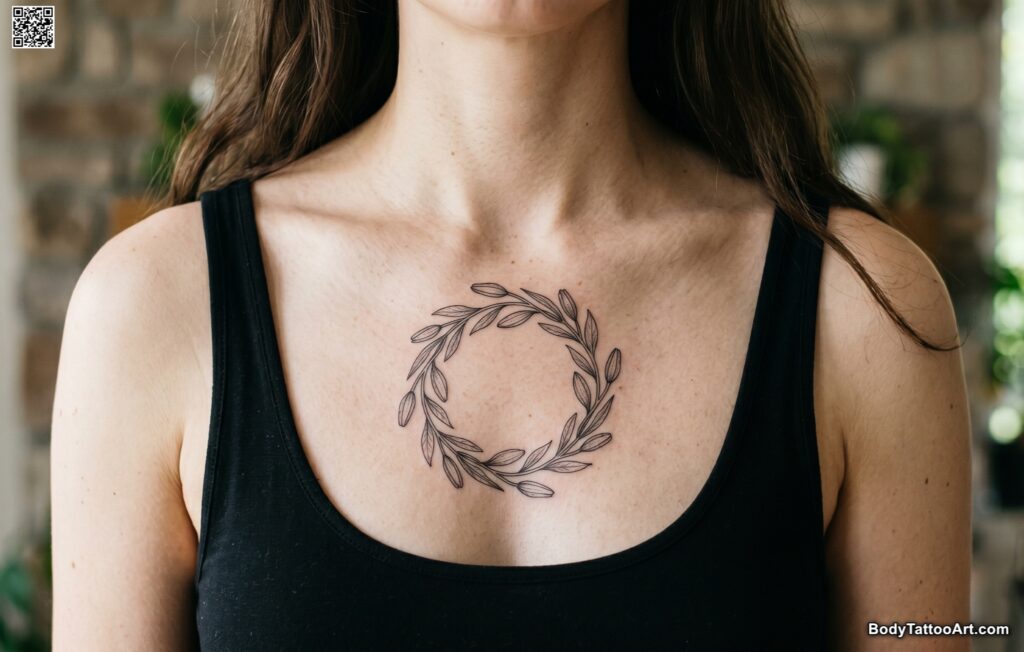
A circular ring made entirely of lily stems, leaves, and small buds — no fully open blooms, just the pre-bloom stages arranged into a complete circle. The stems interlock and the leaves overlap, and the whole arrangement is drawn in fine, precise linework. The circular composition is complete and self-contained.
Placement: Chest / Back of shoulder / Knee
Style: Fine line illustrative
Why it stands out: A wreath of lily buds rather than open flowers is a compositional choice that shows real restraint. The circle of anticipation — flowers not yet open — is more visually interesting than a simple circle of blooms.
Ideal for: People who love circular wreath-style compositions, fine line enthusiasts, those wanting a centered placement piece.
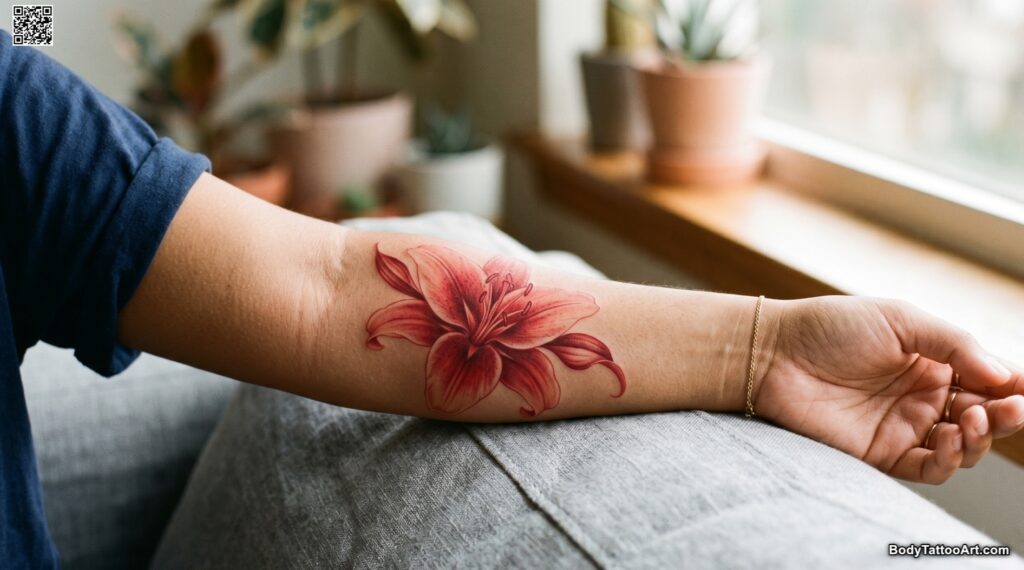
A single lily rendered entirely in solid red ink — no black linework, no outlines, just red. The petals are built from varying densities of red, lighter where the petals catch light and deeper where they curve inward. The stamens are thin red lines. The entire tattoo exists in one color, making the shading technique alone responsible for all the depth.
Placement: Forearm / Ankle
Style: Single-color realism
Why it stands out: Removing black ink entirely and rendering a realistic lily in only red forces the shading to work harder than usual. The result is unusual, warm, and completely unexpected.
Ideal for: People wanting a color tattoo with a twist, those drawn to monochromatic design, anyone wanting a lily that looks like no other.
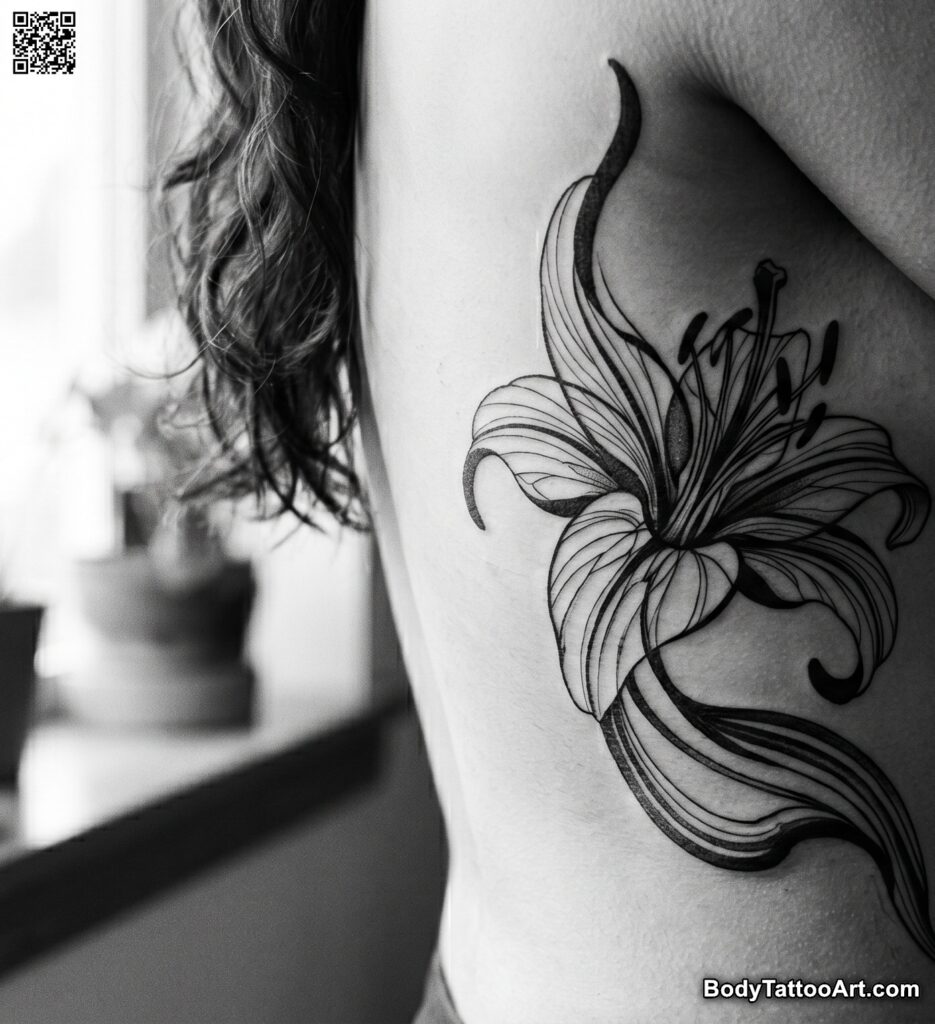
The lily is deconstructed — petals pulled apart and rearranged into an abstract composition that still reads as floral but doesn’t follow the flower’s natural geometry. Some petal shapes are elongated, some overlap in impossible ways, some are reduced to curved lines. The whole piece has a fluid, almost surrealist quality.
Placement: Ribcage / Upper back / Thigh
Style: Abstract blackwork
Why it stands out: Breaking the lily’s structure apart and rebuilding it in a new arrangement keeps the subject recognizable while making the design genuinely original. No two abstract lily tattoos will ever look the same.
Ideal for: Collectors wanting something unconventional, people who love contemporary art tattoo styles, those bored by conventional floral design.
Four small lilies arranged in a strict two-by-two grid, each one in a slightly different orientation — one facing left, one right, one upward, one in three-quarter view. Each lily is rendered in clean fine linework, and the grid arrangement is precise, with equal spacing between each flower. The composition looks like a botanical reference plate.
Placement: Inner forearm / Upper arm
Style: Fine line botanical
Why it stands out: The grid format references the language of scientific botanical illustration. Presenting the same flower from four angles simultaneously turns a single tattoo into a study.
Ideal for: People drawn to scientific illustration aesthetics, those wanting a slightly academic and unusual approach to floral tattoos, fine line collectors.

A lily where all negative space — every gap between petals, inside the leaves, around the stamens — is filled with solid black ink. The lily’s outline is clear, but everything surrounding the flower’s interior details is blacked out. The effect creates extreme contrast where the white linework of petals and stamens cuts through dense black like light through shadow.
Placement: Upper arm / Chest / Calf
Style: Blackwork heavy fill
Why it stands out: The heavy black fill inverts the usual relationship between line and space. The petals are defined by the black around them rather than by their outlines — it’s an aggressive, high-contrast interpretation of a typically soft subject.
Ideal for: Blackwork collectors, people building dark, heavy sleeves, those who love strong visual contrast.

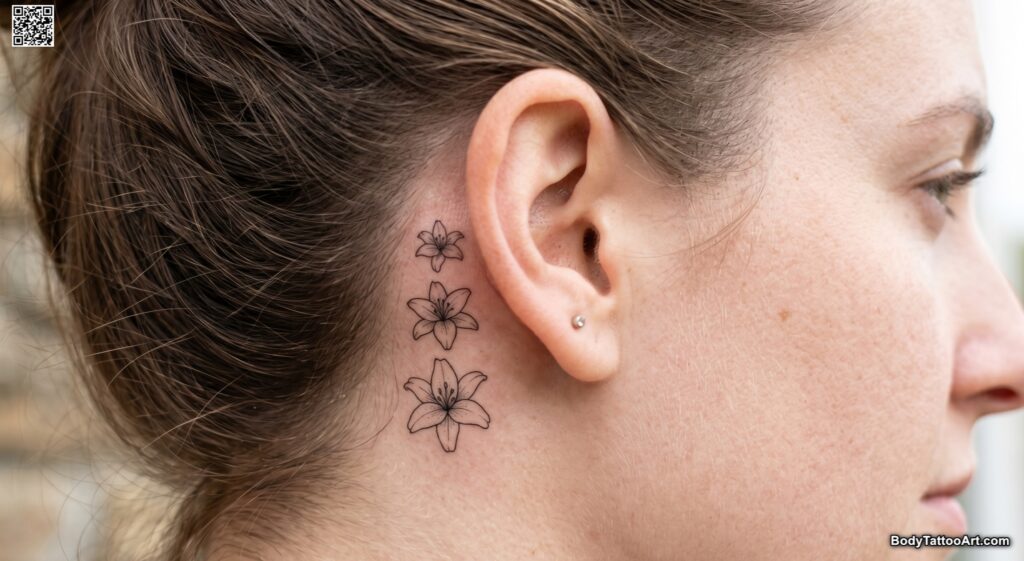
Three very small lilies stacked vertically in a column — smallest at the top, largest at the bottom — each one a simple but complete fine line rendering. The spacing between them is even, the linework is delicate, and the overall piece is compact enough to fit in the smallest placement spaces on the body. Subtle, precise, and easy to love.
Placement: Behind the ear / Finger / Ankle
Style: Minimalist fine line
Why it stands out: The stacked vertical arrangement in descending size creates a visual rhythm that a single small lily can’t achieve. Small doesn’t have to mean simple when the composition is this considered.
Ideal for: People wanting a very small but complete tattoo, minimalists, those choosing subtle placements.
A lily executed in heavy, aggressive expressive blackwork — thick directional marks building the petals with raw energy. The marks overlap and layer, creating dense shadow in some areas while leaving quick gestural strokes visible in others. The overall lily shape is clear but the execution is charged, like the flower was rendered mid-storm. Bold, unapologetic, and full of movement.
Placement: Upper back / Outer thigh / Ribcage
Style: Expressive blackwork
Why it stands out: The tension between a lily — typically associated with softness — and the aggressive mark-making of expressive blackwork creates a visual contradiction that makes the tattoo impossible to look away from.
Ideal for: People who love bold emotional tattoo art, collectors drawn to expressive and gestural styles, those wanting a large powerful floral piece.

Lily tattoos have earned their place in tattoo culture for the same reason that real lilies have been painted, pressed, and admired for centuries — the flower is genuinely beautiful in a way that holds up under close inspection. But the best lily tattoos aren’t just beautiful flowers. They’re considered compositions, interesting uses of style, and designs that feel right on the specific body wearing them.
The 24 ideas here cover a wide range of approaches, but they’re really just a starting point. The best lily tattoo is the one that comes out of a real conversation between a person and an artist — shaped by the placement, the person’s aesthetic, and what the artist does best.
For more floral inspo. check out Orchid Tattoos, Cherry Blosssoms, Peonies, Vines, Lotuses, etc.