Physical Address
304 North Cardinal St.
Dorchester Center, MA 02124
Physical Address
304 North Cardinal St.
Dorchester Center, MA 02124

Ivy leaf tattoos have been quietly taking over tattoo feeds, and honestly, it makes complete sense. There is something about the way ivy grows — slow, steady, wrapping itself around whatever it touches — that just translates beautifully into body art. Whether someone wants something delicate running down their arm like orchids or a bold blackwork rose piece crawling up their ribs, ivy leaf tattoos offer a design flexibility that very few botanical tattoos can match.
This blog covers 26 completely different ivy leaf tattoo ideas, from fine line sketches to abstract geometric takes. Each one is designed to look distinct so there is something here for every style and placement preference.
Ivy leaf tattoos are tattoo designs inspired by the Hedera plant — the same climbing vine commonly seen on old stone walls and garden fences. The leaf has a very recognizable shape: a pointed tip, slightly lobed sides, and veins that branch outward from a central stem. In tattoo art, this shape gets interpreted in dozens of ways — realistic, abstract, geometric, illustrative, and more.
Ivy leaf tattoos can be done as a single leaf, a trailing vine, a dense cluster, or even a symmetrical pattern. The design adapts easily to both small placements like the wrist or ankle and large ones like the back or thigh
Ivy has been a symbol of endurance and fidelity across many cultures for centuries. It clings to walls and surfaces even in harsh weather, which is why it became associated with loyalty and perseverance. In ancient Greek tradition, ivy was linked to Dionysus, the god of wine and festivity, and was used in garlands and offerings.
In Celtic symbolism, ivy represented the cycle of life because it stayed green even through winter. It was also associated with strong bonds between people — the idea of connection that does not break.
Ivy leaf tattoos today are chosen for many reasons — some purely aesthetic, others tied to personal meaning around resilience, growth, or deep connection. The design is flexible enough to carry whatever meaning the wearer brings to it.
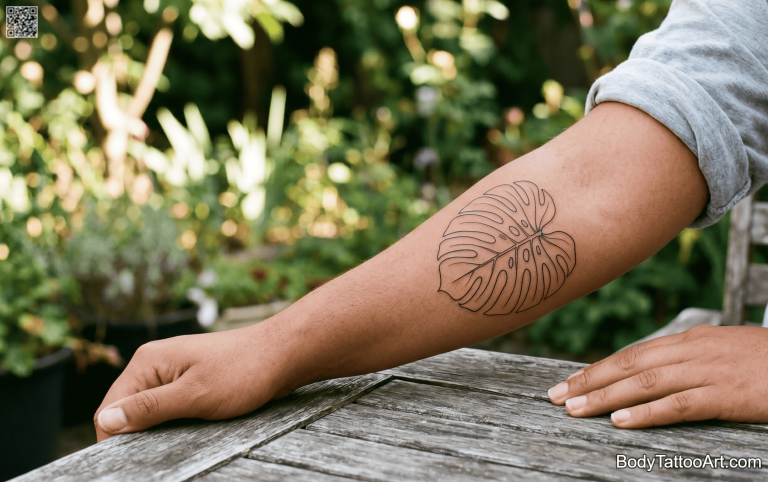
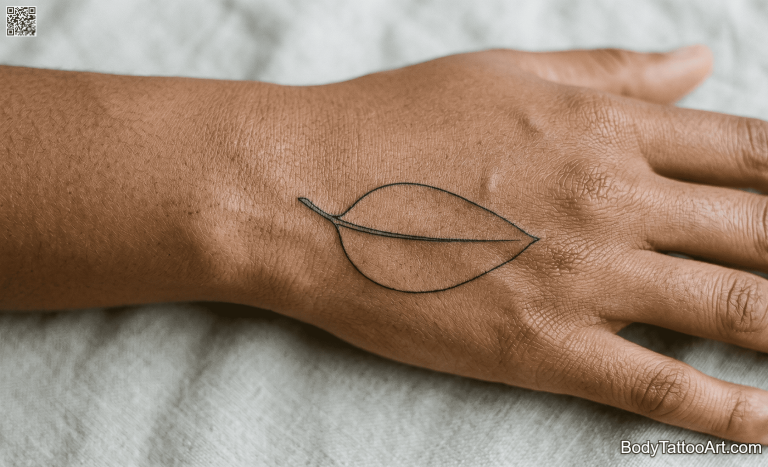
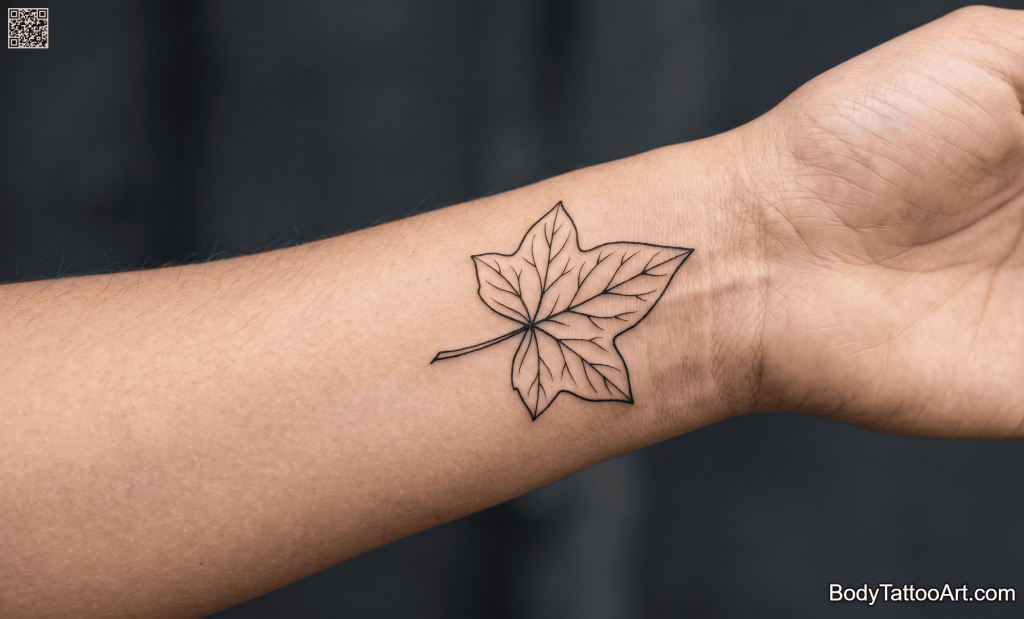
One clean ivy leaf sits alone on the skin, outlined in crisp black ink with no fill and no shading. The veins are drawn as fine single lines branching from the center stem. The negative space inside the leaf does all the visual work here.
Placement: Inner wrist
Style: Fine line minimal Ivy Leaf Tattoos
Why it stands out: The restraint is the whole point. No filler, no shadow — just a clean, confident outline that looks sharp at a small size.
Ideal for: First-timers, minimalist fans, people who want something subtle.
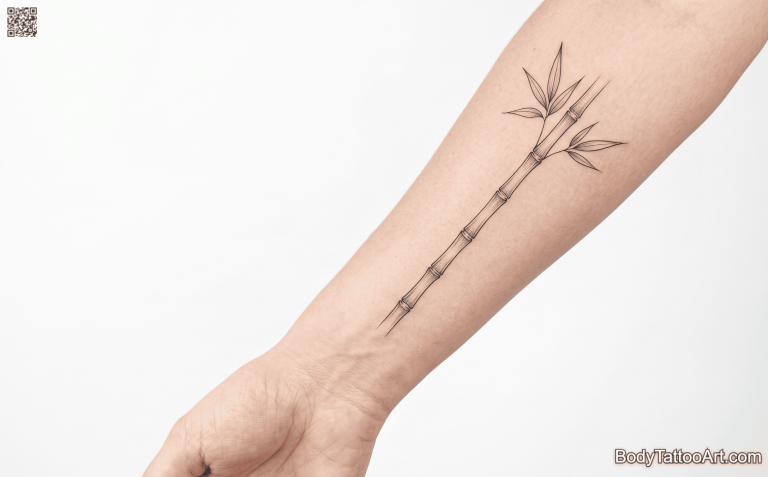
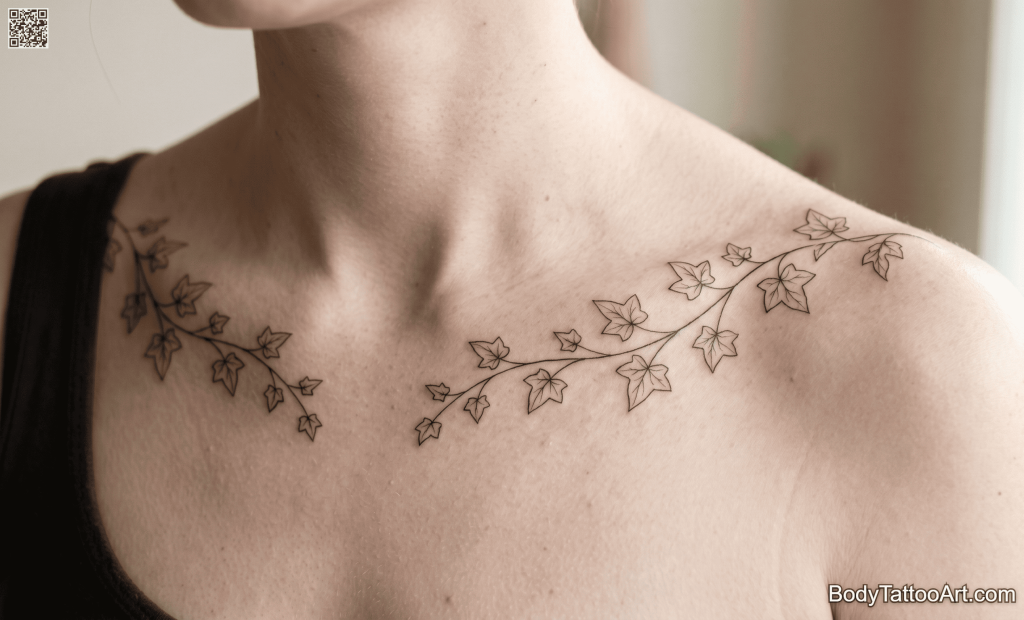
A thin ivy vine stretches horizontally across the collarbone, with small leaves sprouting off at irregular intervals. The leaves vary slightly in size — bigger near the center, smaller toward the ends — giving it a natural, growing quality.
Placement: Collarbone
Style: Fine line botanical Ivy Leaf Tattoos
Why it stands out: The horizontal flow follows the bone structure perfectly. It looks like the vine actually grew there rather than being placed.
Ideal for: People who love placement-conscious tattoos, delicate style lovers.
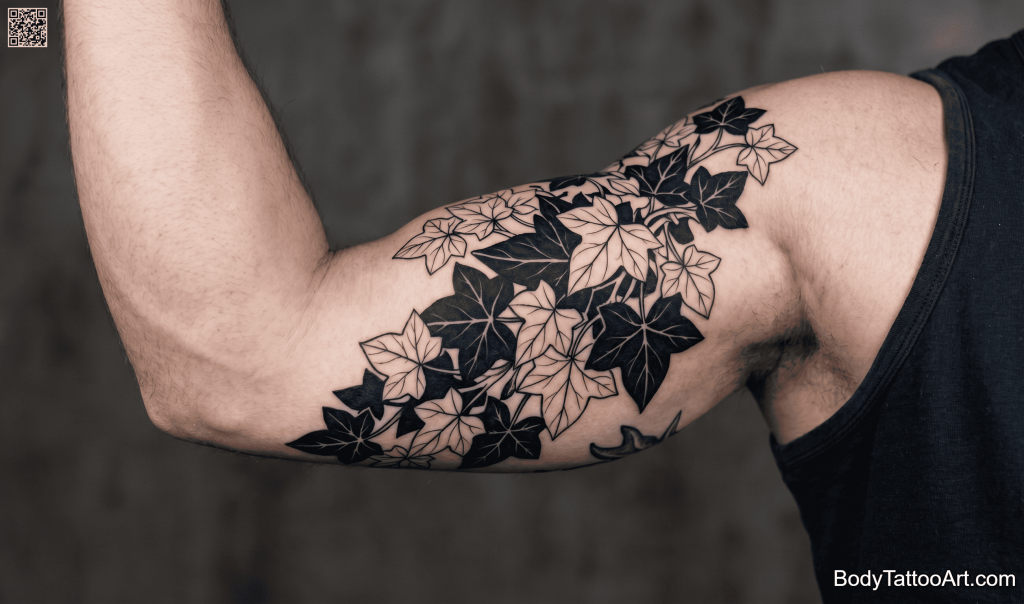
A tightly packed group of ivy leaves filled in with solid black ink, overlapping each other in layers. Some leaves are fully filled, others are just outlined at the edges where they peek out from behind. The contrast between solid black and negative space skin creates strong visual depth.
Placement: Upper arm / outer bicep
Style: Blackwork Ivy Leaf Tattoos
Why it stands out: The layering creates a sense of dimension without any gradients. It is graphic and bold but still reads as botanical.
Ideal for: Bold tattoo fans, blackwork collectors, people wanting strong visual impact.
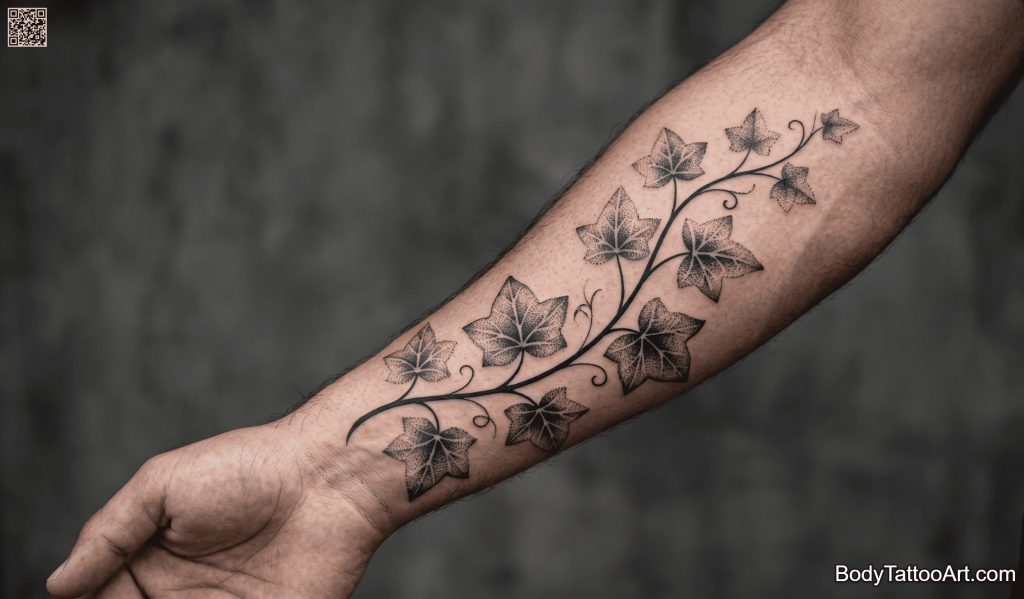
A single ivy vine climbs upward with leaves shaded entirely through dotwork — thousands of tiny dots building up density in the shadows and fading out in the highlights. The stem is a clean solid line while the leaves graduate from near-black at the center to almost bare at the tips.
Placement: Forearm
Style: Dotwork Ivy Leaf Tattoos
Why it stands out: The texture from the dotwork gives the leaves a grainy, almost old-photograph quality. The shading is incredibly nuanced without using any solid fill.
Ideal for: Dotwork enthusiasts, people who appreciate technical tattooing, botanical art fans.
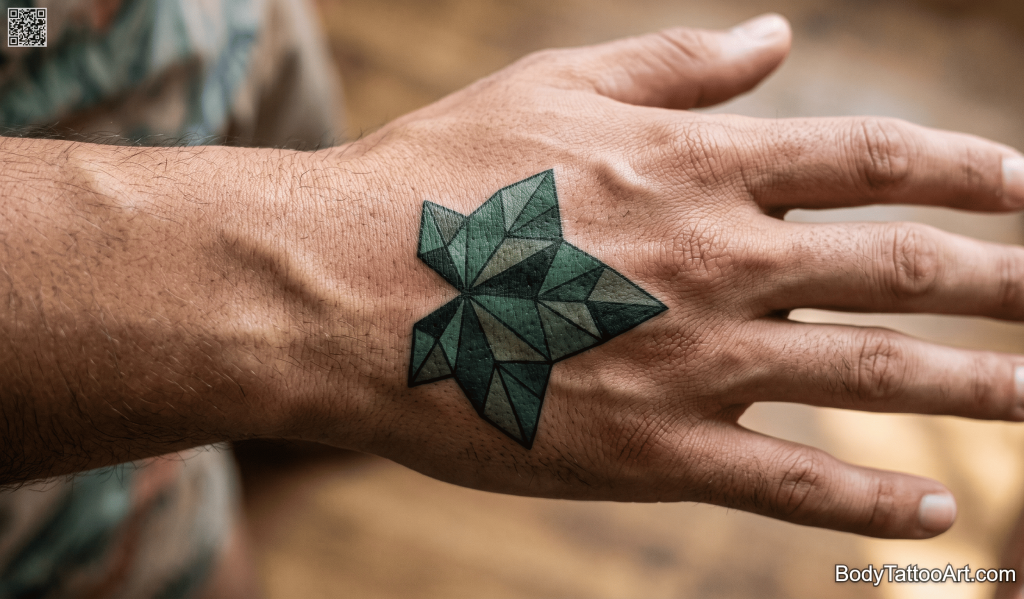
One ivy leaf is redrawn using only straight lines and triangular segments, like a low-polygon 3D render. Each section of the leaf is a flat geometric plane, and thin black lines divide them. The overall leaf shape is recognizable but the interior is completely abstracted.
Placement: Back of the hand
Style: Geometric / abstract Ivy Leaf Tattoos
Why it stands out: It takes a natural organic form and forces it into hard angles, creating an interesting tension between the two. The result feels modern and considered.
Ideal for: Geometry lovers, fans of abstract tattoos, people wanting something unusual.
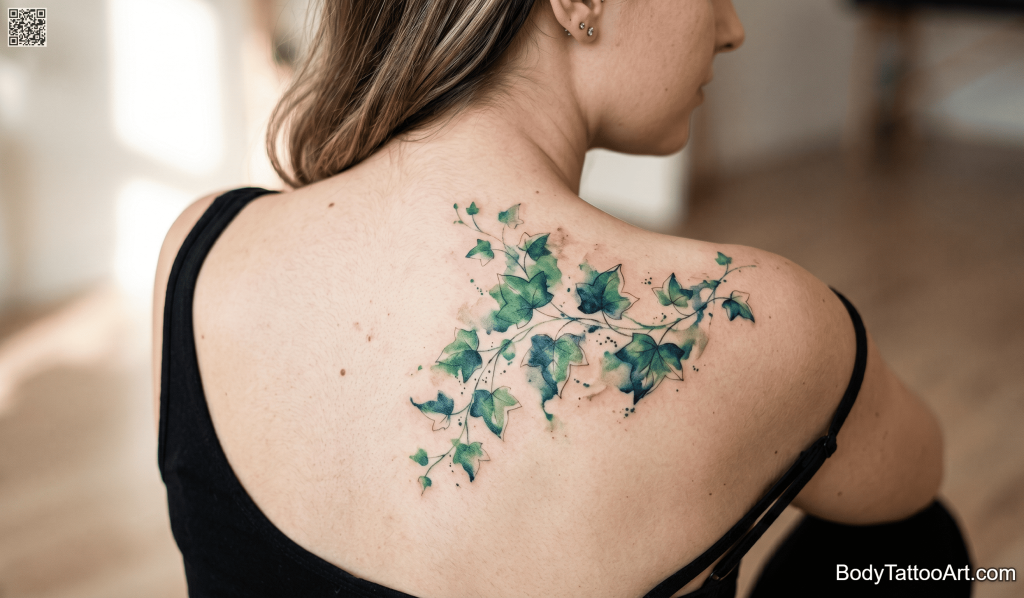
Loose, brushy ivy leaves rendered in a watercolor style with soft ink washes behind them. The leaves themselves are outlined faintly in fine line black but the color bleeds slightly beyond the edges in uneven, organic shapes. Greens and deep blues bleed into each other.
Placement: Shoulder blade
Style: Watercolor Ivy Leaf Tattoos
Why it stands out: The looseness of the watercolor bleed gives it a painted, studio-art quality that stands apart from more precise botanical styles.
Ideal for: Color tattoo fans, artistic style lovers, people wanting something painterly.
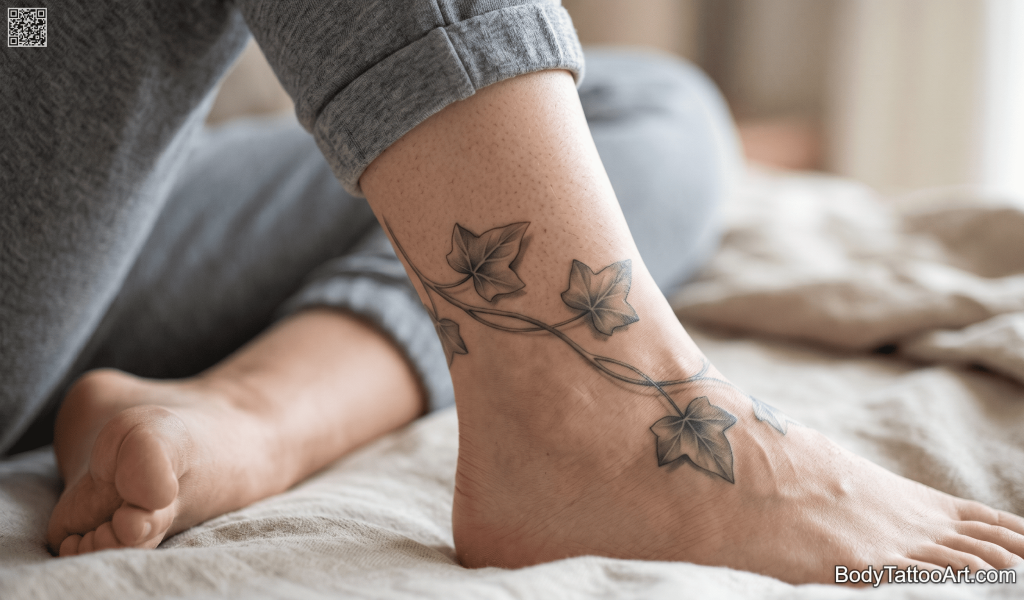
A short ivy vine wraps partially around the ankle like a bracelet, with three to four leaves at different angles. The vine has a slight twist to it and the leaves are rendered in clean grey-wash shading with soft shadows beneath them.
Placement: Ankle
Style: Grey-wash Ivy Leaf Tattoos
Why it stands out: The wraparound placement follows the ankle’s curve naturally. The grey-wash shading gives it dimension without going full realistic.
Ideal for: Placement-focused wearers, people wanting something elegant and wearable.
The ivy leaf shape is cut out of a solid black rectangle — the leaf is the space left behind, not the inked area. The black square sits on the skin and the leaf reads as a pale skin-tone silhouette inside it.
Placement: Inner forearm
Style: Negative space / blackwork Ivy Leaf Tattoos
Why it stands out: Flipping the conventional approach — leaf as empty space instead of filled form — is a strong conceptual and visual move. Very few botanical tattoos use negative space this cleanly.
Ideal for: Conceptual art lovers, blackwork fans, people wanting something that sparks conversation.
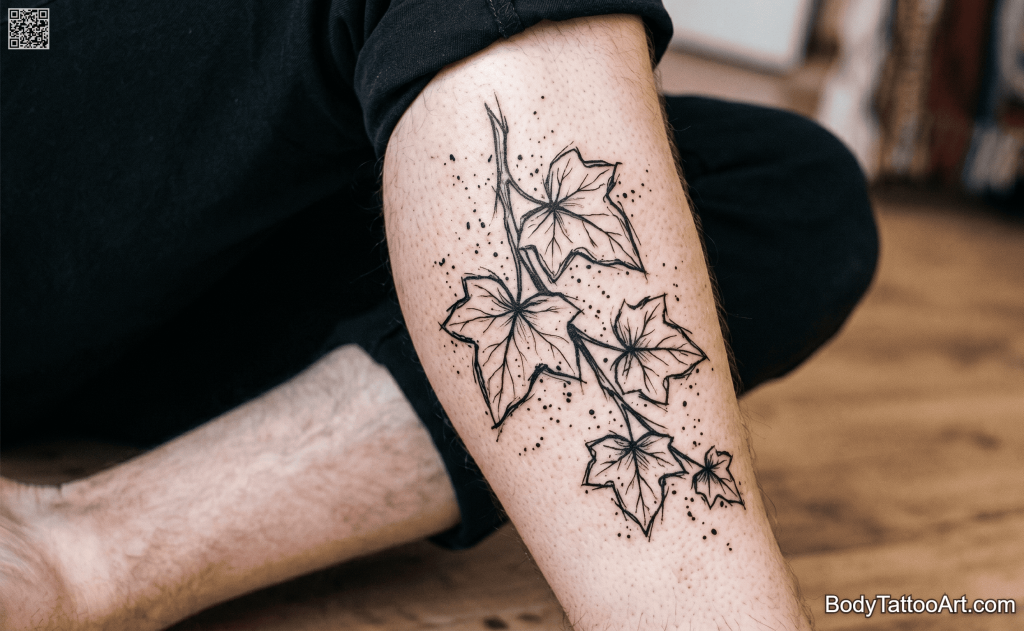
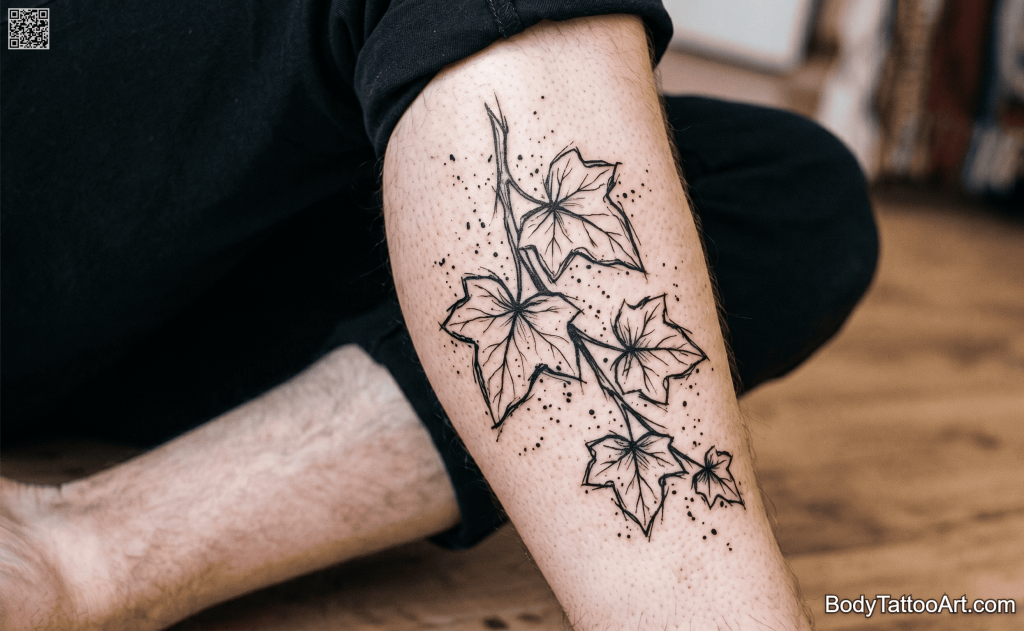
An illustrative-style ivy branch with four leaves, drawn with confident, slightly varying line weights. Around the edges of the design, small ink splatter dots are scattered — like the tattoo was drawn with a dipped pen and the ink flicked outward.
Placement: Outer calf
Style: Illustrative / painterly Ivy Leaf Tattoos
Why it stands out: The splatter adds spontaneity and a handcrafted quality. It feels like a botanical sketch from an old journal.
Ideal for: Art journal fans, people who love a handmade aesthetic, illustrative tattoo collectors.
If you enjoy plant-based tattoo inspiration, the post on floral vine tattoos covers similarly graceful options with a different visual energy.
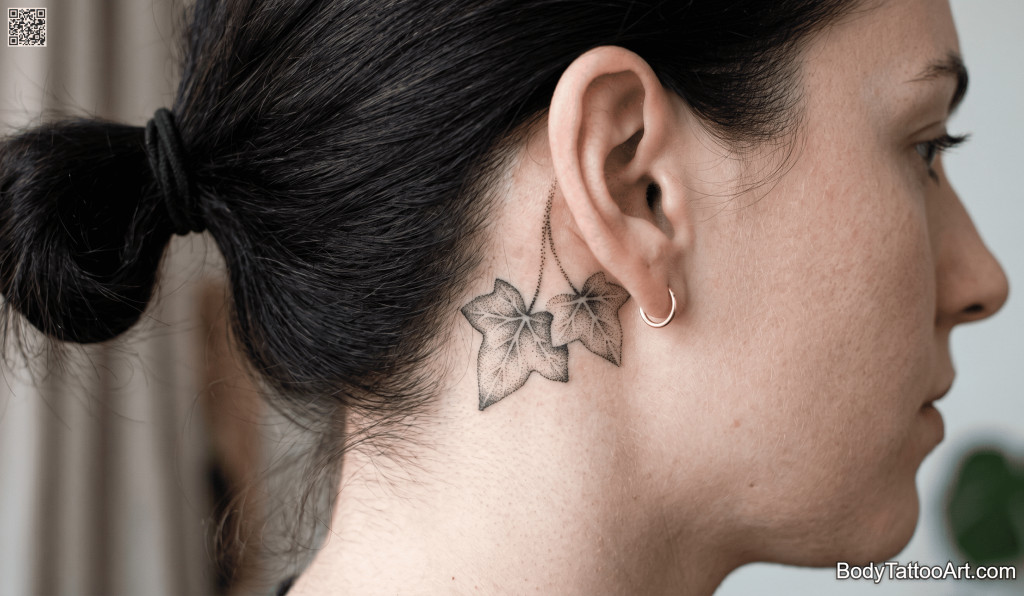
Two ivy leaves side by side, slightly overlapping, with the entire surface texture built from stippling. No solid lines — even the outlines are made of tiny dots spaced closely together. The leaves look almost printed.
Placement: Behind the ear
Style: Stipple / pointillism Ivy Leaf Tattoos
Why it stands out: The pointillist outline technique is unusual and gives the tattoo a soft, almost ghostly presence at small sizes.
Ideal for: Subtle tattoo lovers, people wanting something refined and uncommon.
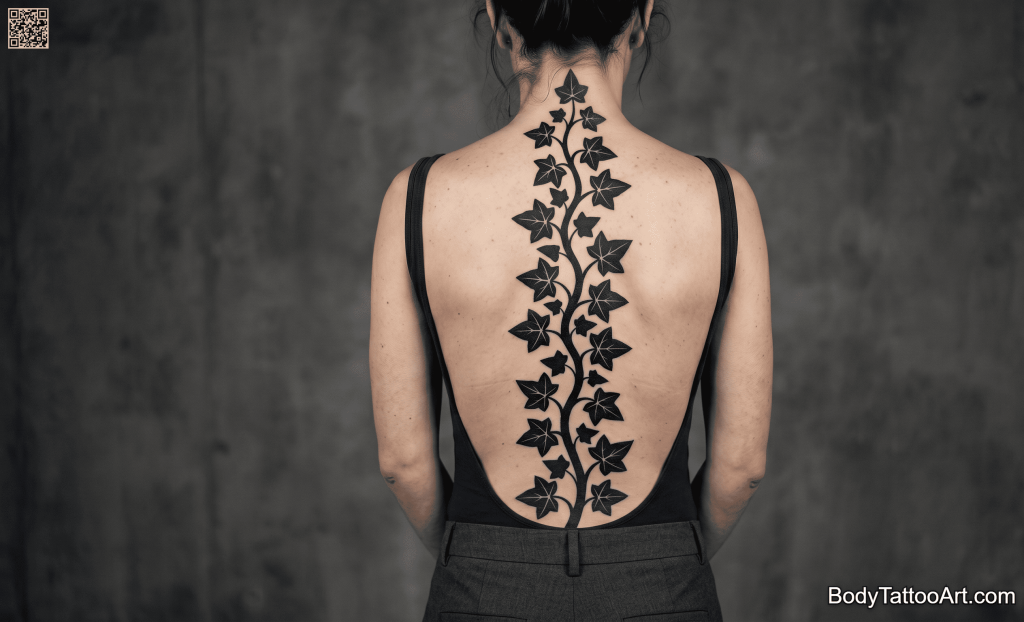
A long blackwork ivy vine runs straight down the spine with leaves branching left and right alternately. The leaves are fully filled in solid black. The vine itself is a thick, confident black stroke.
Placement: Spine / back centerline
Style: Blackwork Ivy Leaf Tattoos
Why it stands out: The symmetry of the alternating leaves paired with the centerline placement creates a strong architectural quality. Bold without being loud.
Ideal for: Bold style lovers, back tattoo fans, people wanting a statement piece.
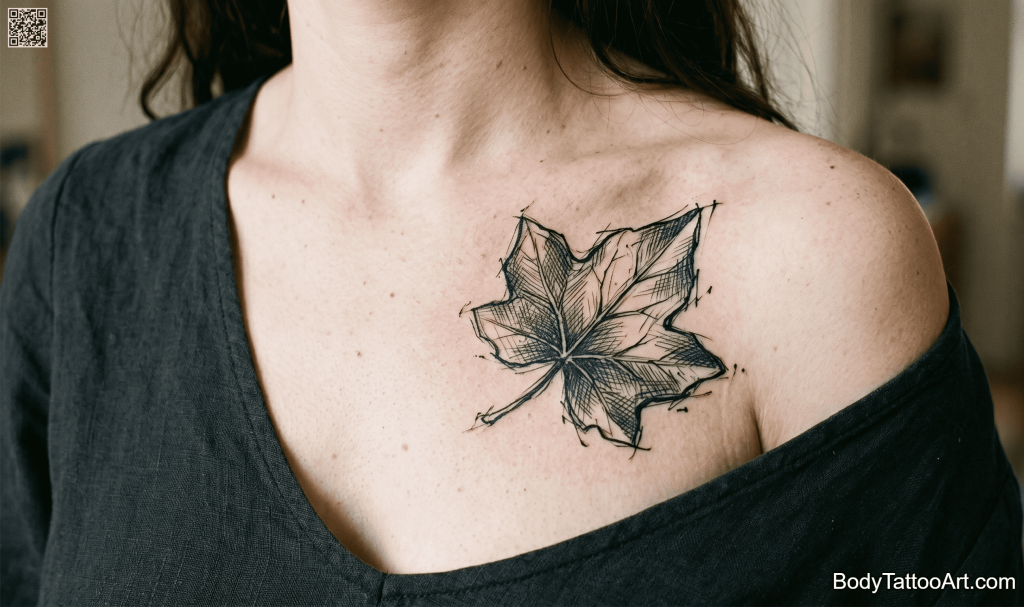
An ivy leaf drawn in a rough sketch style — visible construction lines, cross-hatching for shadow areas, and some deliberately unfinished edges. It looks like a quick study from a sketchbook.
Placement: Upper chest
Style: Sketch / etching Ivy Leaf Tattoos
Why it stands out: The unfinished, loose quality makes it feel spontaneous. Cross-hatching shadows give it depth without looking too polished.
Ideal for: Art and illustration fans, people who like unconventional tattoo aesthetics.
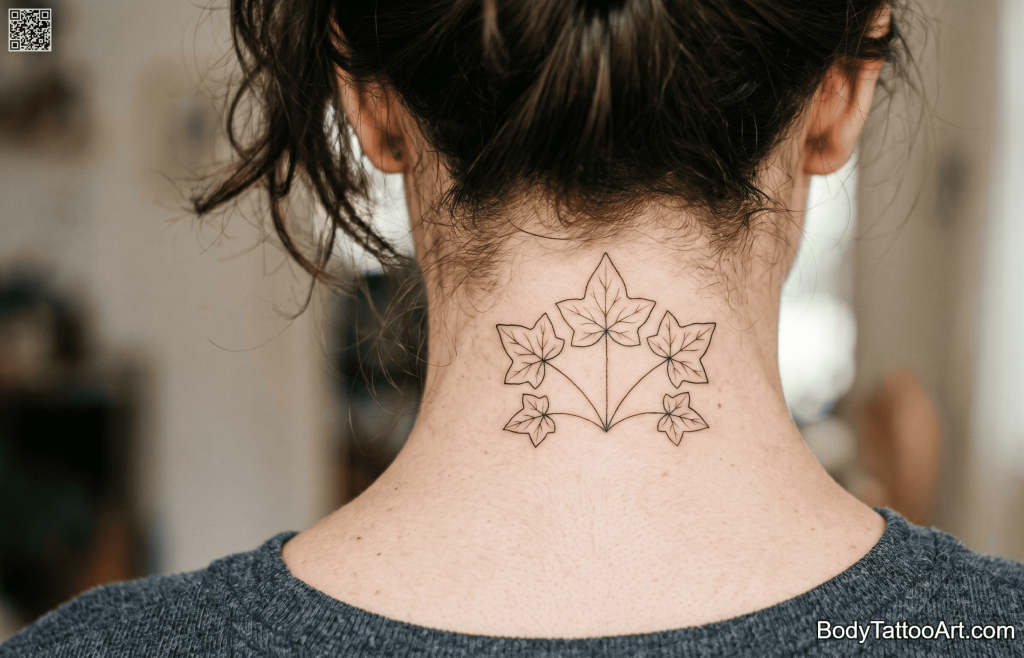
Five ivy leaves arranged in a fan shape radiating outward from a single central point, like an open hand. Each leaf is slightly different in size. The lines are ultra-fine and very precise.
Placement: Back of the neck
Style: Fine line Ivy Leaf Tattoos
Why it stands out: The radial composition gives it an almost medallion-like quality. It reads as both organic and structured at the same time.
Ideal for: Minimalists who want something with a little more going on, fine line tattoo fans.
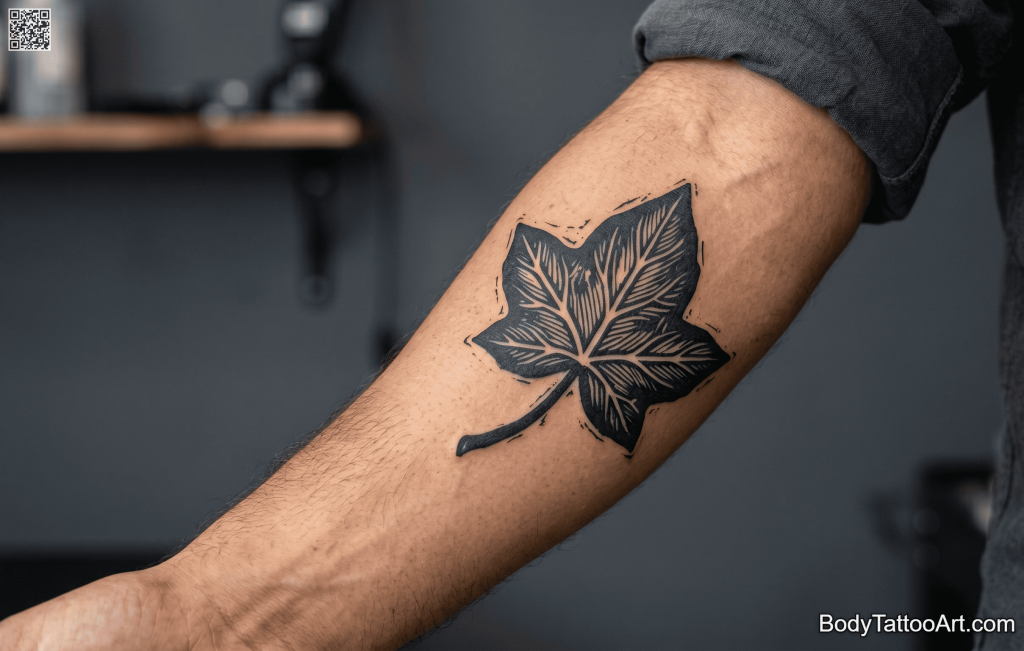
The ivy leaf is rendered to look like it was stamped with a woodblock or linocut print — thick outer edges, strong carved lines inside the leaf for veins, and slightly imperfect edges as if ink pressed unevenly.
Placement: Forearm
Style: Woodblock / linocut print Ivy Leaf Tattoos
Why it stands out: The carved texture and heavy line weights give it a retro printing quality that feels completely different from most botanical tattoos.
Ideal for: Print art lovers, people with a vintage or graphic aesthetic.
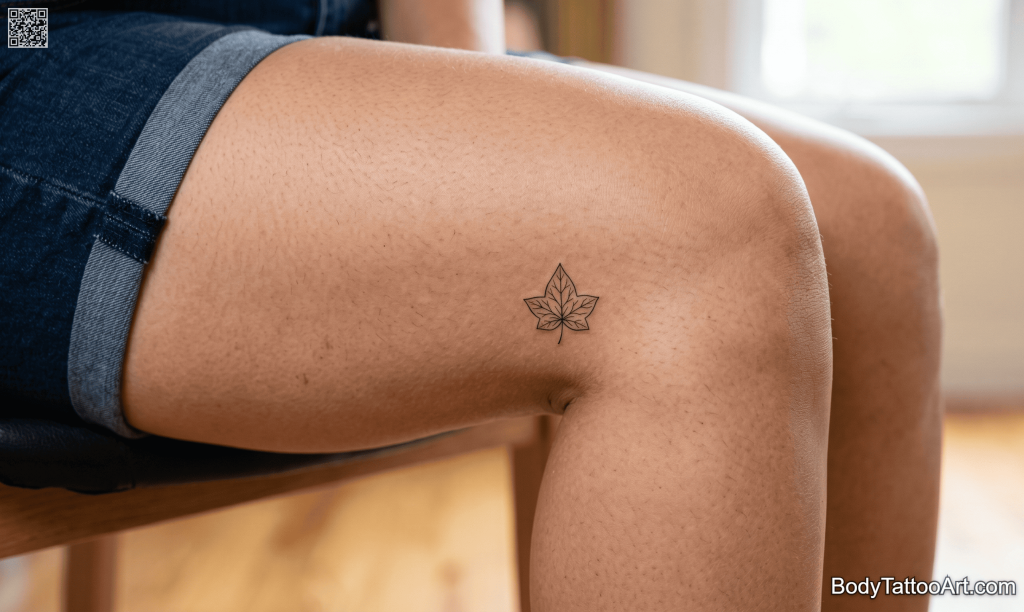
A tiny, perfectly detailed ivy leaf sits just behind the knee. Fine line only, very small — about the size of a thumbnail. Every vein detail is included despite the scale.
Placement: Behind the knee
Style: Micro fine line Ivy Leaf Tattoos
Why it stands out: The placement is unexpected and the scale is impressive. Tiny tattoos behind the knee age beautifully and this one has enough detail to hold up.
Ideal for: Micro tattoo lovers, people wanting something private and personal.
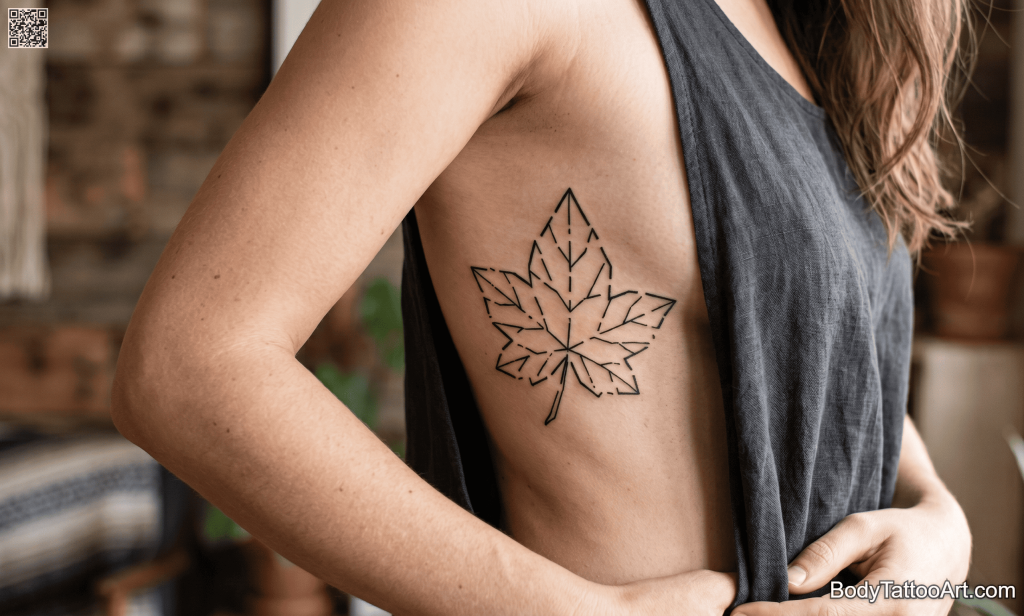
An ivy leaf broken into disconnected segments — like the leaf was shattered and the pieces slightly separated while keeping the overall leaf shape readable. Black ink only, clean lines, no shading.
Placement: Ribcage
Style: Abstract / deconstructed Ivy Leaf Tattoos
Why it stands out: The fragmentation creates an interesting visual tension — the leaf is recognizable but visually disrupted. Strong conceptual design.
Ideal for: Abstract art fans, people wanting something intellectually interesting on their skin.
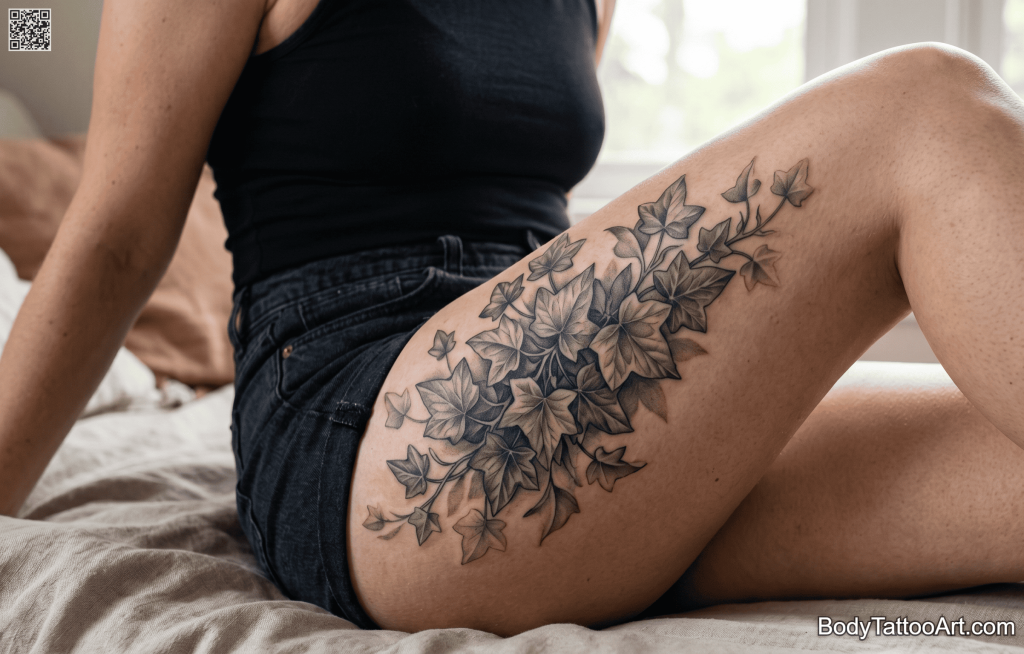
A tight cluster of overlapping ivy leaves in grey-wash, with heavier shading where leaves overlap and lighter tones at the outer edges. The composition builds inward like leaves piling on top of each other.
Placement: Thigh
Style: Grey-wash realism Ivy Leaf Tattoos
Why it stands out: The inward build of shadow and light creates genuine depth. It looks three-dimensional without being hyper-realistic.
Ideal for: Realism fans who want something botanical, large tattoo collectors.
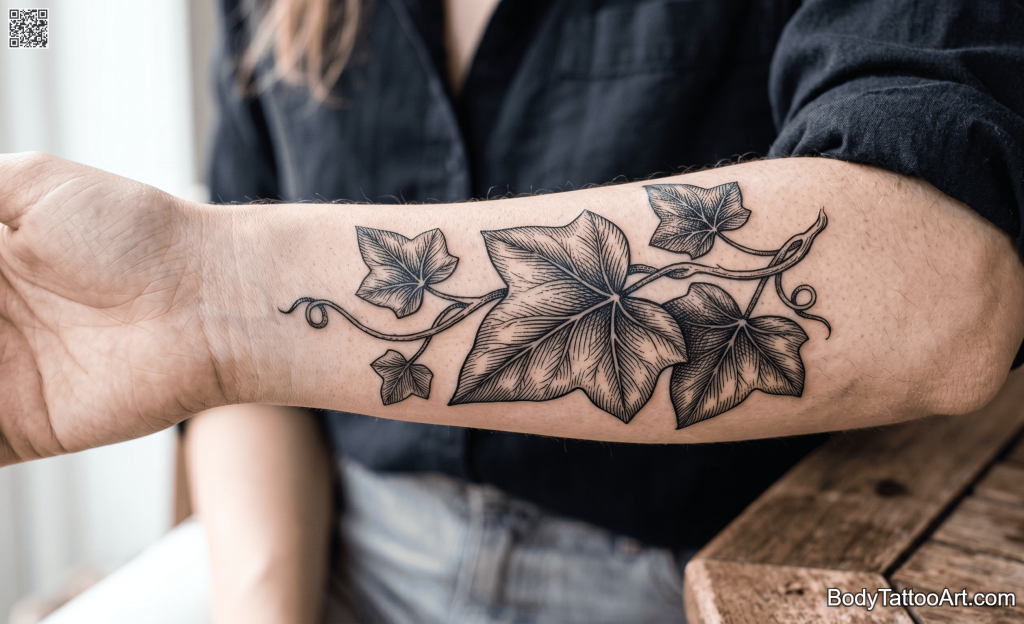
One large ivy leaf rendered in a copperplate engraving style — parallel lines build up the shading across the surface, with hatching and cross-hatching in the deeper shadow zones. The vein lines are precise and architectural.
Placement: Inner arm
Style: Engraving / etching Ivy Leaf Tattoos
Why it stands out: The line-based shading technique gives it an antique scientific illustration quality, like something from a 19th-century botanical encyclopedia.
Ideal for: History and art lovers, people who appreciate technical illustration aesthetics.
For those drawn to dense and highly detailed botanical work, the olive branch tattoo guide explores another iconic leaf design with similar engraving and fine line possibilities.
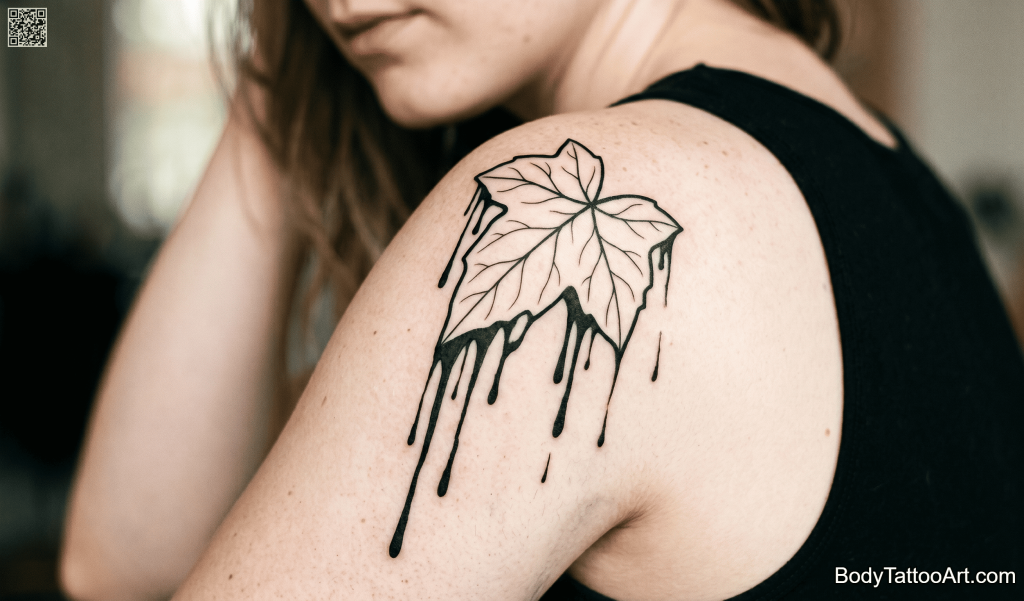
An ivy leaf at the top with thick black ink dripping downward from the bottom of the leaf, the drips varying in length and thickness. The leaf itself is clean and outlined but the drips give it a fluid, melting quality.
Placement: Shoulder / upper arm
Style: Graphic / surrealist Ivy Leaf Tattoos
Why it stands out: The contrast between the clean botanical form and the expressive drips creates a surreal, editorial look that feels contemporary.
Ideal for: Creative, fashion-forward tattoo wearers, people who like unexpected design twists.
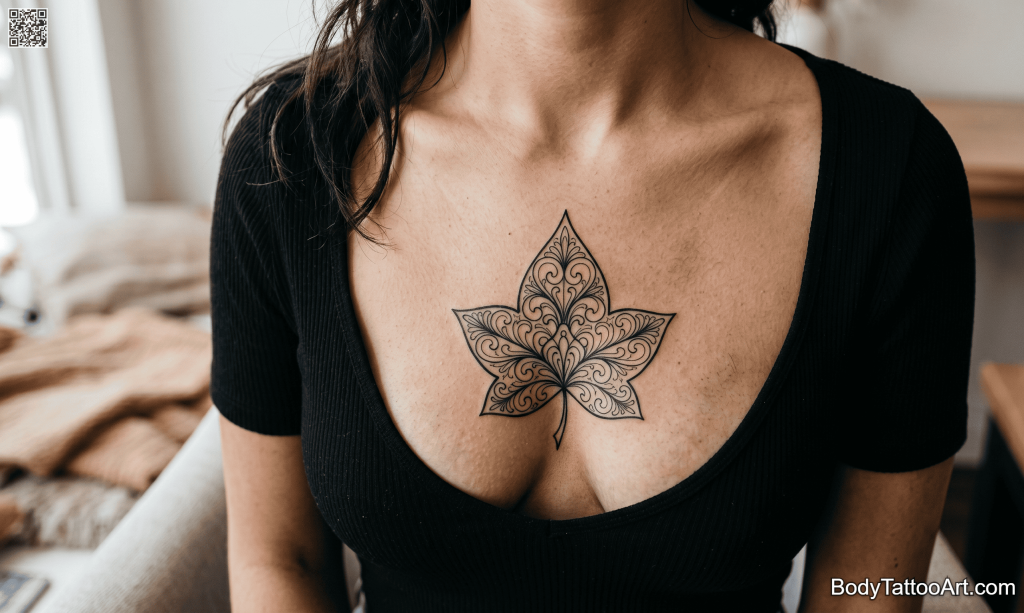
A single ivy leaf redrawn with ornamental additions — fine filigree lines fill the interior space of the leaf, replacing natural veins with decorative swirling patterns. The leaf outline remains clear but the interior is elaborate and lacy.
Placement: Sternum
Style: Ornamental / decorative Ivy Leaf Tattoos
Why it stands out: The filigree interior transforms a simple leaf into something jewellery-like. It hits the balance between botanical and decorative perfectly.
Ideal for: Fans of ornamental tattoos, people wanting something feminine and intricate.
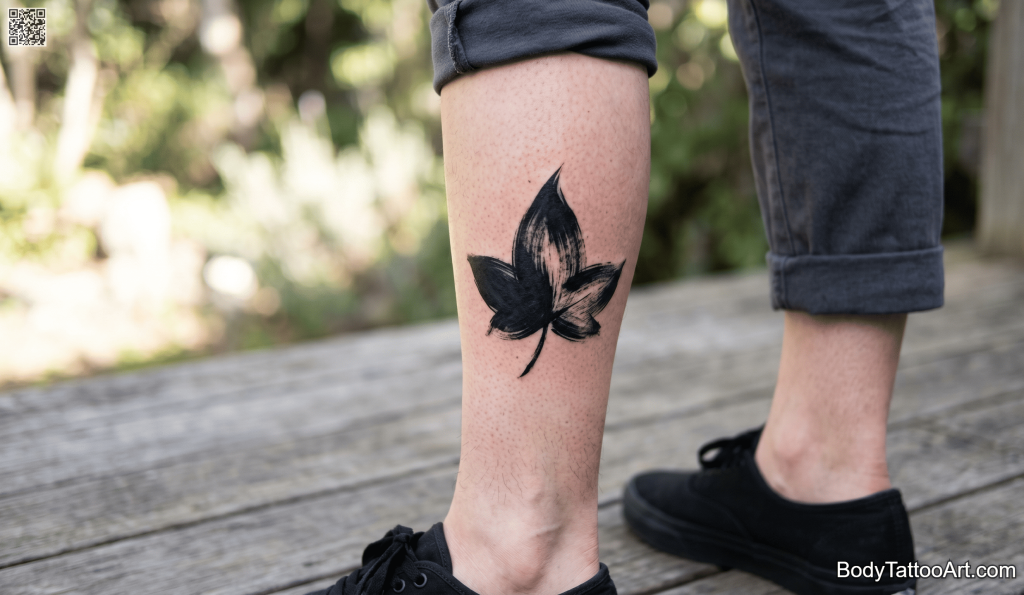
The ivy leaf is formed from a single thick brushstroke — the base of the leaf starts wide and tapers to a point. The brushstroke texture is visible inside the form, with slight gaps and variations in ink density that reveal the brush’s movement.
Placement: Ankle / lower leg
Style: Brushstroke / calligraphy Ivy Leaf Tattoos
Why it stands out: The single-stroke construction gives it spontaneity and rhythm. It looks like it was painted in one decisive gesture.
Ideal for: Minimalists who want something with a painterly feel, fans of calligraphy-inspired tattoos.
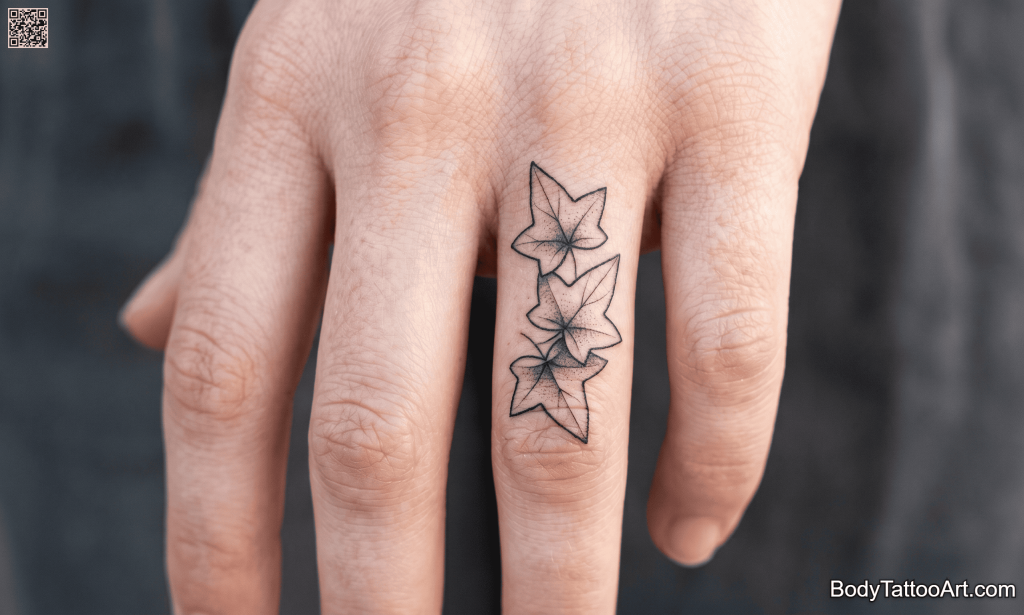
Three ivy leaves arranged in a clean vertical stack, each one pointing in a slightly different direction. The leaves are done in fine line with light dotwork shading on one side of each leaf to suggest a consistent light source.
Placement: Side of the finger
Style: Fine line with dotwork Ivy Leaf Tattoos
Why it stands out: The stacked placement along the finger is a smart use of a narrow vertical space. The consistent light source across all three leaves unifies the composition.
Ideal for: Finger tattoo fans, people wanting something dainty and precise.
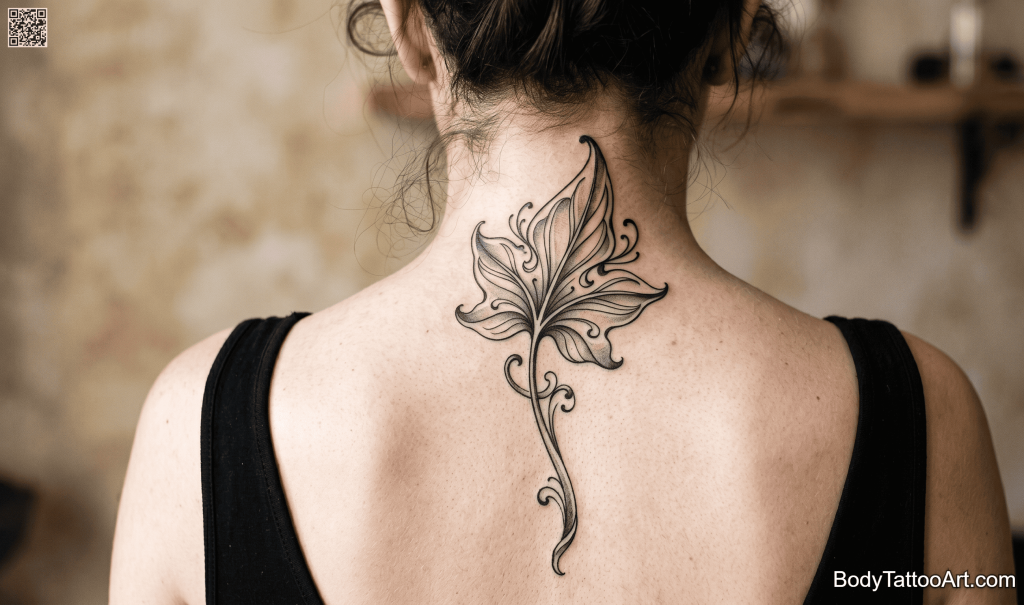
A single ivy leaf redrawn with art nouveau influences — elongated proportions, elegant curved lines, and a slight stylization of the leaf shape. The vein lines curve gracefully and the stem has a long, tapered arc.
Placement: Upper back / nape area
Style: Art nouveau / illustrative Ivy Leaf Tattoos
Why it stands out: The art nouveau stylization gives it an elegant, vintage poster quality. The elongated proportions make it more graphic than botanical.
Ideal for: Art history lovers, fans of decorative illustration styles.
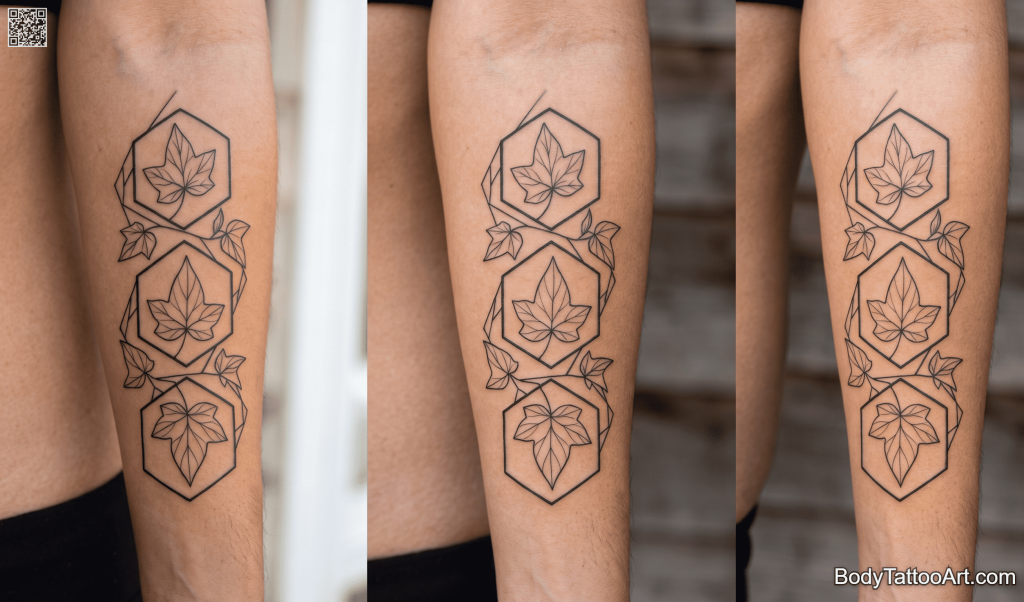
A section of ivy vine where the leaves are each contained within their own hexagonal border. The vine connects the hexagons as it moves upward. Inside each hexagon, the leaf is rendered in clean fine line.
Placement: Outer forearm
Style: Geometric / fine line hybrid Ivy Leaf Tattoos
Why it stands out: The hexagonal framing creates a modular, almost scientific specimen quality — like pressed botanical samples organized in a grid.
Ideal for: Geometry and botany crossover fans, people wanting something structured and original.
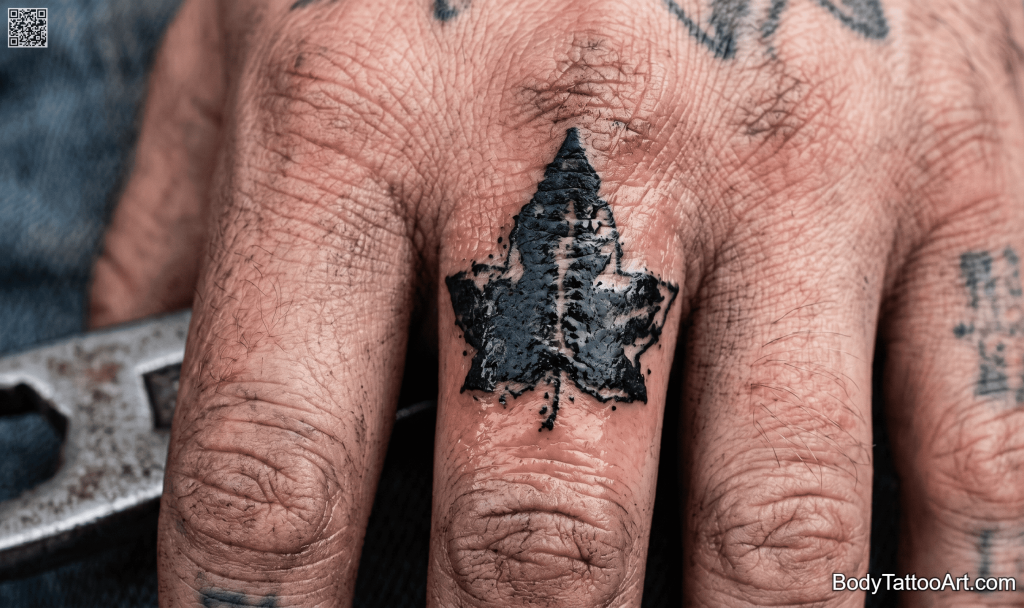
A blackwork ivy leaf done deliberately rough — the fill is slightly uneven, the edges have small breaks, and the line work has a hand-pressed quality. It looks intentionally imperfect, like a stamp pressed with too much and too little ink in different spots.
Placement: Knuckle / finger top
Style: Rough blackwork / hand-poked aesthetic Ivy Leaf Tattoos
Why it stands out: The intentional imperfection gives it character and rawness. It reads as bold and unprecious — anti-precious in the best way.
Ideal for: Fans of hand-poke and DIY aesthetics, people who prefer raw over refined.
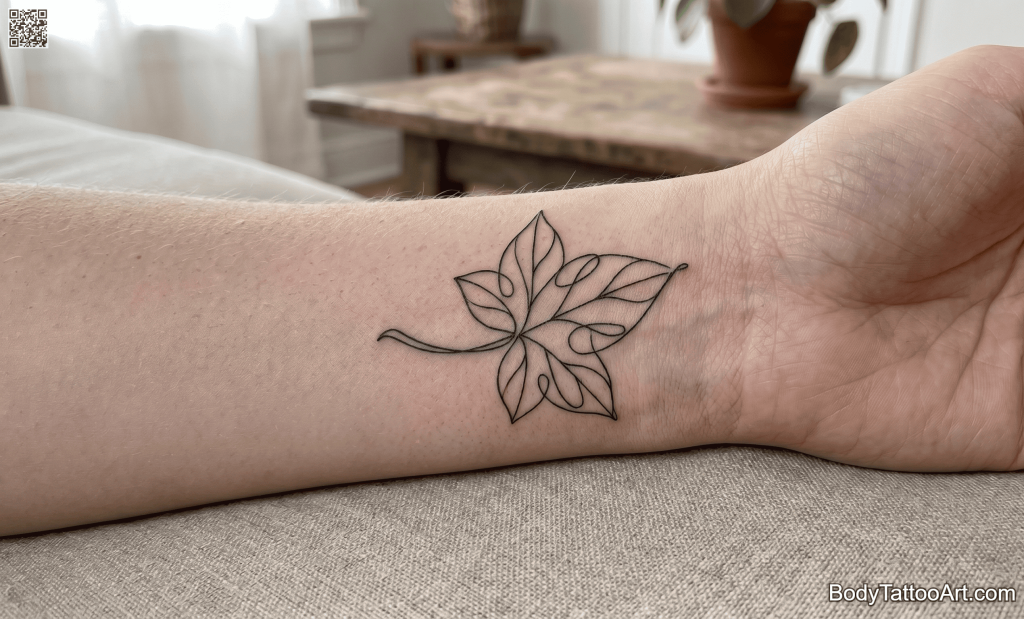
The entire ivy leaf — outline, veins, and stem — is drawn as one continuous unbroken line that loops and crosses itself to form the complete shape. No line ends; the pen never lifts.
Placement: Wrist
Style: One-line / contour Ivy Leaf Tattoos
Why it stands out: The constraint of drawing the whole leaf in a single looping line creates an almost puzzle-like visual. Every crossing and return of the line builds the recognizable shape from what should be impossibly simple.
Ideal for: Conceptual design lovers, people who appreciate clever restraint in art.
Leaf Tattoos are enormous. Ivy leaf tattoos prove that one of nature’s simplest shapes can hold endless visual possibility. From a single micro leaf tucked behind the knee to a dense blackwork cluster running down the spine, the same basic form transforms completely depending on technique, scale, and placement.
What makes ivy leaf tattoos worth considering is exactly this — they are not trend-driven. The design has been used in art and symbolism for centuries and it still reads as fresh when handled with intention. Whether the goal is something quiet and personal or a bold graphic statement, ivy leaf tattoos have a version of themselves ready for it.