Physical Address
304 North Cardinal St.
Dorchester Center, MA 02124
Physical Address
304 North Cardinal St.
Dorchester Center, MA 02124

Leaf tattoos have been around for a long time, and honestly, they never go out of style. Whether it’s a single oak leaf sitting quietly on a wrist or a cascade of monstera leaves wrapping around a forearm, leaf tattoos manage to look both simple and striking at the same time. They work on almost every body part, suit nearly every tattoo style, and age well — which is a big deal in the tattoo world; very similar to floral designs of Roses or Dandelions.
This blog covers 26 leaf tattoo ideas that are genuinely different from each other. No repeated compositions, no filler designs. Each one has been chosen for something specific — the linework, the shading, the placement, the overall vibe. Whether someone is getting their first tattoo or adding to an existing collection, there’s something here worth bookmarking.
Leaf tattoos are exactly what they sound like — tattoos featuring leaves as the central design element. The subject itself is simple, but the execution is where things get interesting. A leaf can be rendered in hyper-realistic detail with vein-by-vein shading, or it can be stripped down to a single clean outline or it can be with a floral vine tattoo. Some leaf tattoos lean into the botanical, some go fully abstract, and others borrow from cultural motifs — Japanese maple, tropical monstera, Indian peepal.
The variety is genuinely impressive. Leaf tattoos can be small enough to sit behind an ear or large enough to cover an entire back. They’re used as standalone pieces, as filler in larger sleeves, and as delicate standalone tattoos that don’t need any extra elements to hold attention.
Leaves carry a surprising amount of symbolic weight across cultures. In many traditions, they represent the cycle of life — growth, change, decay, and renewal. Falling leaves often signal transition or acceptance of impermanence, while green, full leaves suggest vitality and new beginnings.
In Celtic traditions, leaves — especially oak — were tied to strength, endurance, and the natural world. In Japanese culture, the maple leaf (momiji) is closely linked to the concept of mono no aware — the bittersweet beauty of things that don’t last. Indian traditions associate the peepal leaf with spiritual awakening and longevity.
For a detailed botanical and cultural breakdown of leaf symbolism, Wikipedia’s entry on leaf symbolism and folklore is a solid starting point.
Across all of these meanings, one thing stays consistent: leaves are deeply tied to time, nature, and the idea that everything changes. That’s probably why they’ve stayed relevant as tattoo subjects for so long.
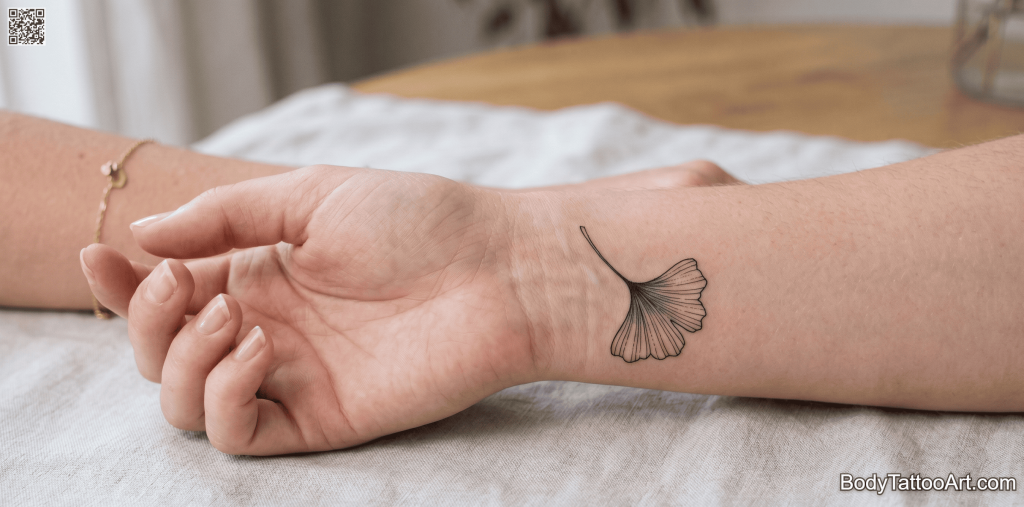
A single ginkgo leaf rendered in fine line, with every vein mapped out in delicate strokes. The fan-shaped silhouette is instantly recognizable, and the linework gives it an almost architectural quality. The leaf sits slightly tilted, which keeps it from looking flat or stiff.
Placement: Inner wrist
Style: Fine line botanical Leaf Tattoos
Why it stands out: The ginkgo’s unique shape does most of the visual work. The fine line style keeps it elegant without overcomplicating it.
Ideal for: Minimalists, first-time tattoo getters, and people who prefer clean botanical designs.
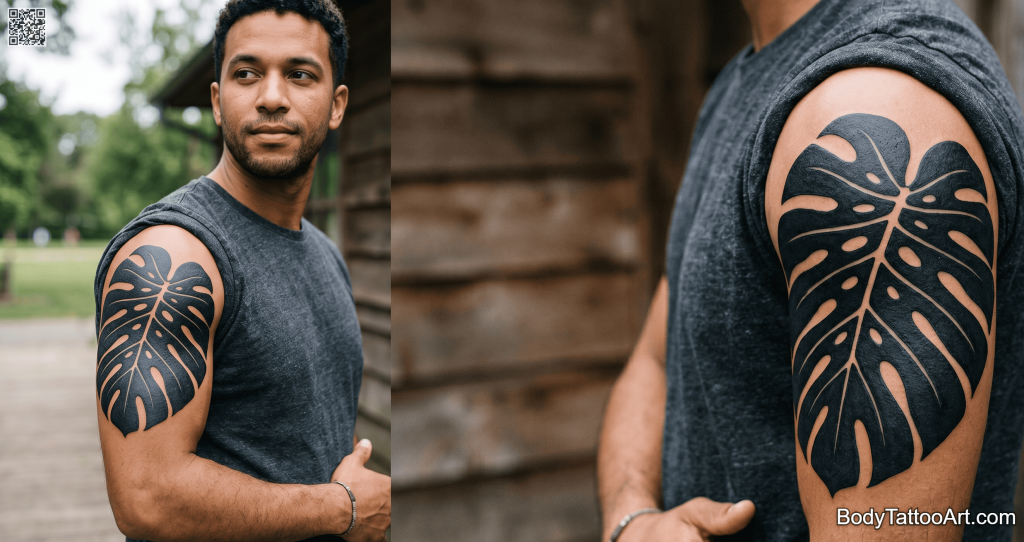
A large monstera leaf done in blackwork, with heavy ink filling the solid portions and bold cutouts left negative-space white. The characteristic holes of the monstera become the design feature — they’re crisp and intentional, creating a graphic, almost print-like quality.
Placement: Upper arm / shoulder
Style: Blackwork Leaf Tattoos
Why it stands out: The negative space does the heavy lifting here. The contrast between the solid black and the white cutouts is bold and modern.
Ideal for: Bold tattoo fans, blackwork collectors, people who like graphic design aesthetics.
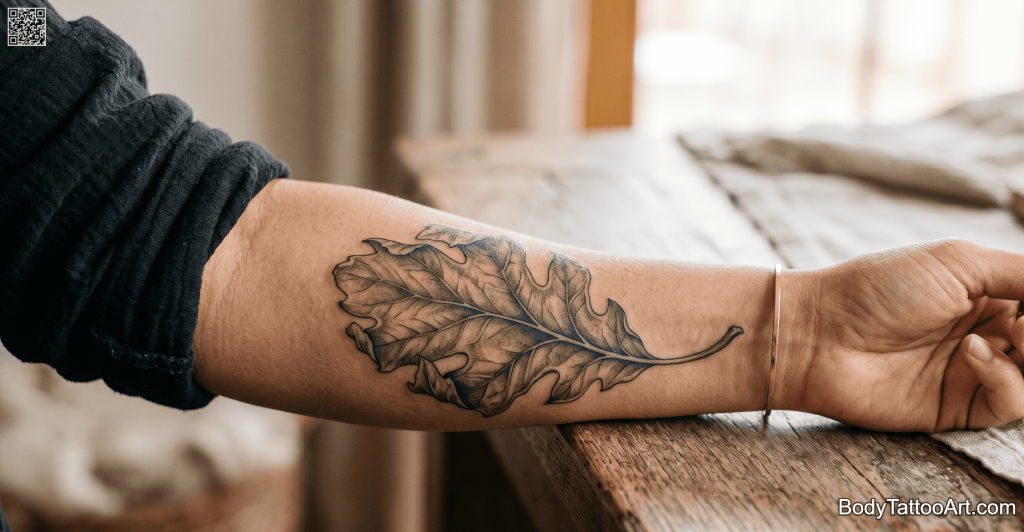
An oak leaf caught mid-fall — edges slightly curled, the surface showing the texture of a dry, aging leaf. Grey-wash shading creates depth across the ridges and lobes, with darker tones gathering near the veins and lighter areas giving the impression of natural light hitting the surface.
Placement: Forearm
Style: Grey-wash realism Leaf Tattoos
Why it stands out: The curling edges and textured shading make this feel like a real leaf, not a drawing of one. It has genuine depth.
Ideal for: Nature lovers, realism tattoo fans, people building a nature-themed sleeve.
If you enjoy botanical tattoo styles, the flower tattoo idea blogs covers everything from peonies to wildflowers in similar detail.
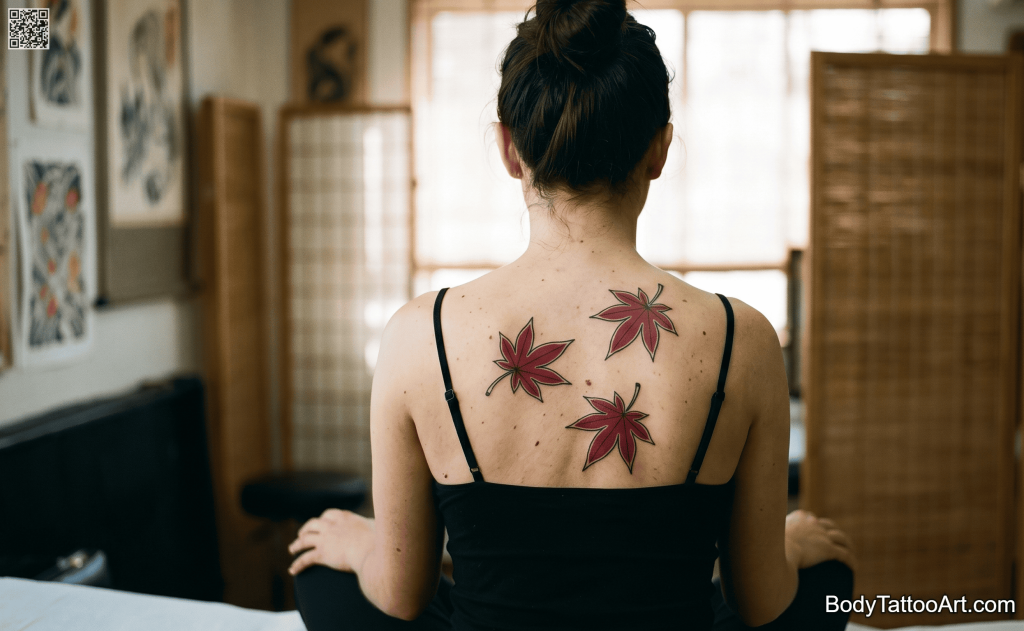
Three Japanese maple leaves arranged in a loose, falling pattern — as if caught mid-drop. Each leaf is at a slightly different angle. The style is traditional Japanese with bold outlines and flat color fills in deep red tones, keeping the palette tight and the shapes clean.
Placement: Back of the neck / upper back
Style: Japanese traditional Leaf Tattoos
Why it stands out: The three-leaf arrangement creates natural movement. The traditional Japanese line weight gives it a timeless, graphic quality.
Ideal for: Fans of Japanese tattoo aesthetics, people wanting something compact but culturally rich.
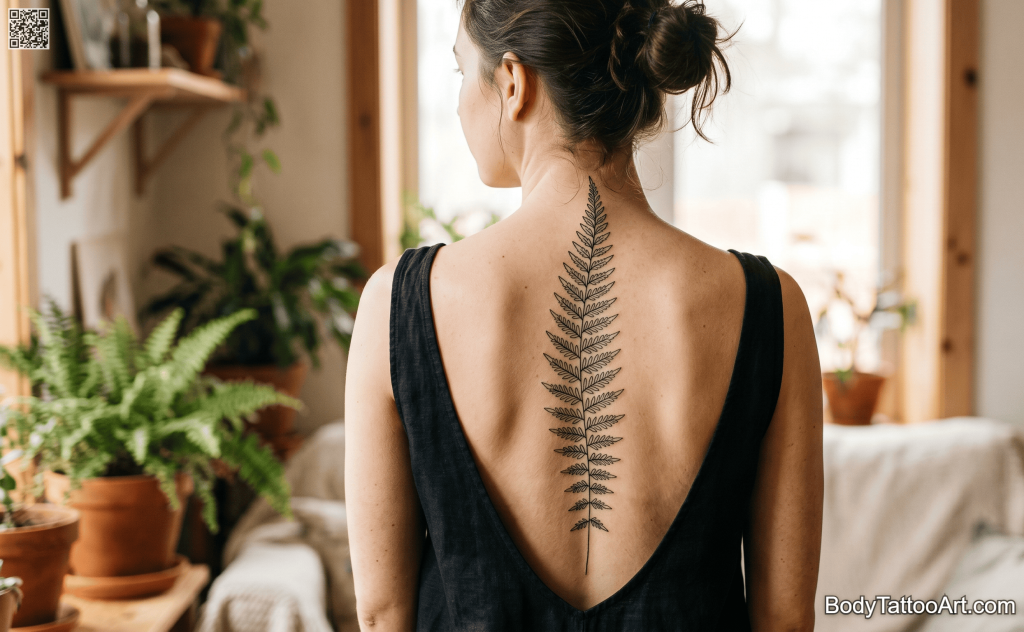
A single fern frond running vertically along the spine, each leaflet branching off symmetrically in fine line. The composition takes advantage of the spine’s natural line — the frond almost looks like it belongs there. Delicate and precise, with no shading, just clean ink.
Placement: Spine / center back
Style: Fine line Leaf Tattoos
Why it stands out: The placement does everything. The frond mirrors the spine so naturally it feels less like a tattoo and more like a part of the body.
Ideal for: People who love placement-driven designs, minimalists, those wanting a full-back-length piece that’s still subtle.
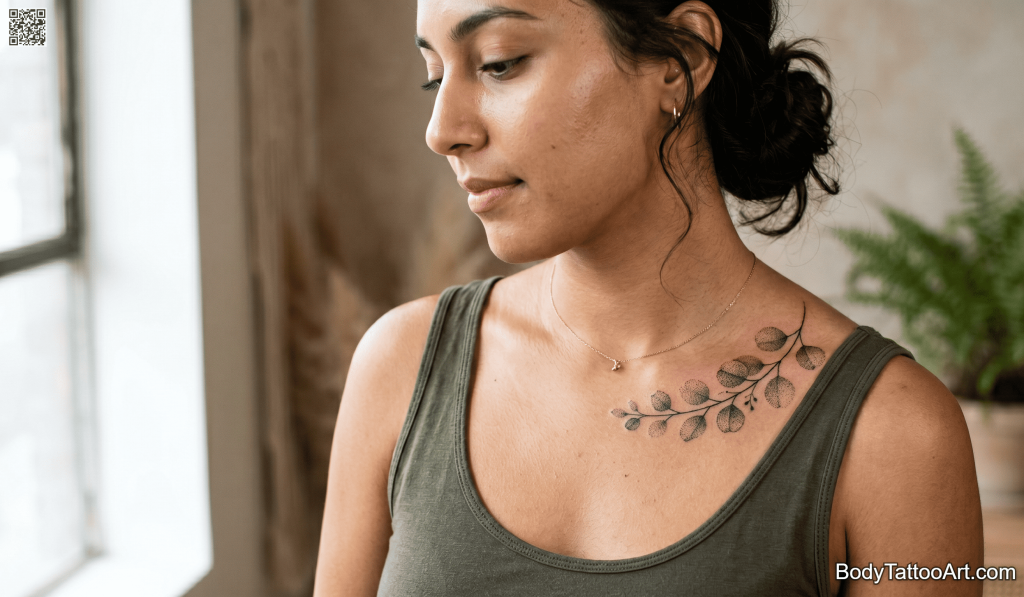
A eucalyptus branch with small rounded leaves, done entirely in dotwork. The dots are densest near the central stem and fade outward, giving each leaf a soft, almost watercolor-like edge. The overall effect is airy and textured at the same time.
Placement: Collarbone / upper chest
Style: Dotwork Leaf Tattoos
Why it stands out: The dot density gradient creates a shading effect that looks completely different from regular ink shading. It’s subtle but technically impressive up close.
Ideal for: Detail-oriented tattoo enthusiasts, people who appreciate craft over flash.
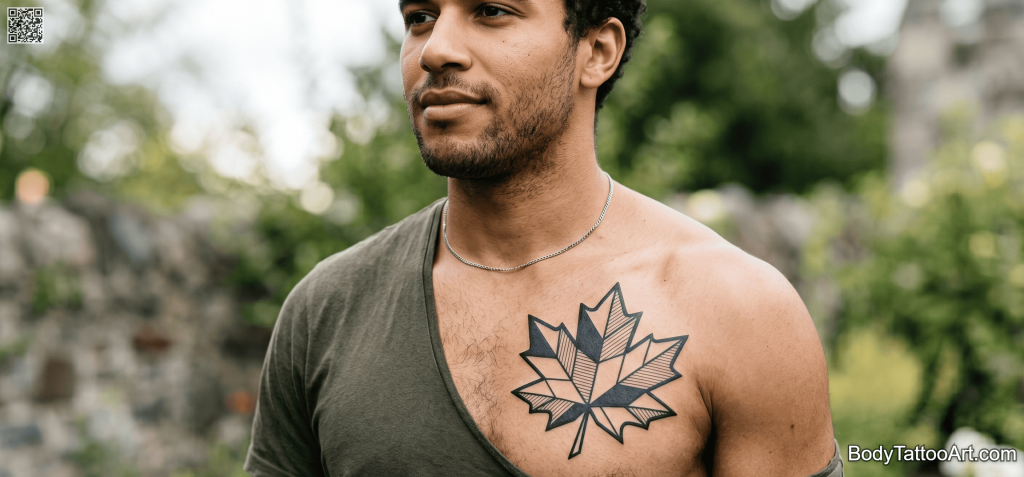
A leaf shape — roughly maple — broken into geometric segments. Each section is filled differently: some solid black, some with fine hatching lines, some left empty. The result is a fragmented, modern take on the classic leaf form.
Placement: Upper chest / pectoral
Style: Geometric / abstract Leaf Tattoos
Why it stands out: It takes something organic and deconstructs it. The contrast between the filled and empty sections creates visual tension that keeps the eye moving.
Ideal for: People who like contemporary art-inspired tattoos, fans of geometric work
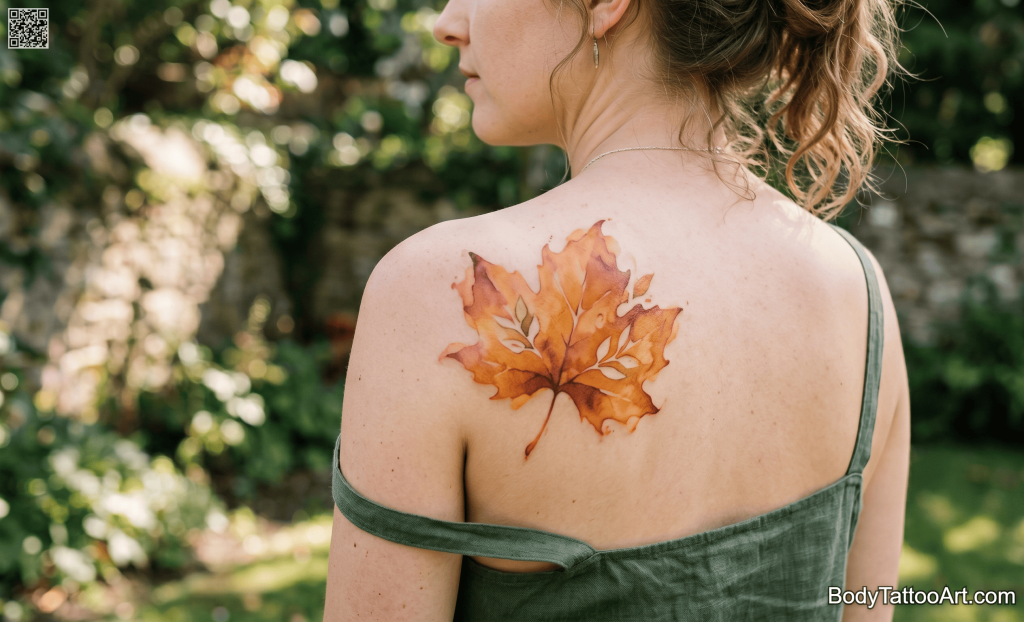
A single broad leaf — roughly an elm or sycamore shape — done in loose watercolor style. Washes of amber, burnt orange, and yellow overlap and bleed at the edges. No outlines. The edges of the leaf are soft and slightly undefined, as if the color itself is defining the shape.
Placement: Shoulder blade
Style: Watercolor Leaf Tattoos
Why it stands out: The absence of a black outline is intentional and bold. The color bleeding at the edges makes it look like a brushstroke on skin rather than a tattoo.
Ideal for: Color tattoo lovers, people who want something painterly and soft
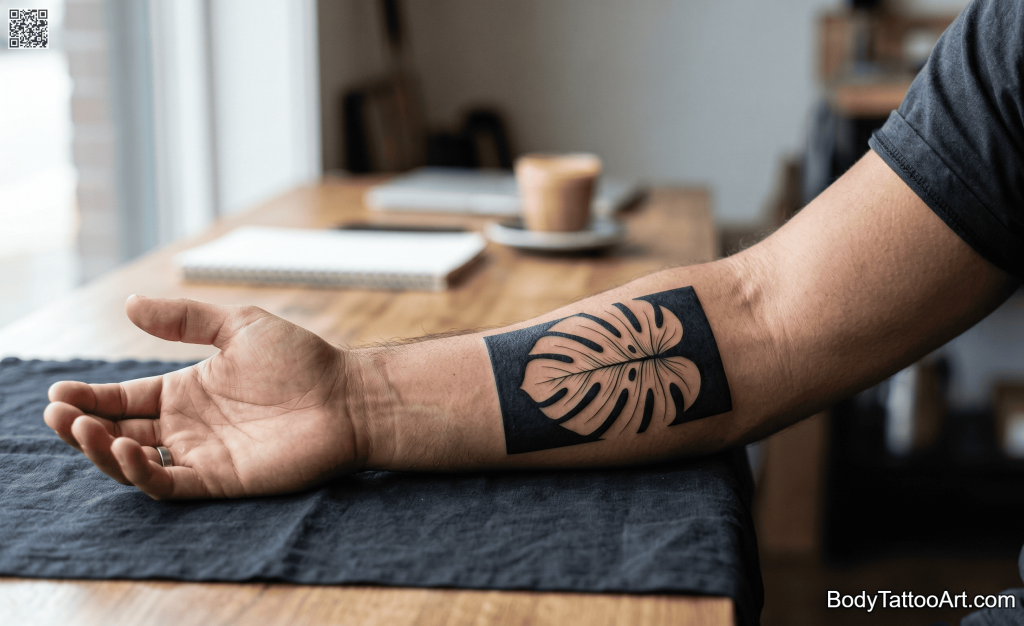
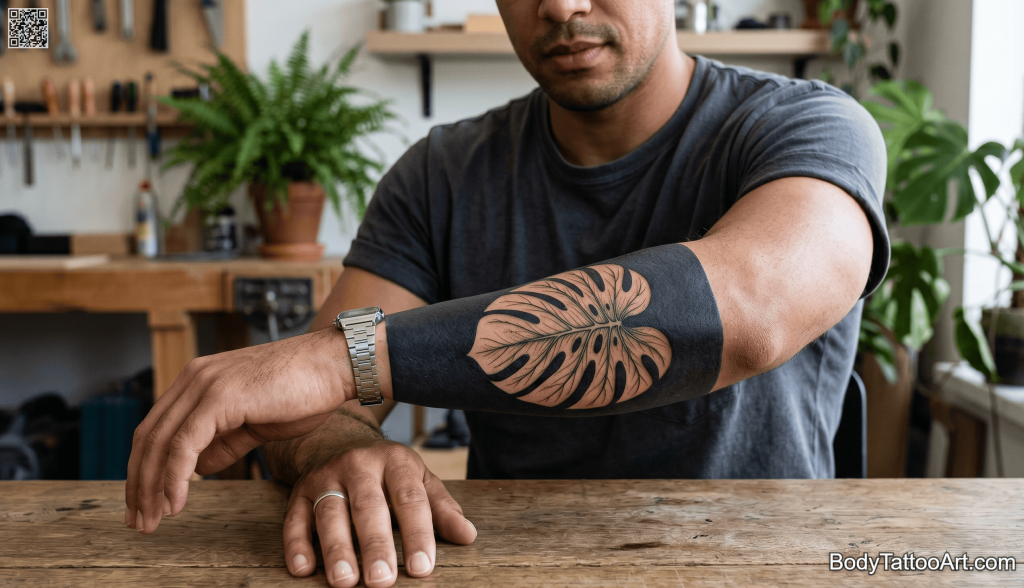
A bold, solid black rectangle with a tropical leaf shape cut out of it in negative space — the leaf itself is the skin, surrounded by ink. The leaf’s veins are added as thin black lines running through the negative space, giving it structure without filling it in.
Placement: Inner forearm
Style: Negative space blackwork Leaf Tattoos
Why it stands out: The concept is flipped — the leaf isn’t inked, the space around it is. It’s a clever design decision that makes the skin itself part of the tattoo.
Ideal for: Conceptual tattoo fans, blackwork lovers, people who want something genuinely unusual.
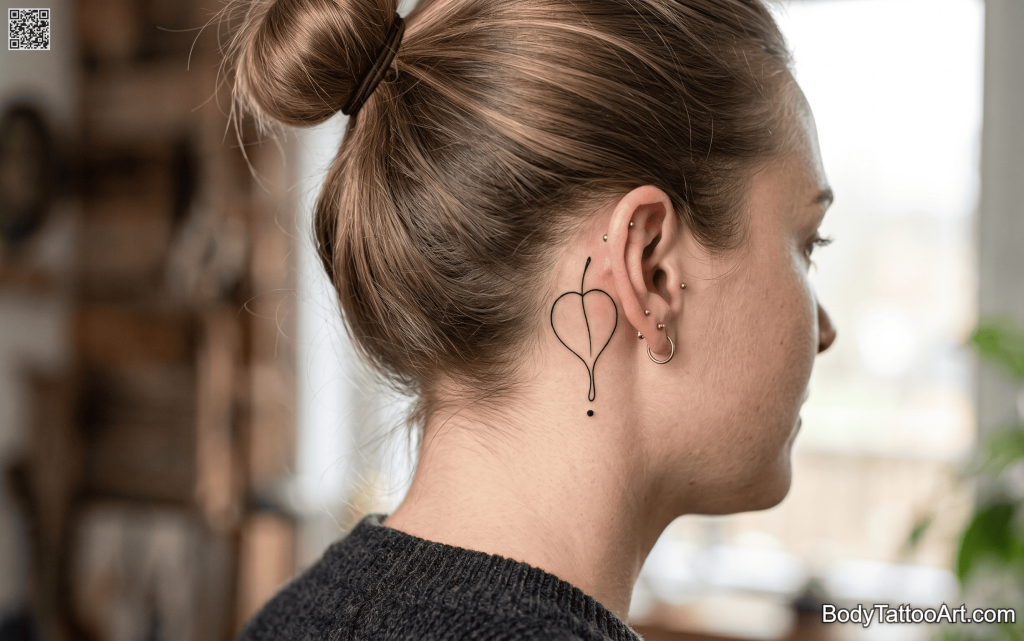
A simple, clean outline of a peepal leaf — the long drip-tip and heart-shaped base are the design. The line is single-weight, perfectly smooth, with just one small filled dot at the stem end. Nothing more.
Placement: Behind the ear
Style: Minimalist single-line Leaf Tattoos
Why it stands out: Total restraint. The peepal’s distinctive silhouette is recognizable enough that it doesn’t need anything added to it.
Ideal for: Minimalists, first-timers, people who want something culturally meaningful without being loud about it.
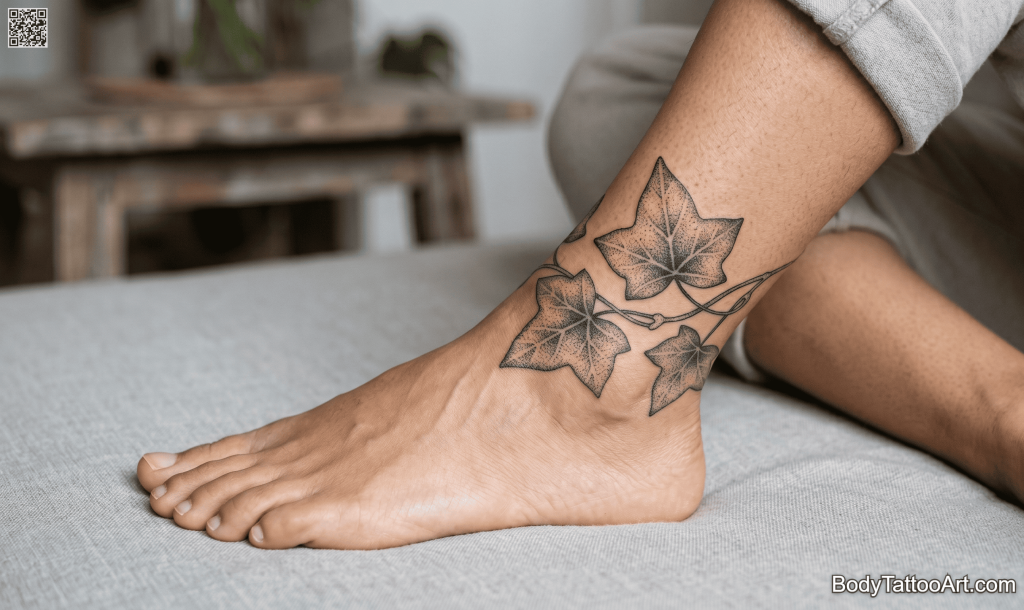
Three ivy leaves wrapping slightly around the ankle, each one stippled in fine dots that gradually darken toward the leaf center. The leaves overlap slightly, creating a layered look. The stems are thin fine lines connecting them into one cohesive unit.
Placement: Ankle
Style: Stippling / dotwork Leaf Tattoos
Why it stands out: The stippling gives each leaf a soft, almost etched quality. The way they wrap the ankle feels natural rather than placed.
Ideal for: People who want ankle tattoos that feel organic, dotwork lovers.
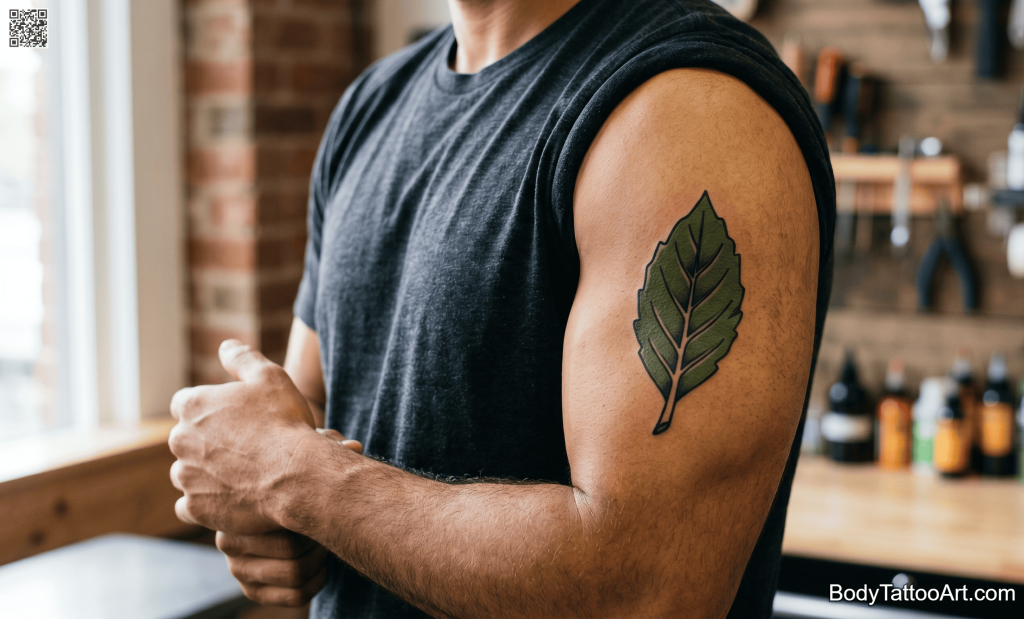
A single bay leaf done in American traditional style — thick black outline, flat green fill, minimal detail inside. The leaf is upright and centered, with a short stem at the base. It’s uncomplicated and confident, exactly what traditional tattooing does best.
Placement: Upper arm
Style: American traditional Leaf Tattoos
Why it stands out: Traditional tattooing relies on shape and clarity, and the bay leaf’s simple elongated form is perfect for it. Clean, graphic, built to age well.
Ideal for: Traditional tattoo fans, people building a classic American traditional sleeve.
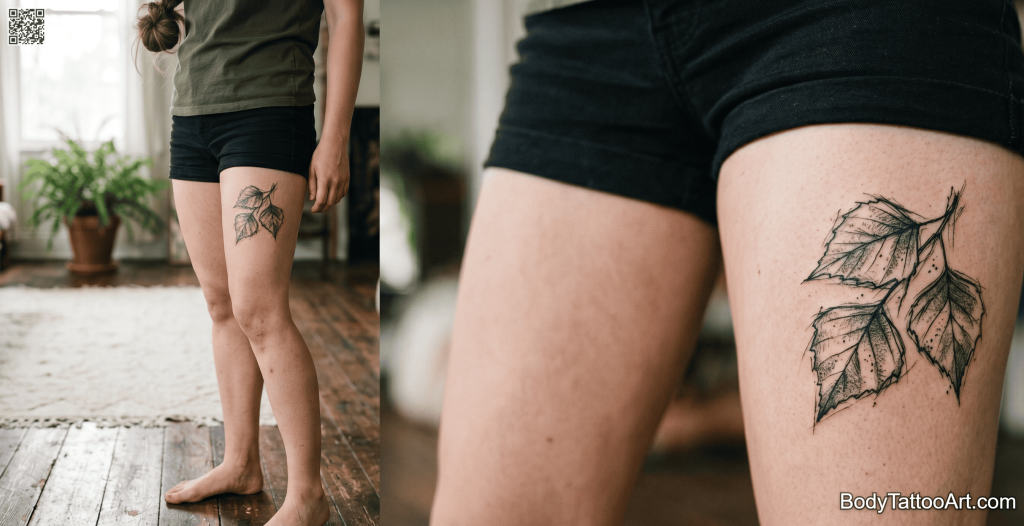
Three birch leaves in a loose cluster, done in a rough sketch style — intentionally imperfect lines, cross-hatching for shading, visible pencil-like strokes. It looks like someone lifted a botanical sketch directly off paper and onto skin.
Placement: Outer thigh
Style: Sketch / illustrative Leaf Tattoos
Why it stands out: The deliberate imperfection is the whole point. The sketch quality gives it a handmade, personal quality that polished tattoos don’t always have.
Ideal for: Art lovers, people who prefer illustrative over fine line, those building thigh pieces.
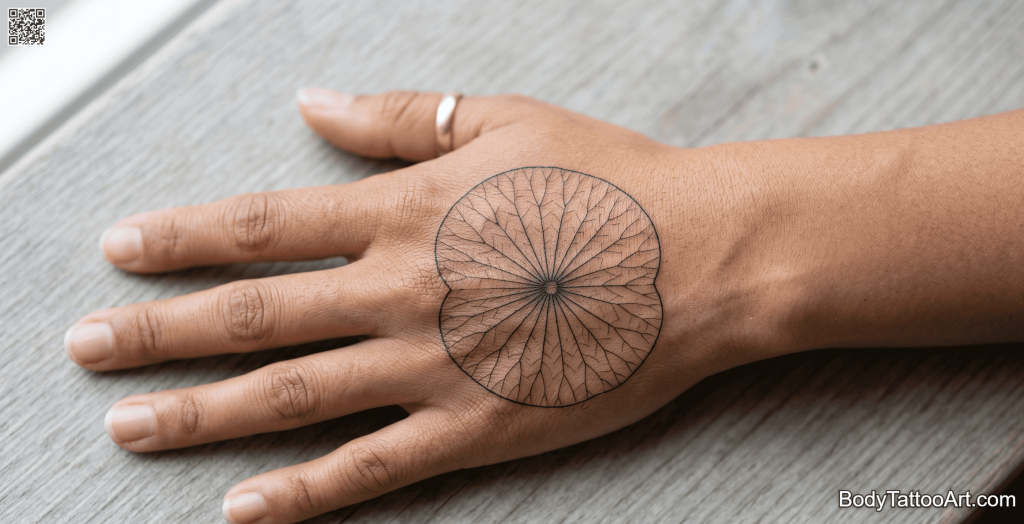
A lotus leaf viewed from above — perfectly round, with radiating veins spreading from a central point. Rendered in clean, even linework with no shading. The veins are precise and evenly spaced, giving it an almost mandala-like symmetry without being one.
Placement: Back of the hand
Style: Fine line geometric Leaf Tattoos
Why it stands out: Viewed from above, the lotus leaf has a natural radial symmetry that works beautifully on the back of the hand. The placement and the design echo each other.
Ideal for: People who love placement-aware tattoos, fine line fans, anyone building hand tattoos.
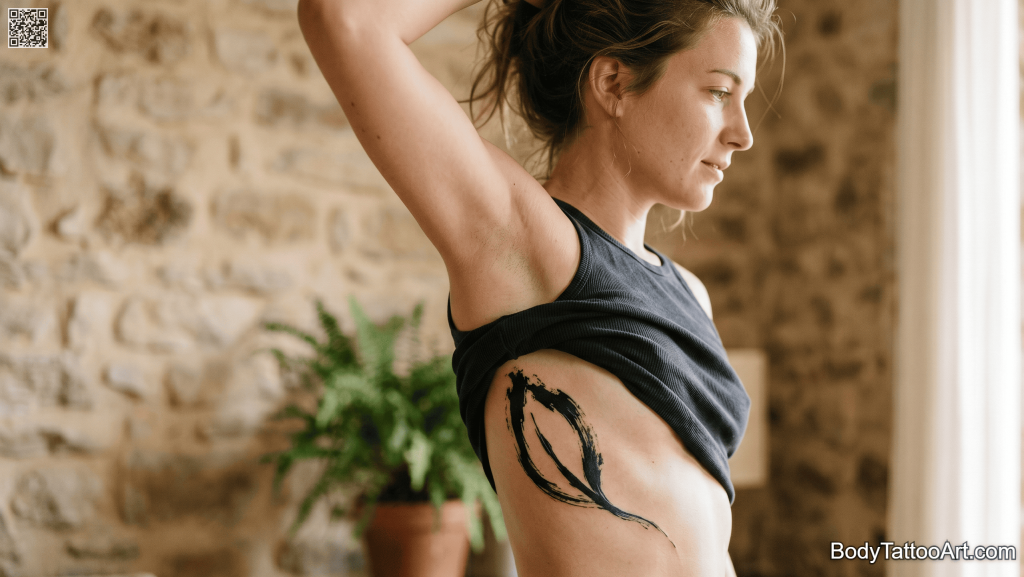
A single leaf shape created with one thick, sweeping brushstroke — the kind of mark a calligraphy brush makes. The edges are slightly uneven, the ink thins toward the top, and the overall shape is leaf-like but not botanically specific. It’s more gesture than illustration.
Placement: Ribcage / side
Style: Abstract brushwork Leaf Tattoos
Why it stands out: The single brushstroke quality gives it spontaneous energy. It’s one of those tattoos that looks effortless but is actually quite difficult to execute well.
Ideal for: People who appreciate gestural art, minimalists who want movement in their design.
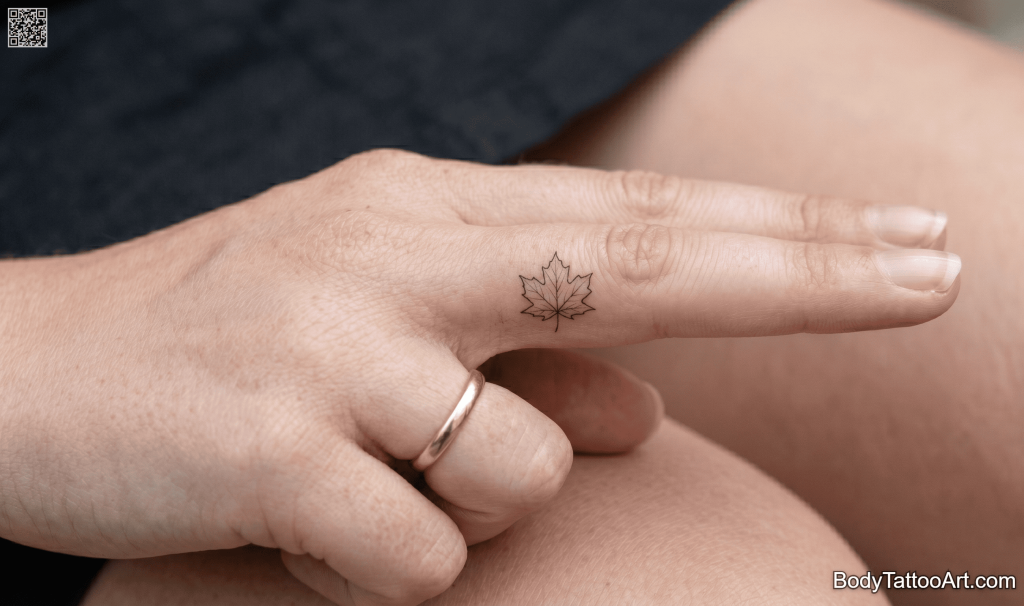
A tiny maple leaf on the side of a finger, done in crisp micro-fine line. The leaf is small enough to fit between the knuckle and the finger’s base, with each lobe visible and the veins just barely suggested.
Placement: Side of finger
Style: Micro fine line Leaf Tattoos
Why it stands out: Scale is everything here. The detail packed into something so small is what makes it impressive. It rewards close inspection.
Ideal for: People who love tiny tattoos, those adding to knuckle or finger collections.
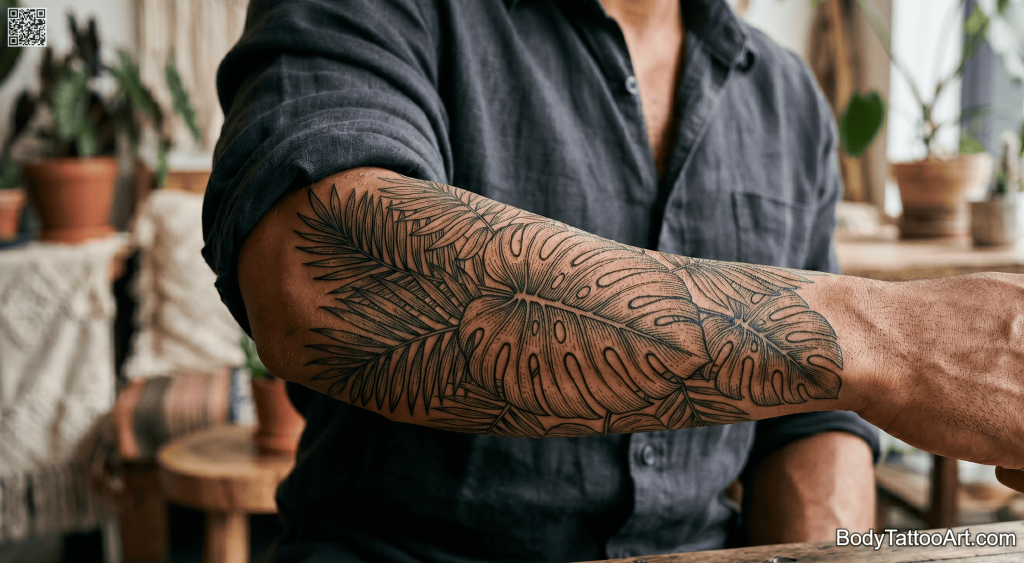
A large banana or tropical leaf done in an old engraving style — every bit of shading created through fine parallel lines and cross-hatching. No grey wash. Just lines at different densities building up shadow and form. The result looks like something out of a 19th-century botanical illustration.
Placement: Full forearm / sleeve section
Style: Engraving / etching Leaf Tattoos
Why it stands out: The engraving style on skin looks like a printed illustration. The density variation in the hatching lines creates impressive depth without a single grey tone.
Ideal for: People who love vintage illustration aesthetics, collectors building detailed arm pieces.
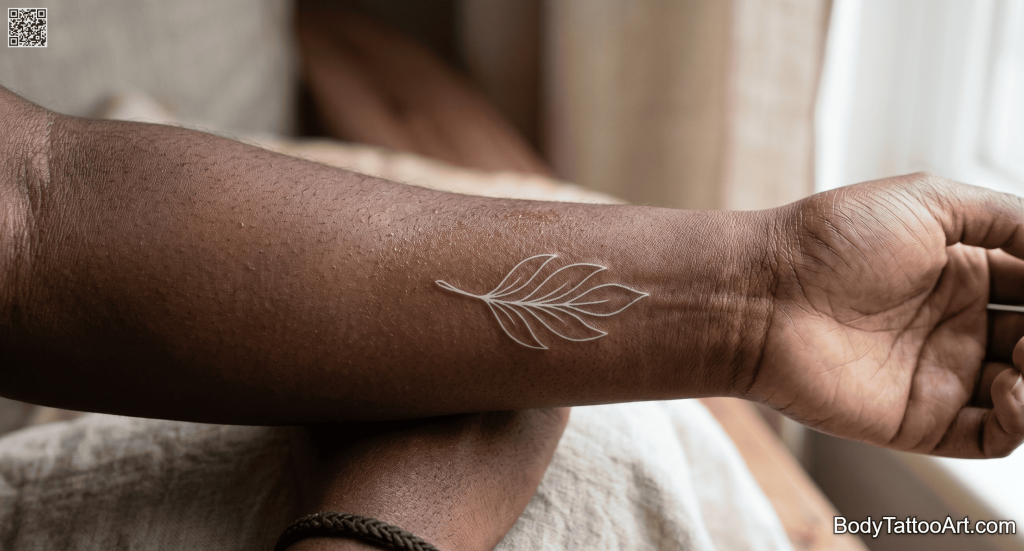
A delicate leaf outline tattooed in white ink on deep brown skin. The design is a simple symmetrical leaf — no complex shading — relying entirely on the white ink’s contrast against the skin tone. Subtle, visible only up close, with an almost ghostlike quality.
Placement: Inner forearm
Style: White ink Leaf Tattoos
Why it stands out: White ink on dark skin creates a totally different visual than black ink — it’s understated, intimate, and unusual. The effect is closer to a scar or a brand than a traditional tattoo.
Ideal for: People with deeper skin tones wanting something subtle, those interested in white ink work.
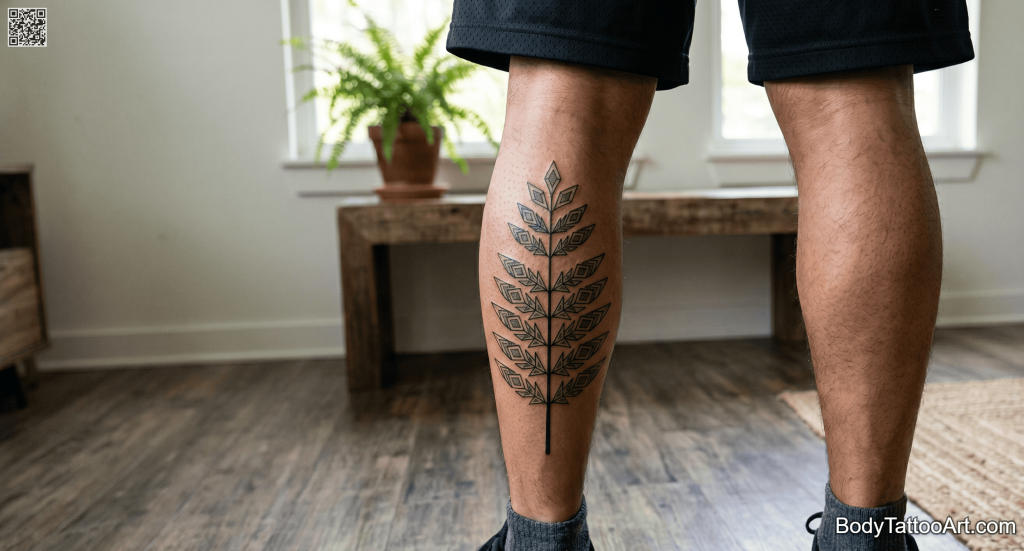
A single fern frond where each leaflet is replaced with a small geometric triangle or diamond shape. The central stem remains as a clean line, but the organic leaf forms are swapped out for angular shapes. It reads as a fern only when you look at the whole — up close, it’s all geometry.
Placement: Calf
Style: Geometric Leaf Tattoos
Why it stands out: The concept plays with recognition — familiar structure, unfamiliar details. It sits right at the edge of abstract and botanical.
Ideal for: Geometric tattoo fans, people who want nature-inspired work with a modern twist.
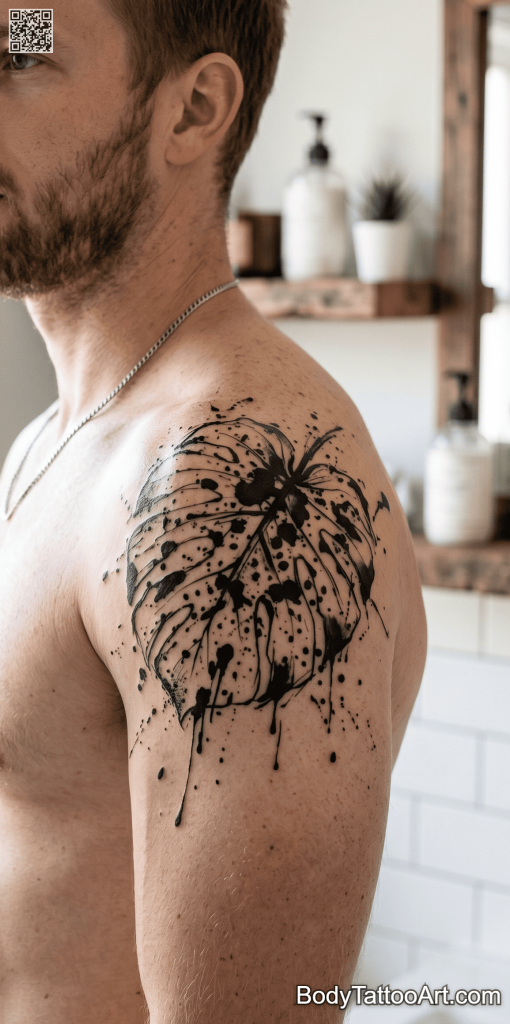
A leaf shape — simple, broad — where the body of the leaf is made up of ink splatters and drips rather than solid fill or linework. The outline is present but loose, and the interior is organic and unpredictable. No two of these would ever look the same.
Placement: Shoulder / upper arm
Style: Abstract ink splash Leaf Tattoos
Why it stands out: The randomness is the point. The splatter technique makes it feel alive and unrepeatable, which is a strong quality in a permanent piece.
Ideal for: People who like expressive, painterly tattoos, fans of abstract work.
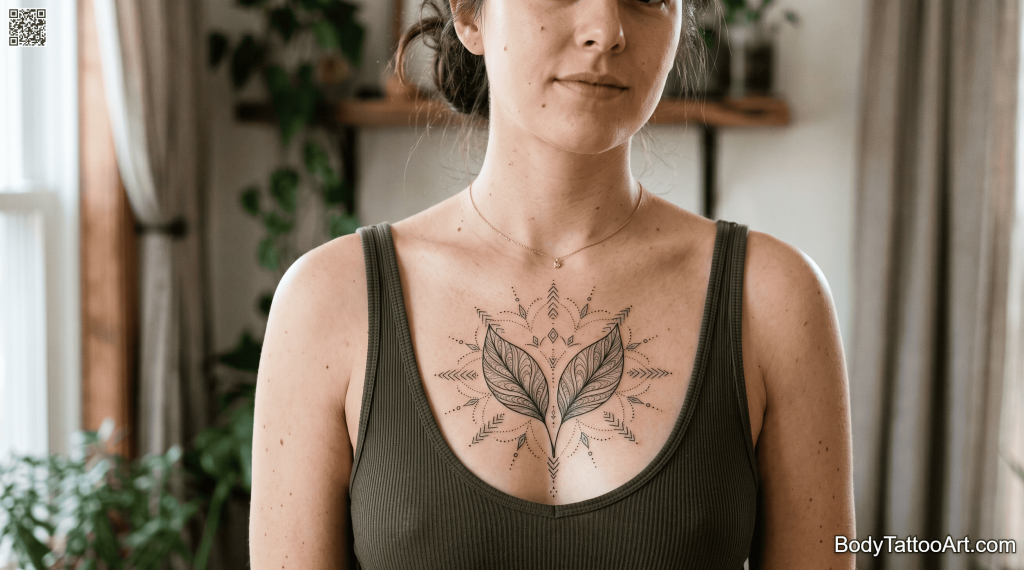
Two mirrored leaves placed symmetrically, their stems touching at the center, with fine dot details and small geometric marks radiating from the join point. It reads as a mandala fragment — balanced and precise — but the leaves are clearly still the main subject.
Placement: Center chest / sternum
Style: Fine line mandala-adjacent Leaf Tattoos
Why it stands out: The symmetry is clean and intentional. The placement along the sternum amplifies the sense of balance — the design and the body work together.
Ideal for: People who love sternum tattoos, those who want something geometric but still natural.
A solid blackout rectangle on the forearm with a single leaf shape left as negative space — the leaf is untouched skin surrounded entirely by dense black ink. Inside the leaf space, fine vein lines are tattooed in black over the skin.
Placement: Forearm
Style: Blackout / negative space Leaf Tattoos
Why it stands out: The blackout background is a bold commitment. The contrast between the solid black and the exposed skin leaf is dramatic and graphic. It takes guts but looks striking.
Ideal for: People comfortable with bold, heavy tattoos, blackwork enthusiasts, those covering old work.
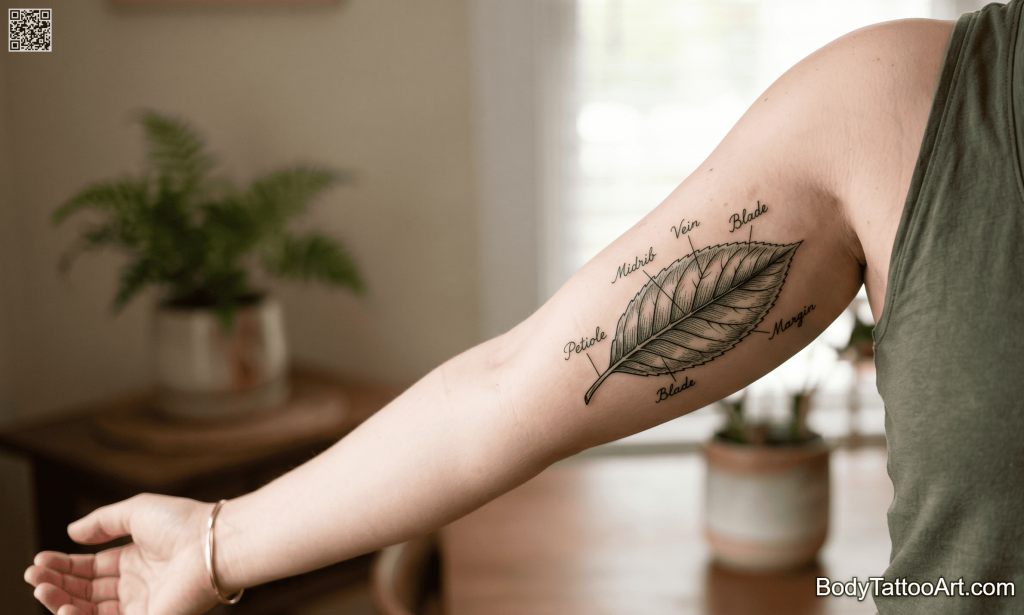
A single large leaf rendered in the style of a scientific botanical illustration — labeled with small handwritten-style text noting parts of the leaf (blade, midrib, petiole), with fine line shading suggesting depth. It looks like an anatomical diagram.
Placement: Upper arm / inner bicep Leaf Tattoos
Style: Illustrative botanical
Why it stands out: The fake-label detail makes it feel like a page from a field journal. It’s conceptually clever — wearing your own annotated botanical study.
Ideal for: Science and nature enthusiasts, people who love illustrated reference-style tattoos.
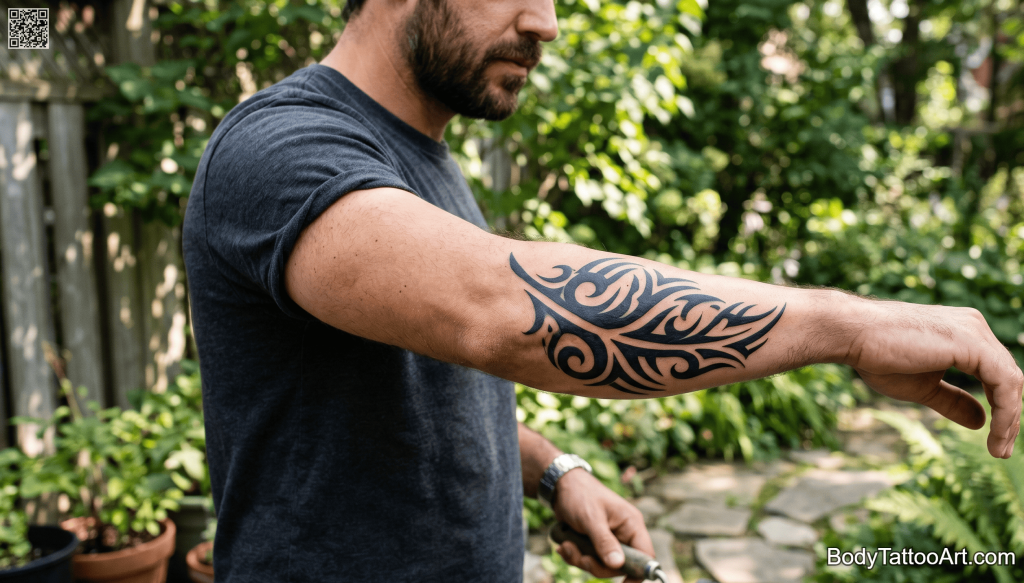
A stylized leaf form built from thick black tribal-style marks — bold curves, tapered ends, and interlocking shapes that together suggest a leaf without literally depicting one. The design is solid black with no outlines, just the shapes themselves.
Placement: Outer forearm
Style: Tribal / blackwork Leaf Tattoos
Why it stands out: It bridges traditional tattoo mark-making with botanical subject matter. The abstraction is subtle enough that the leaf is still readable, but the tribal quality is unmistakable.
Ideal for: People drawn to tribal aesthetics, fans of bold black tattoos.
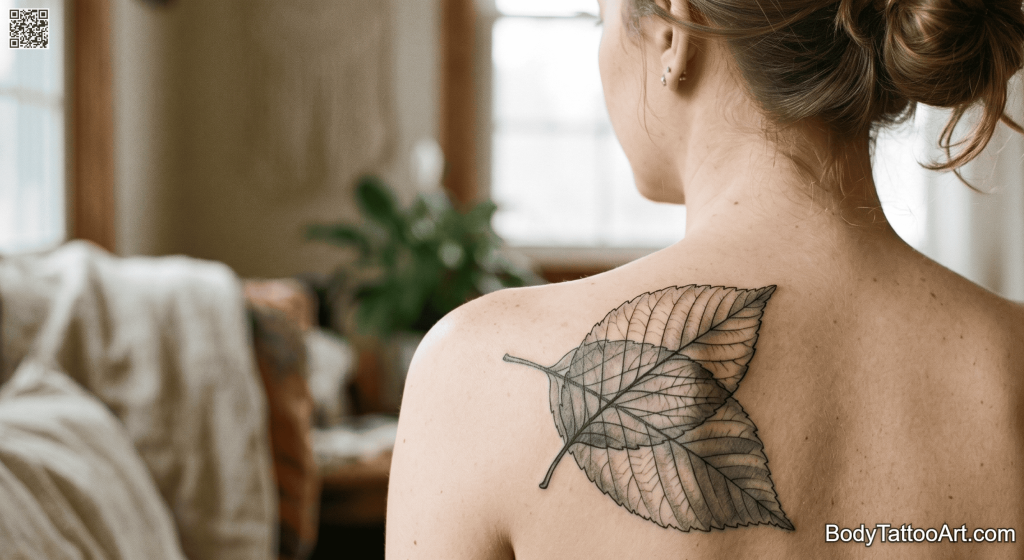
Two large leaves, same species, overlapping each other with the overlap area showing the combined vein structure of both. Done in grey-wash with careful shading that suggests translucency — the lower leaf is visible through the upper one.
Placement: Back of the shoulder
Style: Grey-wash realism Leaf Tattoos
Why it stands out: The translucency effect is technically demanding and visually unusual. The overlapping veins in the shared area are the detail that makes the whole thing work.
Ideal for: Realism collectors, people wanting a nature tattoo with genuine technical depth.
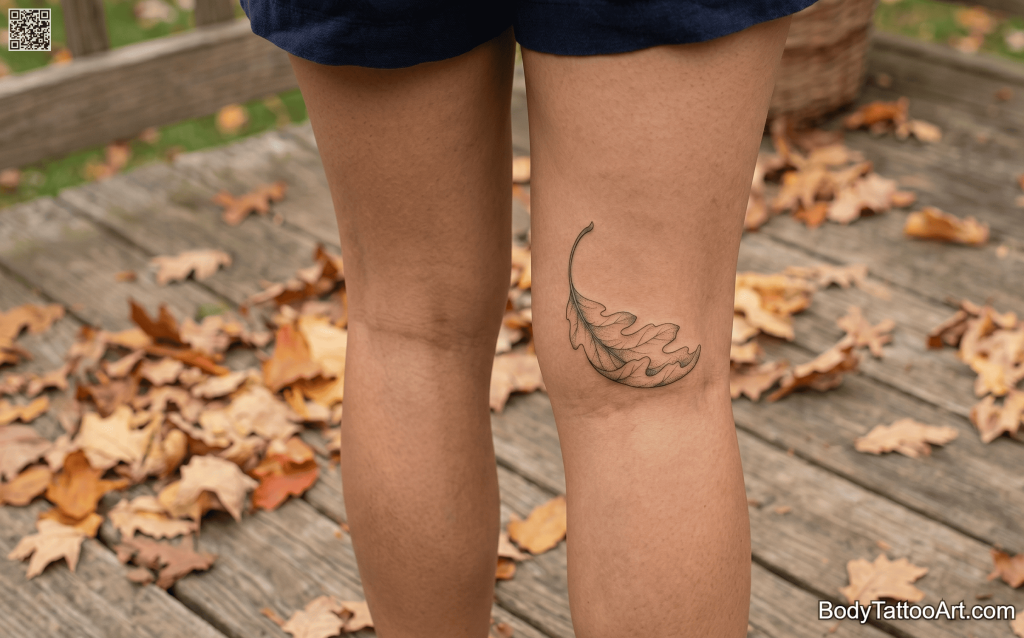
One autumn leaf — any broad deciduous variety — depicted from the side as it falls, with a slight curve to the body as if catching air. Fine line with minimal shading along one edge to suggest dimension. The stem trails above it, catching the direction of fall.
Placement: Behind the knee
Style: Fine line illustrative Leaf Tattoos
Why it stands out: The placement behind the knee is underused and genuinely interesting. The motion implied in the falling leaf interacts with the natural movement of the leg.
Ideal for: People who like placement-conscious designs, those looking for something unexpected in a hidden spot.
Leaf tattoos prove that a subject doesn’t need to be complicated to be interesting. From the white ink subtlety of design 18 to the blackout drama of design 22, the range here is genuinely wide. The key is picking the right combination of style, placement, and execution — and then trusting a skilled artist to bring it together.
Whether going minimal or bold, small or large, realistic or abstract, leaf tattoos hold their own. They age well, they suit almost every part of the body, and they carry just enough meaning to feel intentional without being heavy-handed about it. Any of the 26 leaf tattoo ideas above are worth bringing to a consultation — screenshot, save, and let the artist do the rest.