Physical Address
304 North Cardinal St.
Dorchester Center, MA 02124
Physical Address
304 North Cardinal St.
Dorchester Center, MA 02124

The shape of palm leaf is naturally dramatic — long, sweeping fronds that curve and taper — and it adapts to almost any tattoo style without losing its identity. It can go with flowers like Carnations or Cosmos, or animals like Snakes or even Wolves. Go fine line and it looks delicate. Go blackwork and it turns graphic and bold. Scale it up and it fills a thigh beautifully. Keep it small and it sits perfectly on a wrist.
Palm leaf tattoos have been picking up steam for good reason. They’re versatile, they age well, and they carry a quiet confidence that doesn’t need explaining. This blog covers 27 palm leaf tattoo ideas that are different styles, different placements, different visual languages. Something here will stick.
Palm leaf tattoos feature the fronds of palm trees as the central design element. That might sound narrow, but the visual range is surprisingly wide. A palm frond can be rendered as a single sweeping arc, a full fan shape, a detailed botanical study, or an abstract form that barely resembles a leaf at all. The subject itself is simple — the execution is where the personality comes in.
Palm leaf tattoos work as standalone pieces or as part of larger nature-themed sleeves and back pieces. They suit men and women equally, look at home on almost every body part, and hold up well as the skin changes over time — especially the bolder styles.
The palm leaf has carried meaning across cultures for thousands of years. In ancient Rome and Greece, palm branches symbolized triumph and victory — winners of athletic competitions were handed palm fronds, not flowers. In Christian tradition, the palm branch represents peace and the arrival of a king. In Hindu and South Asian contexts, palm leaves were literally used as writing surfaces, connecting them to knowledge, preservation, and sacred text. The ancient Hindu epic of Mahabharata was also said to be initially written on dried palm leaves.
More broadly, the palm tree itself — and by extension its leaves — is associated with resilience. These trees grow in harsh conditions, bend dramatically in storms, and rarely break. That combination of flexibility and durability resonates with a lot of people who choose palm leaf tattoos.
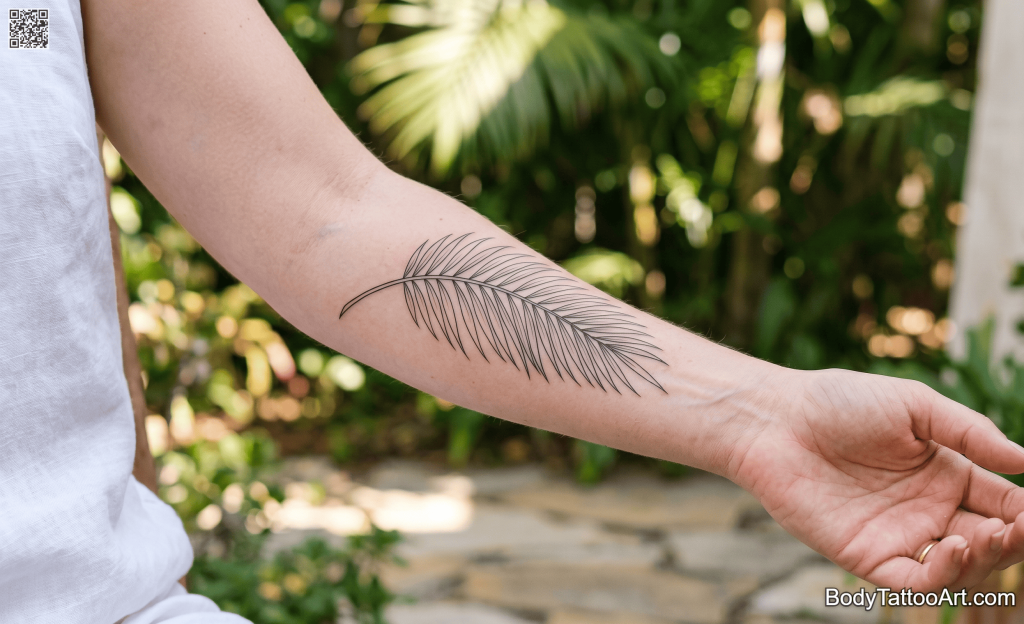
A single long palm frond sweeping in a gentle arc, rendered in fine line. Each leaflet comes off the central spine at a slight angle, creating a natural rhythm along the curve. The lines are clean, consistent, and unhurried — no shading, just the outline doing all the work.
Placement: Inner forearm
Style: Fine line botanical Palm Leaf Tattoos
Why it stands out: The arc shape follows the natural curve of the forearm perfectly. It doesn’t fight the body — it moves with it.
Ideal for: Minimalists, first-timers, people who want something clean and wearable
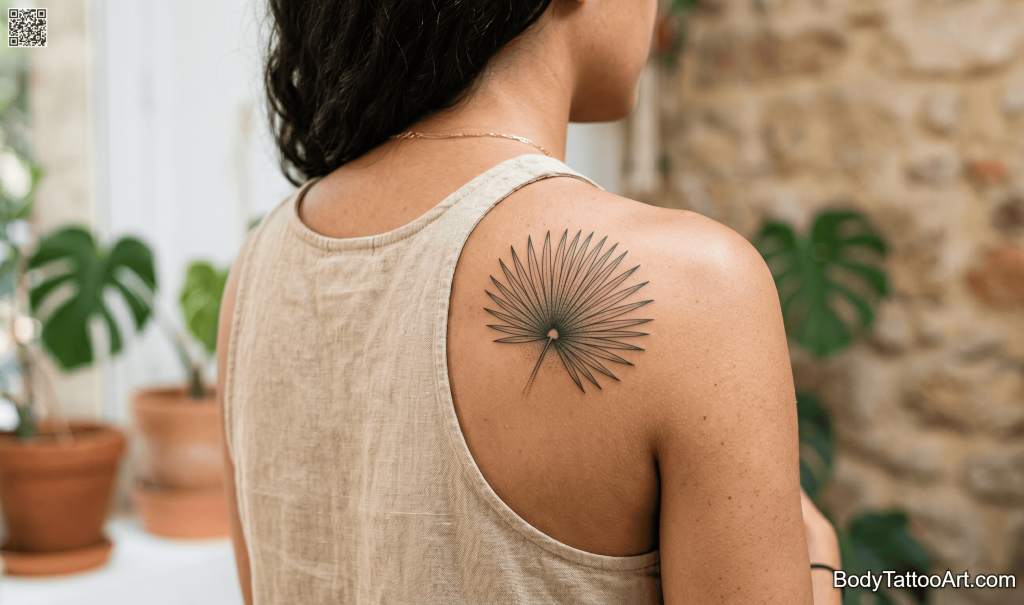
A fan palm leaf viewed from directly above — the kind where all the leaflets radiate from a single central point in a perfect semicircle. Done in fine line with subtle dot shading near the base where the leaflets meet, fading out toward the tips.
Placement: Back of the shoulder / shoulder blade
Style: Fine line with dotwork detail Palm Leaf Tattoos
Why it stands out: The top-down view turns the palm leaf into something almost architectural. The radial symmetry is naturally satisfying to look at.
Ideal for: People who love placement-aware designs, botanical tattoo fans.
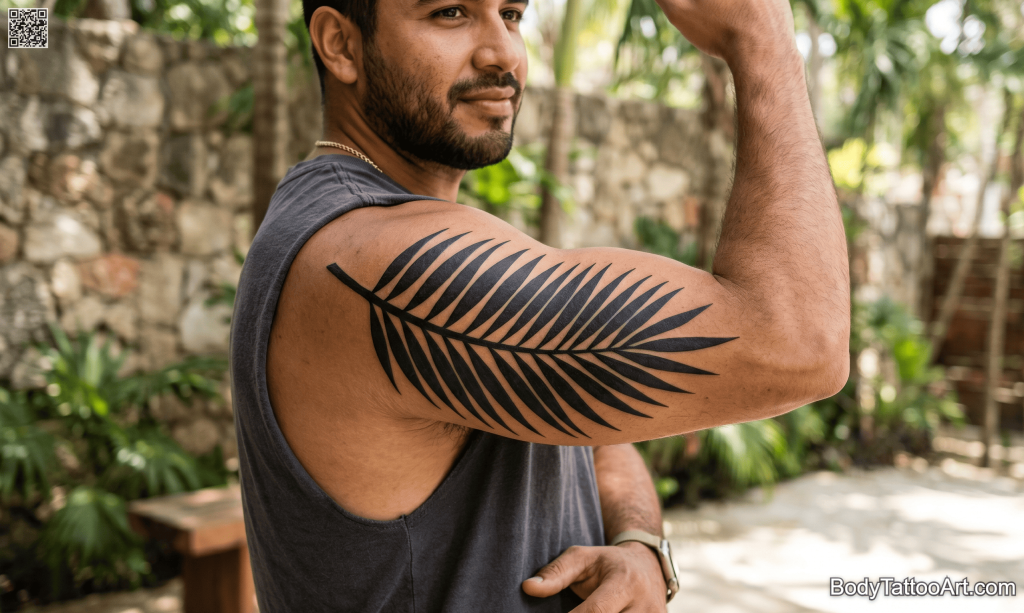
One large palm frond, fully inked in solid black. The central spine is a strong thick line, and each leaflet is a filled black shape tapering to a sharp tip. No gradients, no shading — just the raw contrast of black against skin.
Placement: Upper arm
Style: Blackwork Palm Leaf Tattoos
Why it stands out: Palm leaf tattoos in blackwork have a graphic, almost poster-like quality. The filled leaflets create natural negative space between them that gives the design breathing room.
Ideal for: Bold tattoo fans, blackwork collectors, people who want something with real visual weight.
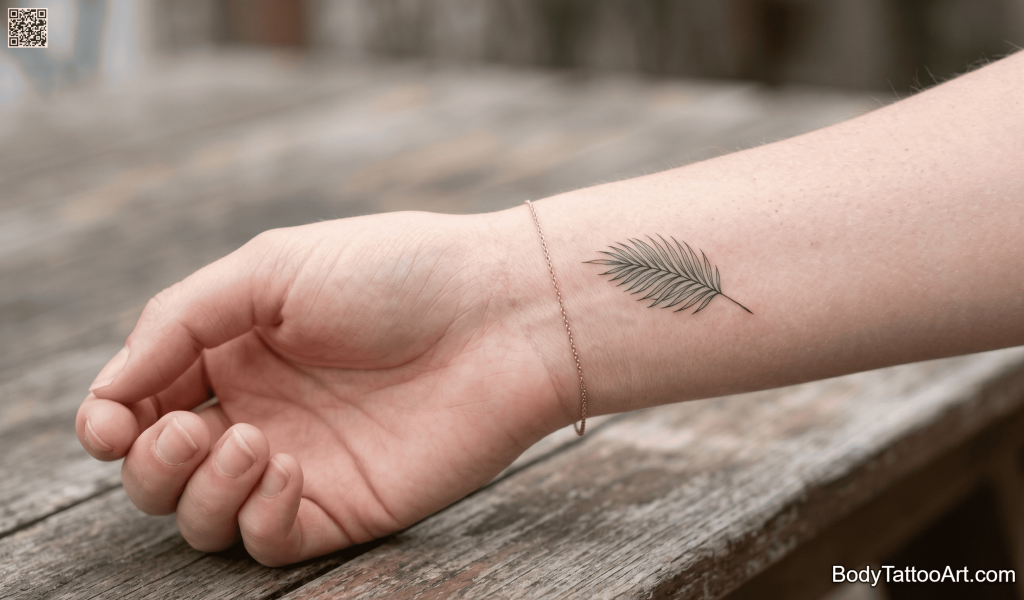
A tiny palm frond sitting just above the wrist bone — small enough to look effortless but detailed enough to reward a close look. Each leaflet is rendered in micro-fine line, with the whole design fitting in about 3 centimetres.
Placement: Wrist
Style: Micro fine line Palm Leaf Tattoos
Why it stands out: Scale does the work here. Getting this level of detail into something this small is what makes micro tattoos impressive. It’s a design that earns a second glance.
Ideal for: People who love tiny tattoos, those adding to a wrist or hand collection.
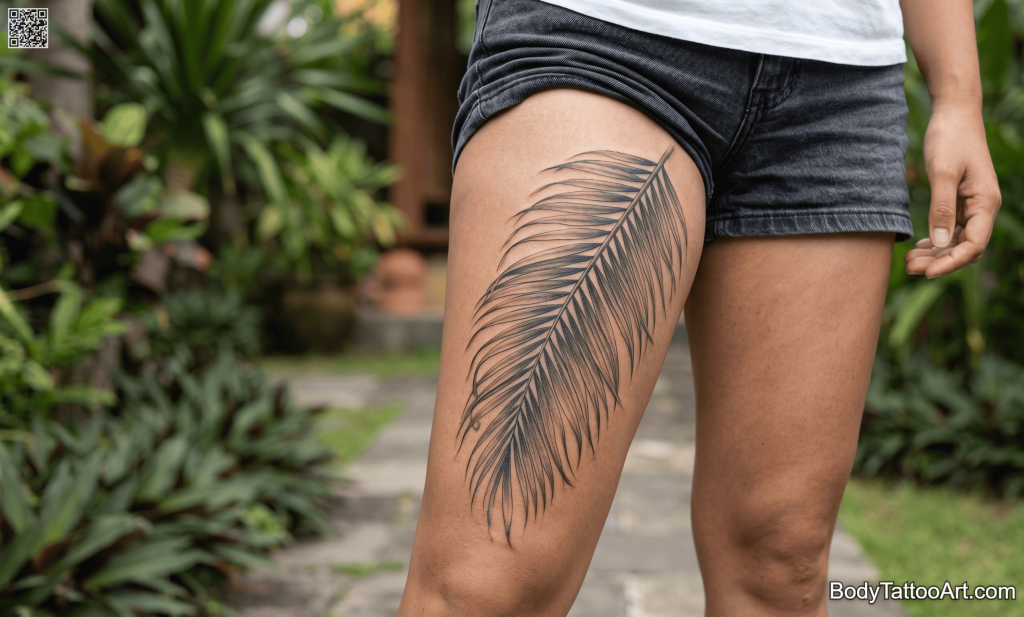
A long coconut palm frond rendered in grey-wash realism. The leaflets droop slightly at the tips, catching a sense of weight and movement. Shading builds up along the central spine and fades outward, giving each leaflet a rounded, three-dimensional form.
Placement: Thigh
Style: Grey-wash realism Palm Leaf Tattoos
Why it stands out: The drooping tips and the light-to-dark shading give this tattoo actual presence. It doesn’t look drawn — it looks like a photograph of a real frond.
Ideal for: Realism fans, people building large thigh or leg pieces.
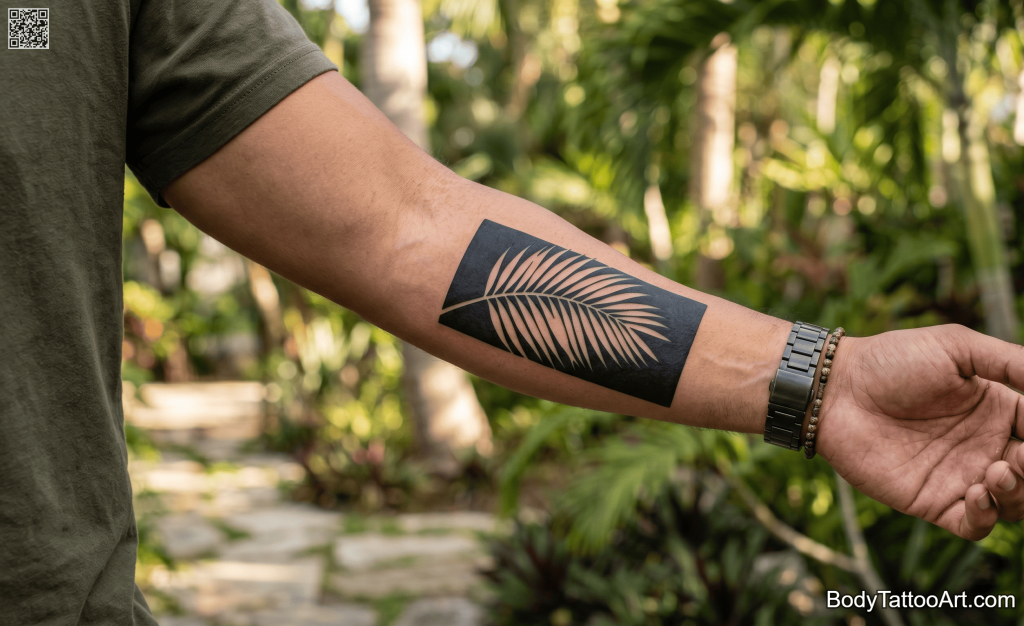
The silhouette of a full palm frond cut out of a solid black rectangle — the frond itself is skin, surrounded by heavy ink. The leaflets are defined only by the black shapes on either side of them. Simple, striking, and impossible to miss.
Placement: Inner forearm
Style: Negative space blackwork Palm Leaf Tattoos
Why it stands out: Flipping the usual approach — inking everything except the design — creates drama. The palm frond emerges from the black rather than sitting on top of it.
Ideal for: People who like conceptual tattoos, blackwork enthusiasts, those who want something genuinely uncommon.
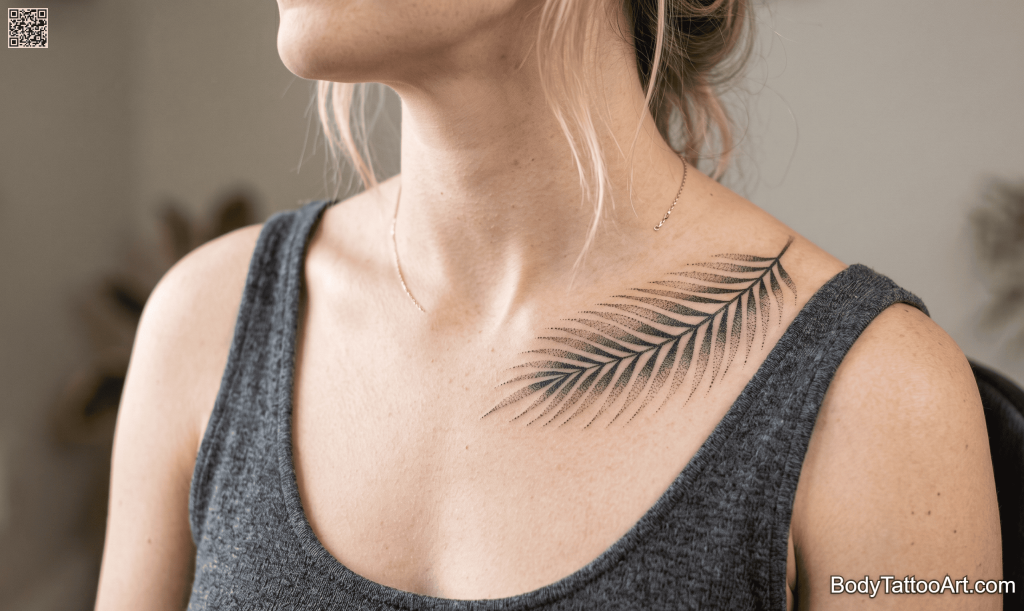
A single palm frond with leaflets rendered entirely in stippling dots — denser near the spine and fading to almost nothing at the tips. The result is a soft, textured look that sits somewhere between botanical illustration and modern tattoo art.
Placement: Collarbone / upper chest
Style: Dotwork stippling Palm Leaf Tattoos
Why it stands out: The density gradient in the dotwork creates a shading effect that’s more nuanced than regular ink shading. Up close, it’s all dots; from a distance, it reads as shadow.
Ideal for: Detail lovers, people who appreciate craft tattoos, dotwork fans.
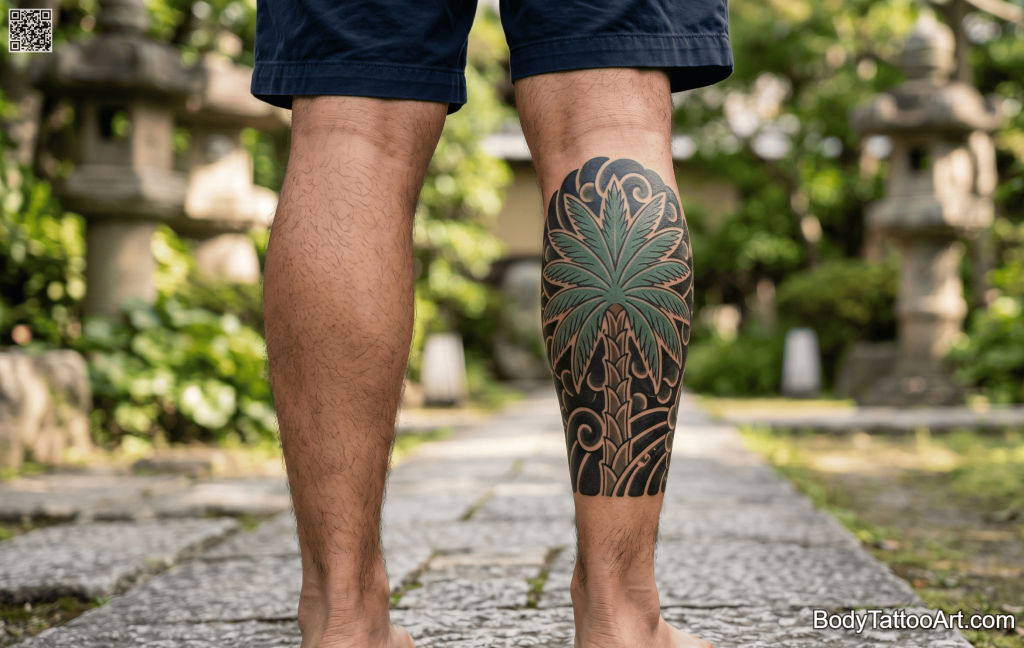
A stylized palm frond done in Japanese traditional tattooing — bold black outlines, flat color fills in muted green, and the distinctive line weight that makes Japanese tattooing instantly recognizable. The composition is upright and centered, with a short section of stem at the base.
Placement: Calf
Style: Japanese traditional Palm Leaf Tattoos
Why it stands out: Japanese traditional style handles organic subjects with a confidence that few other styles match. The bold outlines and flat fill make the palm frond look like it belongs on a woodblock print.
Ideal for: Japanese tattoo fans, people building traditional sleeves or leg pieces.
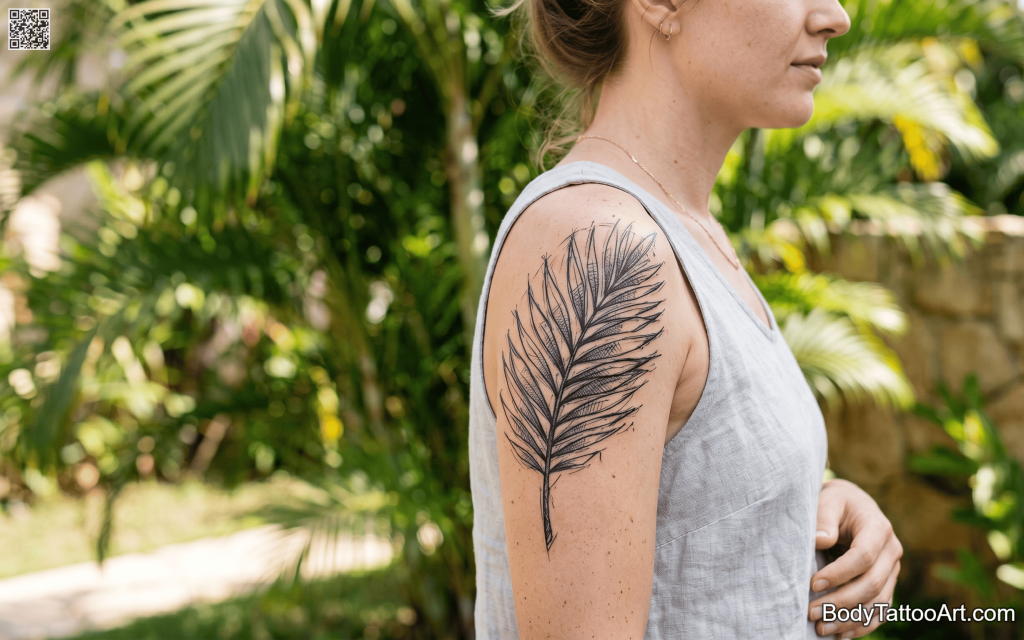
A palm frond done in a rough sketch style — deliberately imperfect lines, visible cross-hatching for shadow, multiple overlapping strokes creating texture. It looks exactly like a page torn from an artist’s field notebook.
Placement: Outer upper arm
Style: Sketch / illustrative Palm Leaf Tattoos
Why it stands out: The hand-drawn quality gives this tattoo a personal, unfinished feel that polished tattoos don’t have. It’s the kind of design that looks more interesting the longer you look at it.
Ideal for: Art lovers, illustrative tattoo fans, people who prefer character over perfection.
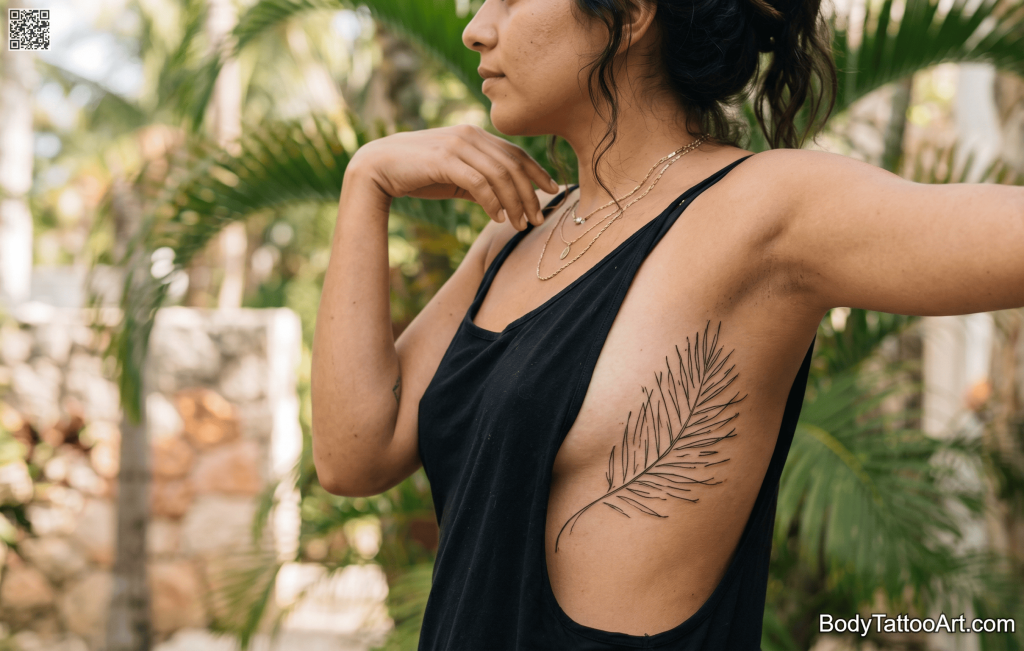
A palm frond reduced to its essential gesture — one long curved line for the spine, with loose short strokes branching off it at irregular intervals. Not precise, not symmetrical, not trying to be. The abstraction is deliberate.
Placement: Ribcage / side
Style: Abstract line Palm Leaf Tattoos
Why it stands out: Stripping the palm frond down to its most basic marks takes more confidence than rendering it in full detail. The result looks spontaneous and contemporary.
Ideal for: People who like gesture-based designs, minimalists who want movement rather than structure.
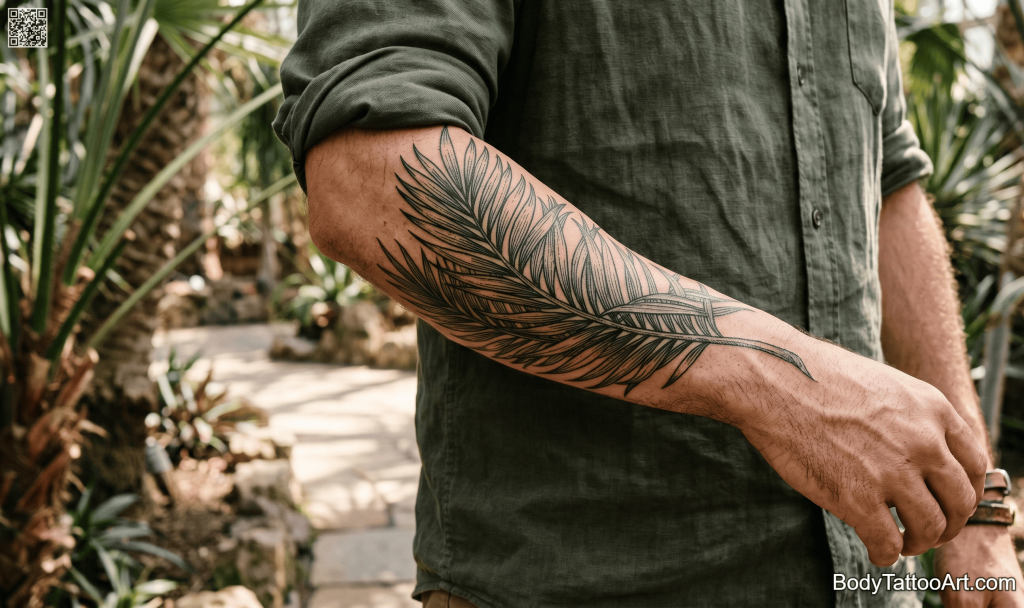
A full date palm frond done in vintage engraving style — all shading built from fine parallel lines and dense cross-hatching. No grey wash. The result looks like an etching from an old botanical encyclopedia, translated directly onto skin.
Placement: Full forearm
Style: Engraving / etching Palm Leaf Tattoos
Why it stands out: The line-density contrast in engraving style creates impressive depth without a single grey tone. This is one of those tattoos that looks more complex the closer you get.
Ideal for: People who love vintage illustration aesthetics, tattoo collectors who appreciate technical detail.
For more vintage botanical-style tattoo inspiration, the leaf tattoo ideas blog covers ferns, oak leaves, and ginkgo in similar illustrative styles.
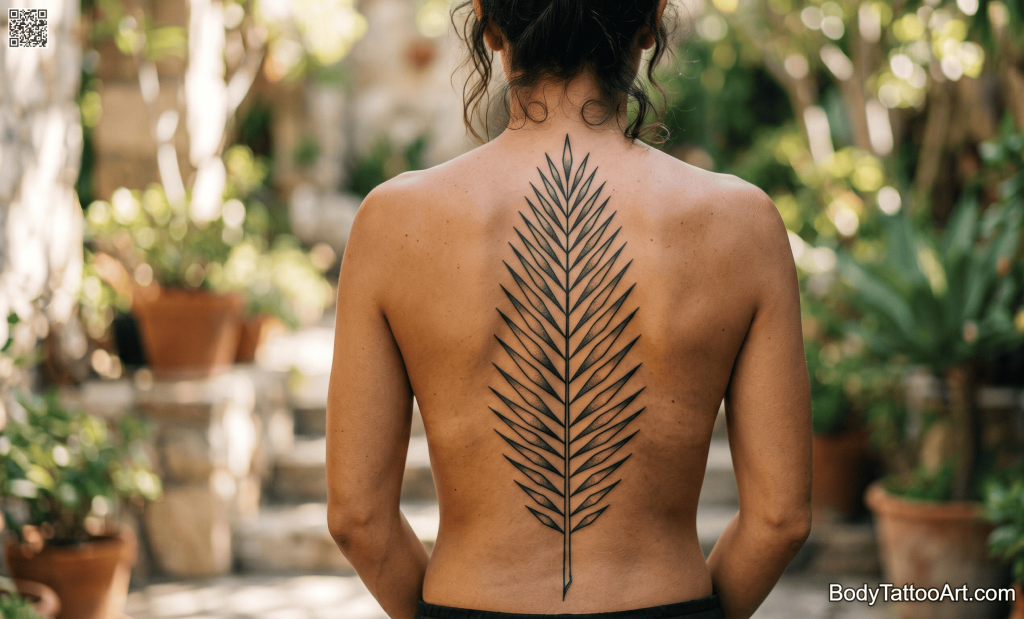
A palm frond where each leaflet is replaced by a small geometric shape — parallelograms or elongated diamonds arranged along the spine. From a distance it reads as a frond. Up close it’s all geometry.
Placement: Spine / center back
Style: Geometric Palm Leaf Tattoos
Why it stands out: The design plays with recognition — familiar overall form, unexpected internal detail. It sits neatly at the intersection of botanical and geometric tattooing.
Ideal for: Geometric tattoo fans, people who want nature-inspired work with a contemporary edge.
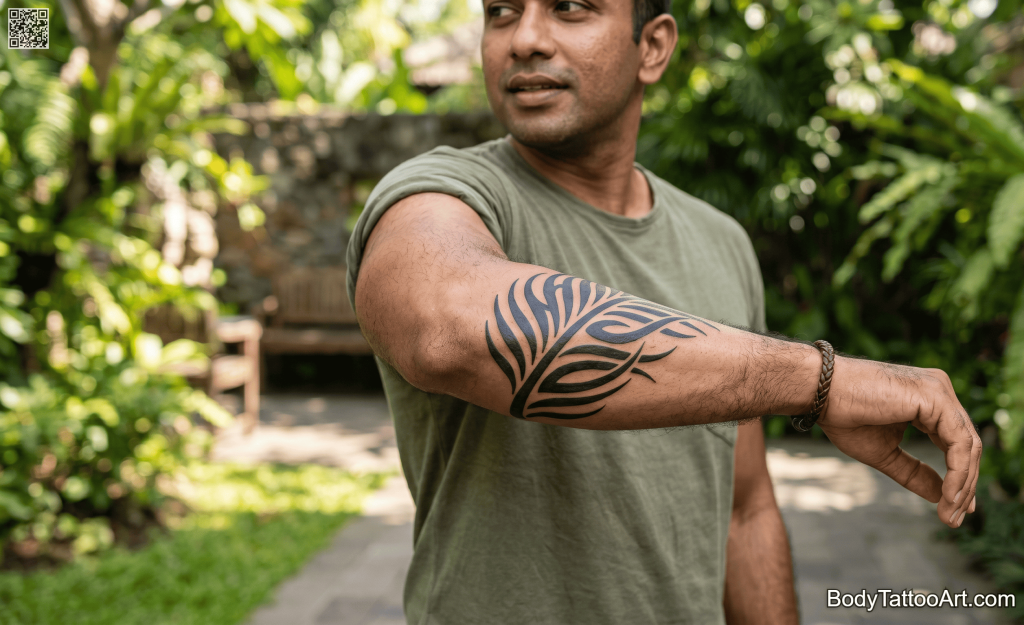
A stylized palm frond built from thick, tapered tribal marks — bold curves and solid black shapes that together suggest the form of a frond. No outlines, just the marks themselves forming the design. Strong and unapologetic.
Placement: Outer forearm
Style: Tribal / blackwork Palm Leaf Tattoos
Why it stands out: Tribal mark-making and the palm frond’s natural geometry are a natural pairing. The tapering marks echo the shape of leaflets while staying firmly in the tribal visual language.
Ideal for: People drawn to tribal aesthetics, fans of bold solid black work.
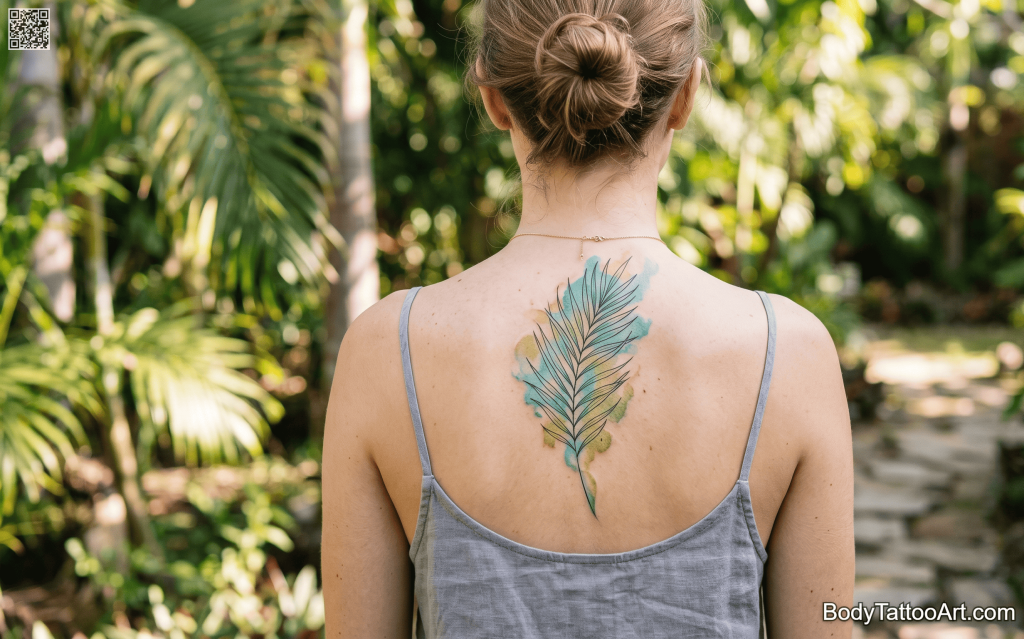
A palm frond with a loose fine-line outline and loose washes of color — deep teal and yellow-green — bleeding through and slightly beyond the line. The color is applied in soft overlapping strokes rather than filled uniformly, giving it a painterly, unfinished quality.
Placement: Upper back / between the shoulder blades
Style: Fine line with watercolor wash Palm Leaf Tattoos
Why it stands out: The contrast between the precise linework and the loose color wash creates visual tension in a good way. The two elements feel like they’re from different worlds but work together.
Ideal for: Color tattoo fans, people who want something between minimalist and expressive.
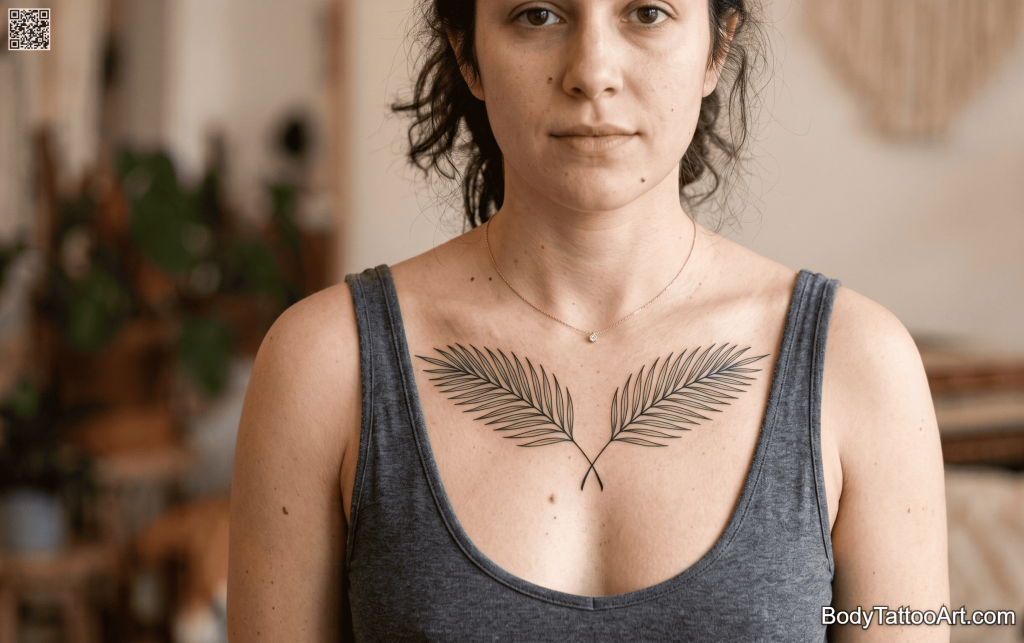
Two identical palm fronds placed symmetrically, curving away from each other like a mirror image. The stems meet at a single central point. The design is done in fine line, with both fronds given equal visual weight. Balanced without being rigid.
Placement: Sternum / center chest
Style: Fine line Palm Leaf Tattoos
Why it stands out: The bilateral symmetry of the sternum placement and the mirrored fronds reinforce each other. The design looks intentional from across the room.
Ideal for: Sternum tattoo fans, people who like symmetry-driven compositions.
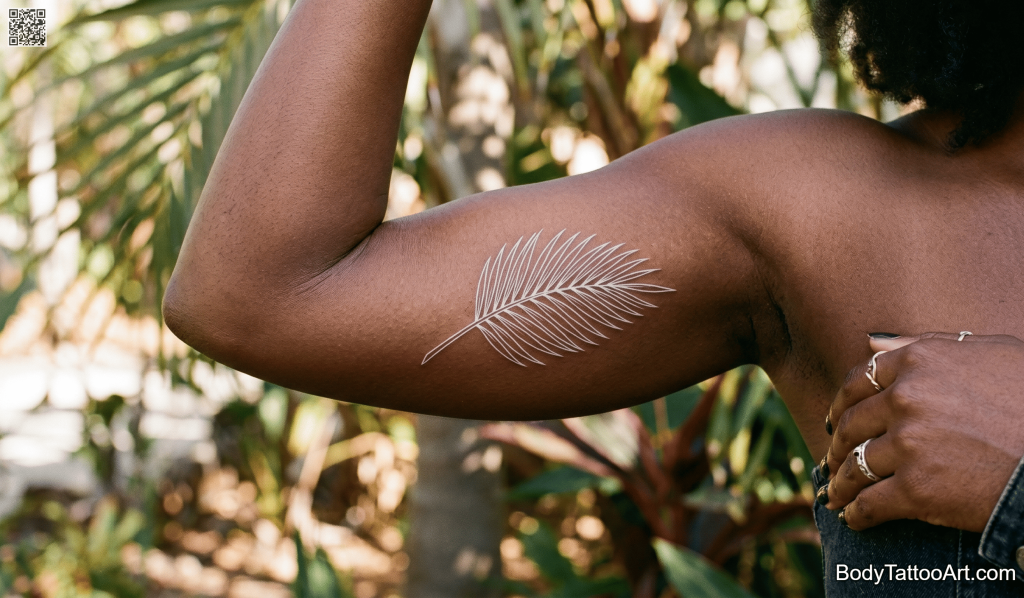
A clean palm frond outline tattooed in white ink on deep brown skin. Single frond, simple composition, no complex shading — the design relies entirely on the subtle contrast of white against deep skin tone. Understated and unusual.
Placement: Inner upper arm
Style: White ink Palm Leaf Tattoos
Why it stands out: White ink on deep skin creates a completely different visual register than black ink — ghostly, intimate, and unlike anything in standard tattooing. It ages into something that looks almost like a birthmark.
Ideal for: People with deeper skin tones wanting something subtle, those interested in white ink work.
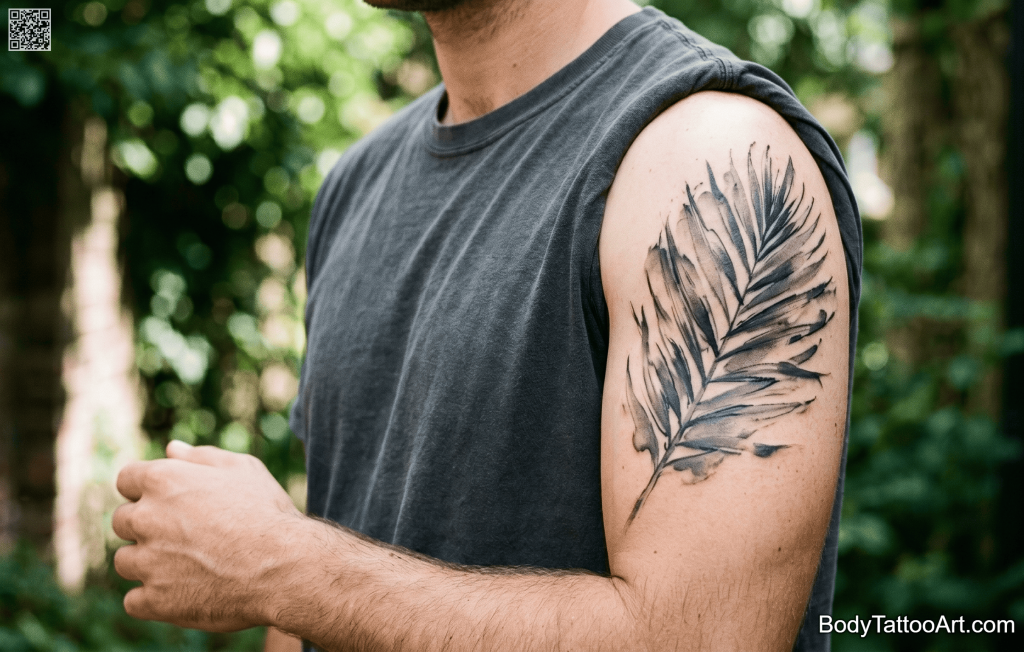
A palm frond rendered in loose ink wash — the kind of mark a brush makes when it’s loaded with diluted ink. The edges are soft, the shading is unpredictable, and the whole design looks like it was painted in thirty seconds by someone who knew exactly what they were doing.
Placement: Shoulder / upper arm
Style: Ink wash / painterly Palm Leaf Tattoos
Why it stands out: The looseness is deliberate and controlled. Ink wash tattoos look effortless but require real skill to pull off. The imprecision is part of what makes them compelling.
Ideal for: People who appreciate expressive, painterly tattoos, those wanting something that looks handmade.
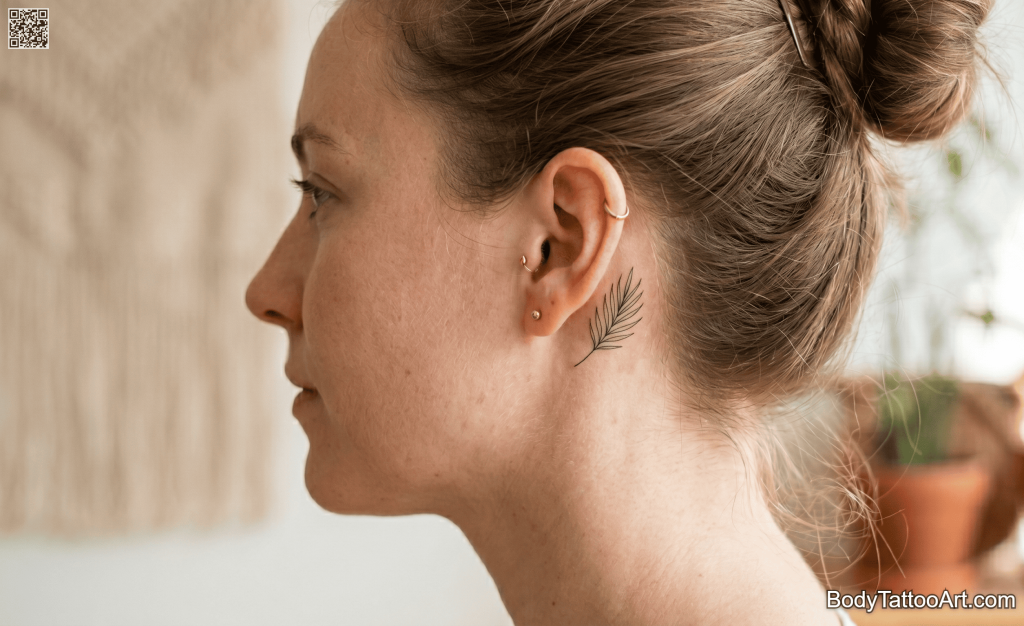
Rather than a full frond, this tattoo features just one single leaflet — one of the slim blades that make up a palm frond — in full botanical detail. The central vein, the texture along the surface, the slight curve at the tip. All rendered in fine line with minimal shading.
Placement: Behind the ear
Style: Micro botanical fine line Palm Leaf Tattoos
Why it stands out: The scale reduction is the whole concept. Taking one tiny element from a large plant and treating it as the entire subject creates something quietly radical.
Ideal for: People who love micro tattoos, botanical detail lovers, anyone wanting something hidden and unusual.
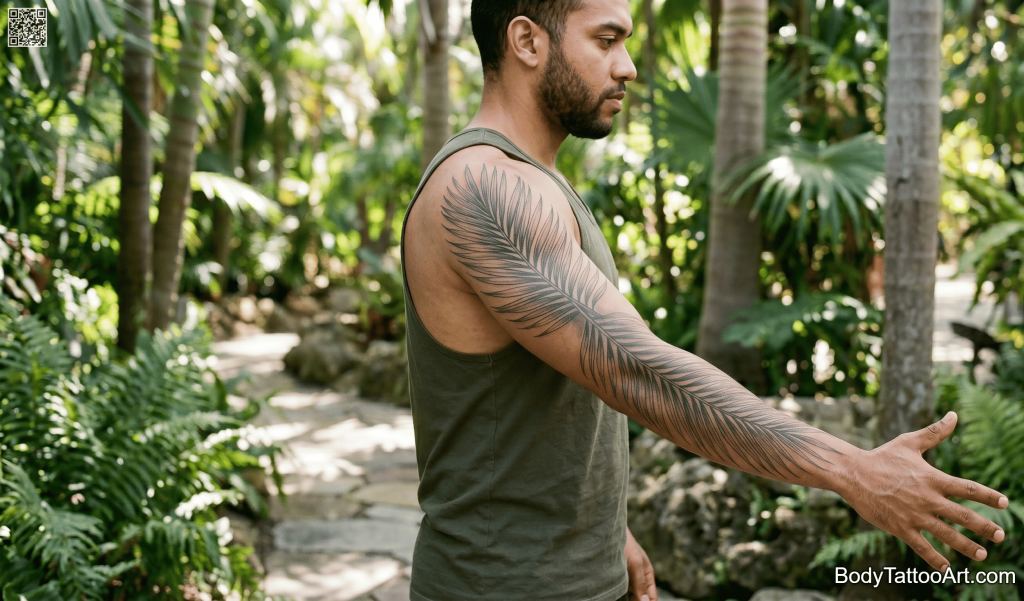
A long palm frond starting near the shoulder and draping diagonally down toward the wrist — the central spine following the natural angle of the arm, leaflets fanning out on either side. Done in grey-wash with heavier shading along the spine.
Placement: Full arm / sleeve component
Style: Grey-wash botanical Palm Leaf Tattoos
Why it stands out: Using the arm’s length to its full advantage, this design lets the frond breathe. The diagonal angle creates natural movement across the whole arm.
Ideal for: People building arm sleeves, those wanting a large-scale nature piece
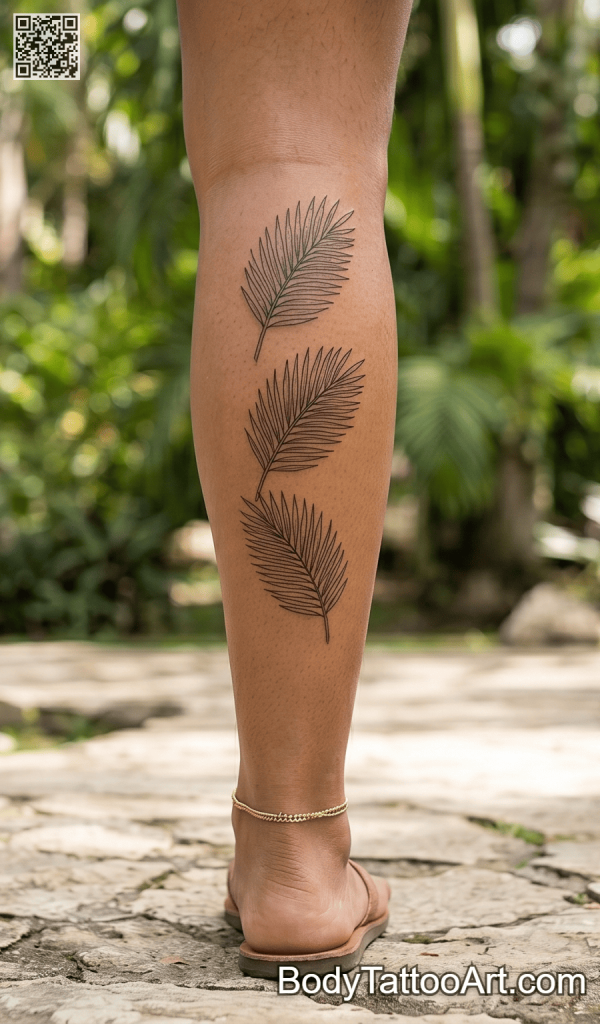
Three palm fronds of the same size and style arranged in a repeating vertical strip — each one pointing in the same direction, evenly spaced. Done in fine line, they create a pattern rather than a composition. It reads as both textile and tattoo.
Placement: Outer calf
Style: Fine line repeat pattern Palm Leaf Tattoos
Why it stands out: Treating a tattoo like a printed pattern is an underused approach. The repetition creates rhythm, and the clean fine line keeps it from feeling cluttered.
Ideal for: People who like pattern-based tattoos, minimalists who want something larger.
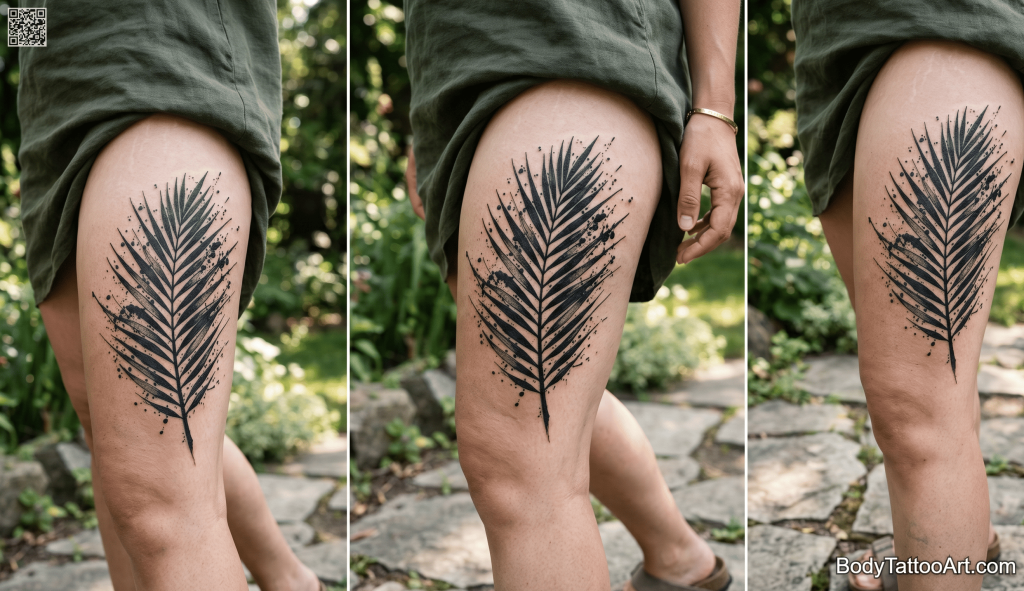
A palm frond with a crisp central spine and clearly defined leaflets, but the edges of each leaflet break apart into ink splatter marks — as if the frond is dissolving outward. The center is controlled; the edges are chaotic.
Placement: Outer thigh
Style: Abstract blackwork Palm Leaf Tattoos
Why it stands out: The contrast between the controlled center and the exploding edges creates genuine visual energy. It looks like the tattoo is in the middle of something.
Ideal for: People who like expressive or abstract tattoos, bold style fans
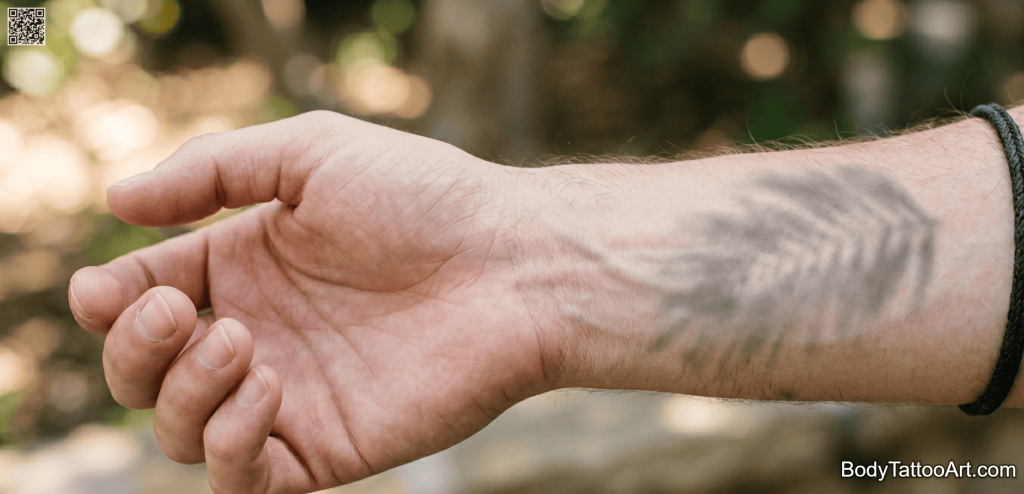
A palm frond where only the shadow of the frond is tattooed — not the frond itself. The shadow is cast to one side, rendered in heavy grey-wash as if the real palm leaf is hovering just off the skin. No outline of the frond, only its shadow.
Placement: Inner wrist
Style: Grey-wash conceptual Palm Leaf Tattoos
Why it stands out: The design plays with the idea of absence — the subject isn’t there, only its mark is. It’s one of the more conceptually interesting ways to approach a palm leaf tattoo.
Ideal for: People who love concept-driven tattoos, collectors who want something that sparks conversation.
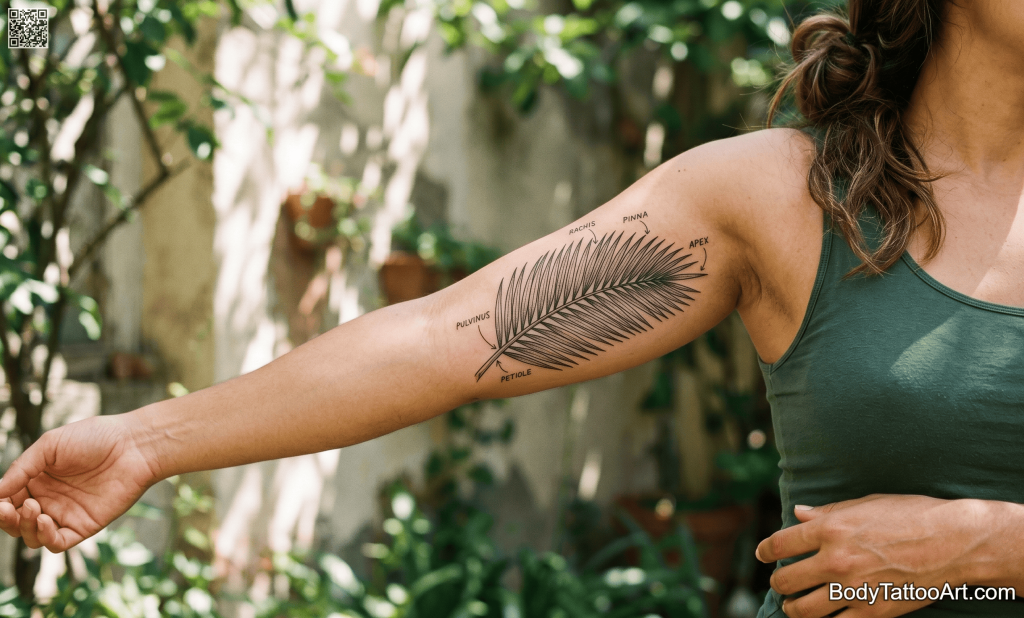
A palm frond rendered in the style of a scientific illustration — fine line shading, labeled parts (blade, rachis, petiole, leaflet), and a precise, studied quality. It looks like it was lifted from a botany textbook.
Placement: Inner bicep
Style: Illustrative botanical Palm Leaf Tattoos
Why it stands out: The annotation labels transform the tattoo into a reference document. It’s clever and specific — the kind of tattoo that tells you something about the person wearing it.
Ideal for: Science enthusiasts, botany lovers, people who like illustrative reference-style tattoos.
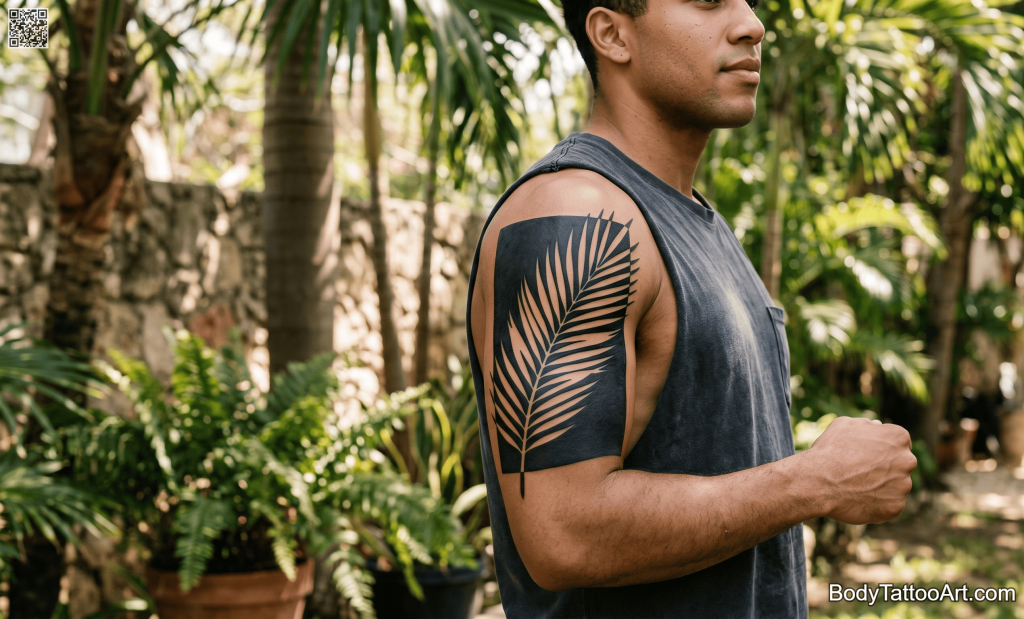
A solid blackout block on the upper arm with a palm frond shape left entirely as negative space skin. The leaflets are visible only as bare skin framed by black. The tips of the leaflets reach the edge of the blackout block, some of them cutting through it.
Placement: Upper arm
Style: Blackout negative space Palm Leaf Tattoos
Why it stands out: The frond breaking through the edge of the blackout block gives the design a sense of escape — the leaf pushing past its own frame.
Ideal for: Blackwork enthusiasts, people comfortable with heavy bold tattoos.
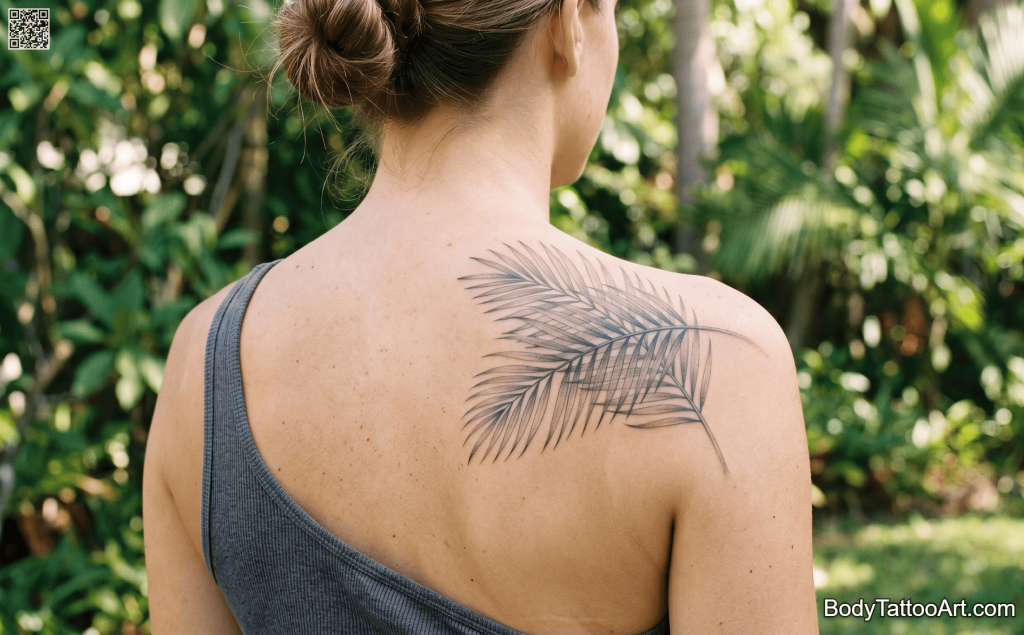
Two palm fronds crossing over each other with the overlapping section rendered to look transparent — the veins of the lower frond visible through the upper one. Done in grey-wash with careful shading to suggest layers of thin leaf material.
Placement: Back of the shoulder
Style: Grey-wash realism Palm Leaf Tattoos
Why it stands out: The translucency effect requires technical control and creates visual depth that flat compositions simply can’t match. The crossing point is where all the detail lives.
Ideal for: Realism collectors, people wanting a nature tattoo with genuine technical complexity.
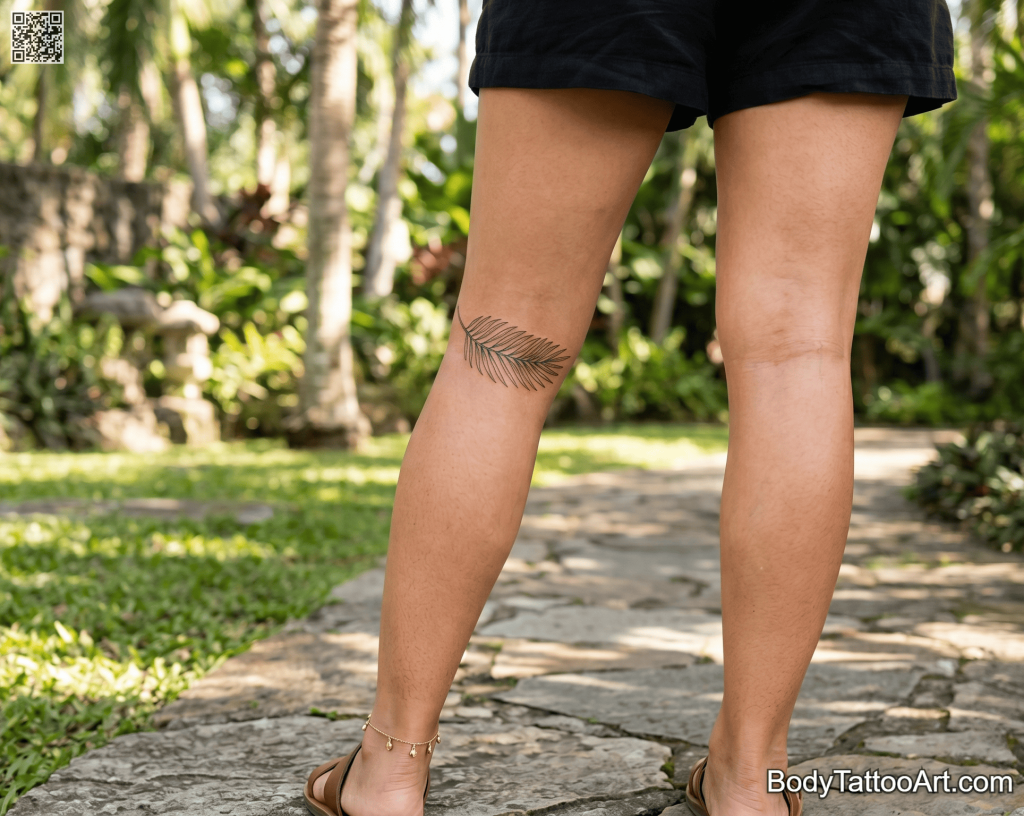
A single slim palm leaflet — not a full frond — curving naturally behind the knee, following the bend of the joint. Fine line, no shading, just the outline tracing the curve of the skin.
Placement: Behind the knee
Style: Fine line Palm Leaf Tattoos
Why it stands out: The placement is what makes this. The natural crease behind the knee and the curved leaflet echo each other. It’s one of those tattoos that only fully works in its specific location.
Ideal for: People who like placement-driven tattoos, those looking for something unexpected.
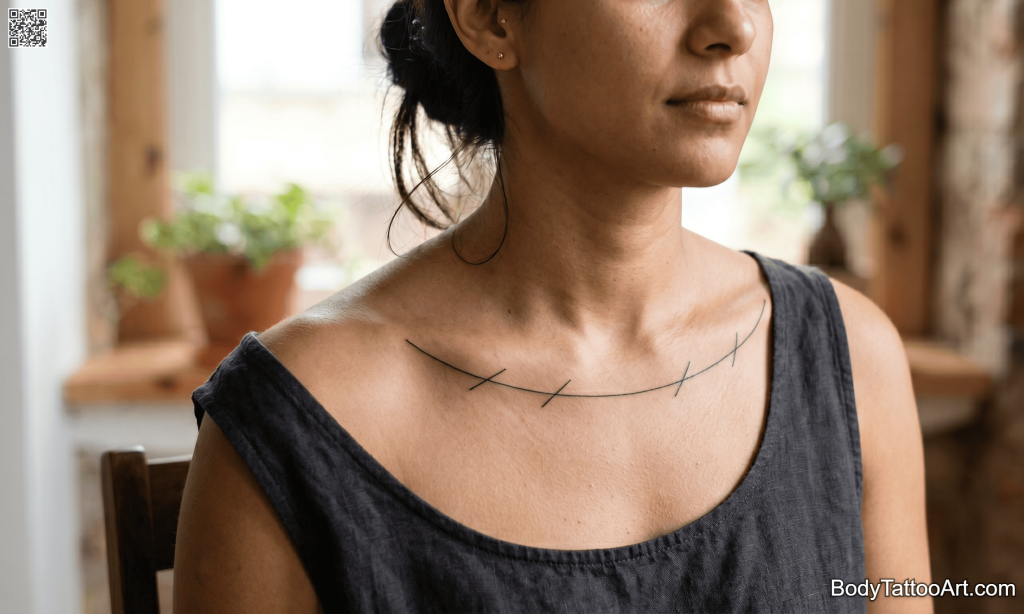
Just the spine of a palm frond — one long, gently curving line with small diagonal tick marks showing where the leaflets would be. The leaflets themselves are absent. It’s a skeleton of a palm frond, reduced to the bare minimum.
Placement: Collarbone
Style: Minimalist line Palm Leaf Tattoos
Why it stands out: Removing the leaflets entirely turns the design into a code — it’s only a palm frond if you already know what a palm frond looks like. That subtlety is the point.
Ideal for: Hardcore minimalists, people who want meaningful subtlety over visual loudness.
Palm leaf tattoos reward thoughtful choices. The subject is simple enough to work in almost any style, but the design decisions — placement, scale, rendering technique — are what separate a good palm leaf tattoo from a great one. The 27 ideas above cover the full range: from the tiniest micro frond behind an ear to a full blackout negative space piece on the upper arm.
The best approach is always to bring a reference to a skilled artist and let them adapt it to the specific body part. Palm leaf tattoos already have natural shape on their side. With the right execution, they’re among the most consistently impressive botanical tattoos around. For a all round inspiration of all kinds of leaf tattoos, check this out as well!
For Floral Inspiration, Check out –