Physical Address
304 North Cardinal St.
Dorchester Center, MA 02124
Physical Address
304 North Cardinal St.
Dorchester Center, MA 02124

Wildflowers don’t follow rules. They grow in rocky fields, along forgotten roadsides, and between cracks in stone walls — and that untamed quality is exactly what makes wildflower tattoos so compelling. They aren’t delicate like Dandelions. Whether it’s a single stem of lavender, a loose bouquet of chamomile and clover, or a sweeping meadow scene across the ribs, these tattoos carry a kind of natural beauty that doesn’t try too hard.
This blog brings together 27 wildflower tattoos ideas, whether the goal is something soft and minimal or dark and dramatic, there’s something here for every taste.
Wildflower tattoos feature flowers that grow naturally in the wild without cultivation — think poppies, daisies, clover, lavender, cornflowers, Queen Anne’s lace, dandelions, buttercups, and more. Unlike roses or peonies, which carry a more cultivated, polished feel, wildflowers bring a sense of freedom and organic imperfection to a design.
The beauty of wildflower tattoos is their versatility. A single wildflower stem can be clean and minimal. A full cluster of mixed blooms can be lush and detailed. The looseness of how wildflowers naturally grow also gives tattoo artists more compositional freedom — there’s no “wrong” arrangement.
Wildflowers have carried symbolic weight across cultures for centuries. In general, they represent freedom, resilience, and the beauty of things that grow without being forced. Different wildflowers bring their own meanings — the poppy is associated with remembrance and rest, the dandelion with wishes and impermanence, chamomile with calm and healing, and lavender with grace and devotion.
In many folk traditions, wildflowers were used in healing, divination, and seasonal rituals. The act of picking wildflowers — something nearly universal across childhood experiences — also ties these blooms to memory, nostalgia, and a return to something simple.
For a deeper look at the cultural and botanical history of wildflowers, the Wikipedia entry on wildflowers is a solid starting point.
One slender poppy stem rises vertically, its petals slightly open and asymmetrical. The fine line work captures the tissue-thin quality of the petals — barely-there lines layered to build subtle depth. A few loose seeds escape from the seed head above. The whole piece has a fragile, airy quality.
Placement: Inner wrist / behind the ear
Style: Fine line Wildflower Tattoos
Why it stands out: The asymmetry in the petals keeps it from looking overly neat. It reads as natural, not constructed.
Ideal for: Minimalists, first-timers, people who want something quiet but precise.

A dense cluster of mixed wildflowers — daisies, clover, and small bell-shaped blooms — rendered entirely in solid black ink. No shading, no gradients. Just stark, flat shapes built from clean outlines and filled forms. The petals overlap and crowd each other the way real wildflowers do in a summer field.
Placement: Upper arm / shoulder cap
Style: Blackwork Wildflower Tattoos
Why it stands out: The flat, graphic quality gives it a woodcut print feel — bold and unconventional for a floral tattoo.
Ideal for: People who love graphic design aesthetics, bold tattoo collectors, anyone moving away from traditional floral styles.

A single lavender sprig built entirely from dot clusters — thousands of tiny points that gradually thin out toward the petal tips and stem edges. The stippling creates a soft gradient effect without any traditional shading. The result looks almost like a botanical illustration printed in pointillist ink.
Placement: Forearm / collarbone
Style: Dotwork Wildflower Tattoos
Why it stands out: The dots create texture that looks almost three-dimensional under certain light. The contrast between dense dot clusters at the center and sparse dots at the edges gives it surprising depth.
Ideal for: Detail lovers, people drawn to meditative or precise art styles, botanical print fans.
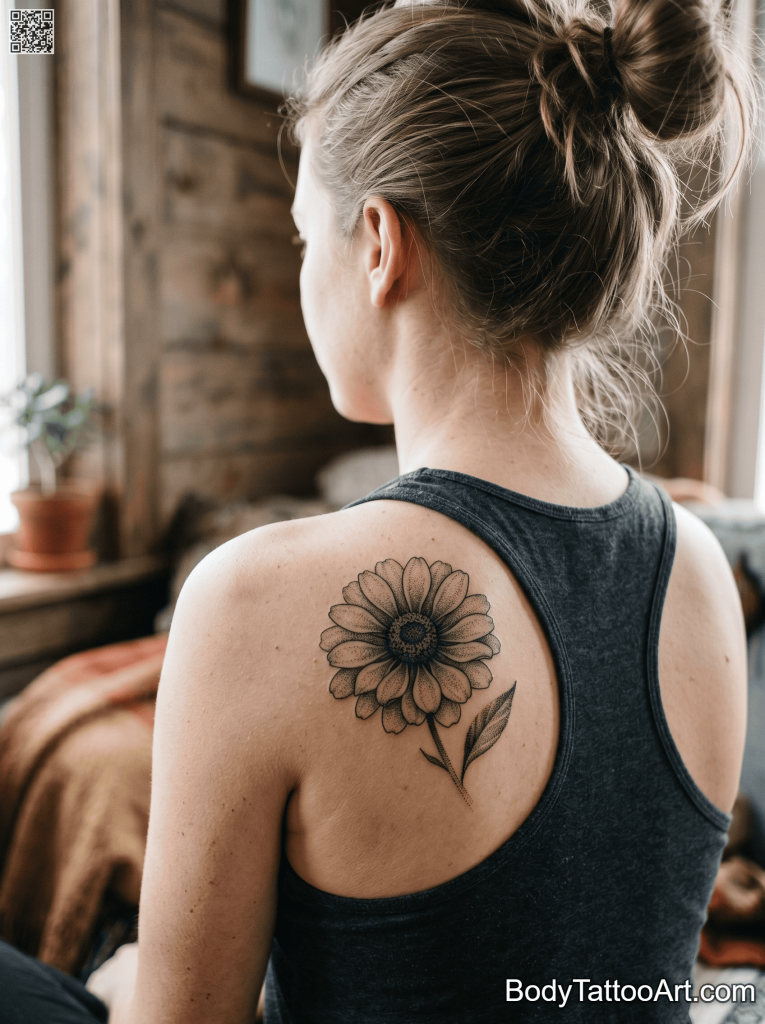
A loose horizontal sweep of wildflowers — poppies, cornflowers, and grasses — painted across the skin in soft watercolor washes. The colors bleed at the edges: reds fading to pink, blues dissolving into the skin. No hard outlines contain the blooms. It looks like someone dragged a wet brush along the ribs and flowers grew.
Placement: Ribcage / side torso
Style: Watercolor Wildflower Tattoos
Why it stands out: The horizontal layout mimics how wildflowers actually grow across a meadow. The bleeding color edges make it feel alive and uncontained.
Ideal for: Color tattoo lovers, people wanting something painterly and expressive, those comfortable with larger placements.

A series of wildflower stems — Queen Anne’s lace, small daisies, and dandelions — arranged to form the corners of an invisible square frame. The flowers are drawn in fine detail while thin geometric lines connect them, creating a structured composition that still feels organic.
Placement: Upper back / thigh
Style: Fine line geometric Wildflower Tattoos
Why it stands out: The tension between organic floral shapes and rigid geometric structure is where this design earns its character. Neither element overwhelms the other.
Ideal for: Tattoo collectors who enjoy conceptual designs, people who like structured but nature-inspired art.

A hyper-realistic dandelion in the final stage of dispersal — some seeds still attached to the seed head, others drifting off as floating wisps. The seeds are rendered with hair-thin lines radiating outward, each one slightly different in angle and length. The seed head itself is shaded with soft grey tones that give it a photographic quality.
Placement: Ankle / lower leg
Style: Realism / grey wash Wildflower Tattoos
Why it stands out: The floating seeds create natural movement within the tattoo — it gives the piece a sense of time passing, which static botanical tattoos rarely achieve.
Ideal for: People who love fine detail and realism, nature lovers, anyone drawn to the symbolism of change and letting go.

If wildflower designs spark an interest in botanical tattoo styles, the sunflower tattoo ideas blog is worth a look — it covers a wide range of compositions from minimalist to bold.
Three chamomile flowers drawn in loose, sketchy linework — like they were pulled straight from an artist’s sketchbook. The lines are slightly rough and imperfect. Petals are outlined with varying stroke weights. A few stray marks around the blooms add to the hand-drawn feel.
Placement: Inner bicep / behind the knee
Style: Sketch / illustrative Wildflower Tattoos
Why it stands out: The imperfection is the point. These don’t look clean and finished — they look genuinely drawn, which gives them personality most floral tattoos don’t have.
Ideal for: People who prefer art-forward, non-traditional aesthetics, illustrators, sketchbook enthusiasts.

A long vertical arrangement of assorted wildflowers — buttercups, clover, wild daisies — that runs straight down the spine. The stems connect naturally, almost like a single tall plant with different flowers blooming at various heights. Tiny leaves fill the gaps between blooms.
Placement: Spine / back centerline
Style: Fine line botanical Wildflower Tattoos
Why it stands out: Spine tattoos live or die by their flow, and this one uses the vertical nature of wildflower stems to work perfectly with the body’s natural line.
Ideal for: People looking for a long, elegant back piece, those who prefer nature-inspired tattoos with real structural thought behind them

An abstract interpretation of wildflowers where the shapes are simplified into bold, gestural brushstrokes. Petals become curved black strokes. Stems are single swooping lines. The whole composition feels like a piece of Japanese ink painting translated into a tattoo.
Placement: Shoulder blade / outer calf
Style: Abstract brushwork / sumi-e inspired Wildflower Tattoos
Why it stands out: It’s recognizably floral but deliberately stripped of realism. The confidence of the brushstroke marks makes it feel more like wearable art than decoration.
Ideal for: Fans of East Asian ink art, people who want something abstract but still legible, bold minimalists.

A garland of cornflowers and fine grass stems that wraps almost entirely around the ankle like a botanical bracelet. The flowers are drawn in fine line with just enough detail to show the layered, fringe-like petals of the cornflower. Thin grasses fill the negative space between blooms.
Placement: Ankle wrap
Style: Fine line / botanical Wildflower Tattoos
Why it stands out: Wrap-around ankle tattoos that use the body’s natural cylinder shape are always striking. The cornflower’s distinctive fringe petal structure adds visual interest that rounder flowers wouldn’t.
Ideal for: People drawn to delicate placement tattoos, those who want something visible but not loud, wrap tattoo enthusiasts.

A tiny but incredibly detailed rectangular patch of wildflowers — daisies, grasses, and small round blooms — that looks like a miniature landscape. The composition has actual depth: taller flowers at the back, shorter ones in the foreground. Micro-shading creates the illusion of a real meadow viewed up close.
Placement: Inner wrist / back of the neck
Style: Micro realism Wildflower Tattoos
Why it stands out: The scale contrast between the tiny placement and the amount of detail packed into it is the magic here. It rewards close inspection.
Ideal for: People who love miniature art, collectors who appreciate technical skill, those looking for something conversation-starting.

A single large poppy rendered in blackwork outlines, but the petals are filled with fine dotwork instead of solid black. The dots are densest at the petal edges and the dark center, gradually becoming sparser toward the middle of each petal. The seed pod at the top is fully solid black.
Placement: Outer thigh / upper arm
Style: Blackwork with dotwork fill Wildflower Tattoos
Why it stands out: The contrast between the solid black seed pod and the dotwork petals creates a beautiful tonal range without using grey ink. It’s technically demanding and visually dynamic.
Ideal for: Bold tattoo fans who appreciate detailed technique, collectors who want something that photographs well.

The wildflowers aren’t drawn — the background is. Dense black shading fills the space around unpainted wildflower silhouettes, leaving the flowers as bare skin. The result is like a photographic negative: dark field, light blooms.
Placement: Forearm / shin
Style: Negative space blackwork Wildflower Tattoos
Why it stands out: It flips the typical logic of tattoo design. The flowers exist as absence rather than mark, which makes for a deeply original composition.
Ideal for: Experimental tattoo lovers, people who’ve thought carefully about what they want, collectors of conceptual work.

For those drawn to bold, high-contrast floral work, the lion with lotus tattoo ideas blog explores similarly dramatic combinations of nature and strength.
A loose scatter of small wildflowers — forget-me-nots, tiny daisies, and single-petal blooms — spread along one side of the collarbone. Some flowers are fully drawn, others are just a few petals. The spacing is uneven and intentional, mimicking how wildflowers scatter across bare ground.
Placement: Collarbone / décolletage
Style: Fine line / illustrative Wildflower Tattoos
Why it stands out: The scattered, uneven spacing is what keeps it interesting. It doesn’t feel arranged — it feels found.
Ideal for: People wanting a feminine but understated piece, those who prefer organic layouts over symmetrical compositions.
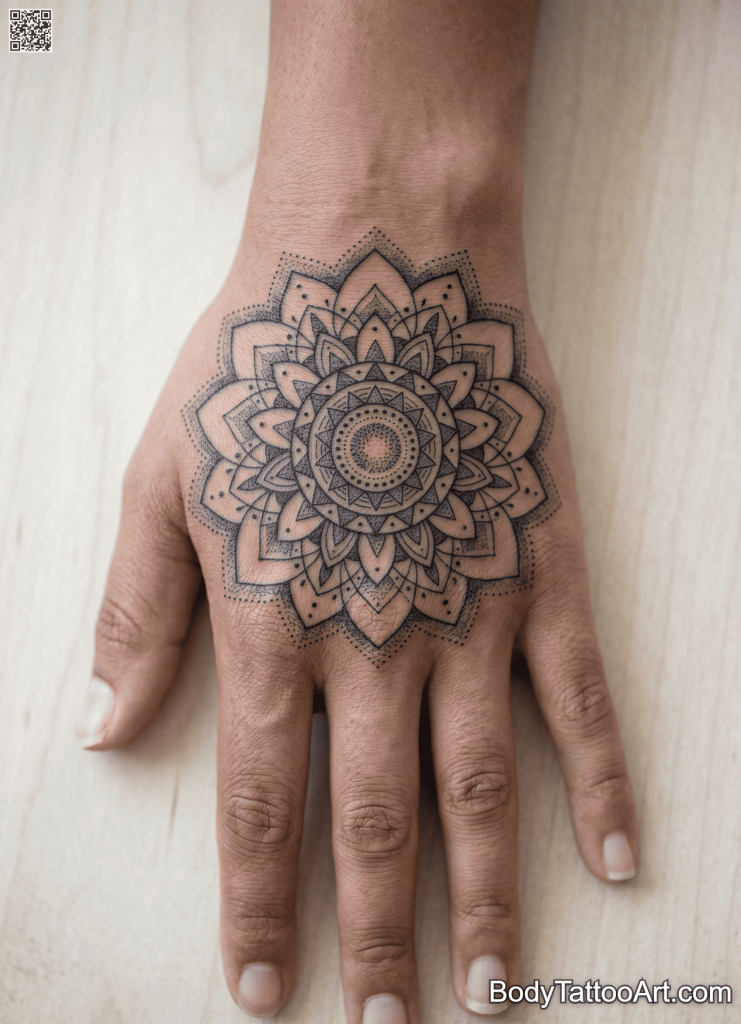
A classic American traditional take on wildflowers: bold outlines, flat color fills in red, yellow, and green, and the characteristic thick black linework of old school tattooing. The bouquet is tied with a simple black ribbon. The whole thing looks like it belongs on the forearm of a sailor.
Placement: Forearm / calf
Style: American traditional Wildflower Tattoos
Why it stands out: Traditional wildflower tattoos aren’t common — most lean modern and delicate. This one embraces the bold, graphic roots of American tattoo culture with an unconventional subject.
Ideal for: Traditional tattoo collectors, people who love vintage tattoo aesthetics, those wanting something with timeless staying power.

Four or five wildflower stems in full silhouette — solid black from tip to base with no interior detailing. The stems are slightly different heights and the blooms have distinctly different shapes: a daisy, a dandelion, a clover, a tall grass head. Together they form a simple, striking row.
Placement: Foot / back of the neck
Style: Silhouette blackwork Wildflower Tattoos
Why it stands out: The silhouette approach trades detail for shape language, and the diversity of flower shapes does the visual work instead of linework or shading.
Ideal for: Minimalists who still want boldness, people wanting something low-maintenance and graphic.

A thin band of fine line wildflowers — chamomile, buttercup, and tiny star-shaped blooms — that circles the wrist like a botanical bracelet. The band is only about 1.5 cm tall, keeping it dainty and precise. Tiny leaves and stems fill every gap.
Placement: Wrist band
Style: Fine line Wildflower Tattoos
Why it stands out: The density of detail at such a small scale is impressive. It reads as elegant from a distance and intricate up close.
Ideal for: People wanting something minimal but permanent, fine jewelry aesthetic fans, those who want placement over statement.

A loose, flowing cluster of mixed wildflowers rendered entirely in grey wash — no colour, no black fills, just varying tones of grey. The flowers have a soft, almost faded quality, like pressed botanicals found inside an old book. Petals overlap and curl with natural irregularity.
Placement: Ribcage
Style: Grey wash Wildflower Tattoos
Why it stands out: Grey wash florals tend to go realistic, but these are kept loose and illustrative. The result sits between a botanical sketch and a photograph.
Ideal for: People who prefer subtle, understated tattoos that age gracefully, those drawn to monochrome aesthetics.

A horizontal strip of poppy stems, drawn in fine line, spreads across the shin like a narrow meadow. The poppies are at different stages — some buds, some in full bloom, some seed heads. The stems cross and overlap loosely. No shading, no fill — just clean, confident line work.
Placement: Shin / forearm
Style: Fine line / linework only Wildflower Tattoos
Why it stands out: Showing the same flower at multiple growth stages in a single composition gives it a narrative quality most standalone floral tattoos don’t have.
Ideal for: People who love botanical illustration, those wanting something that tells a visual story.

A cluster of wildflowers — wild roses, poppies, and tall grasses — flows over the shoulder cap, starting at the top of the shoulder and softly trailing down the upper arm. The composition follows the curve of the shoulder, with the densest blooms sitting at the highest point and stems trailing downward.
Placement: Shoulder cap / upper arm
Style: Fine line botanical realism Wildflower Tattoos
Why it stands out: Working with the body’s natural contour rather than ignoring it is what elevates this from pretty to genuinely well-designed.
Ideal for: Those looking for a placement-conscious floral piece, people ready to commit to something that uses the body as a canvas.

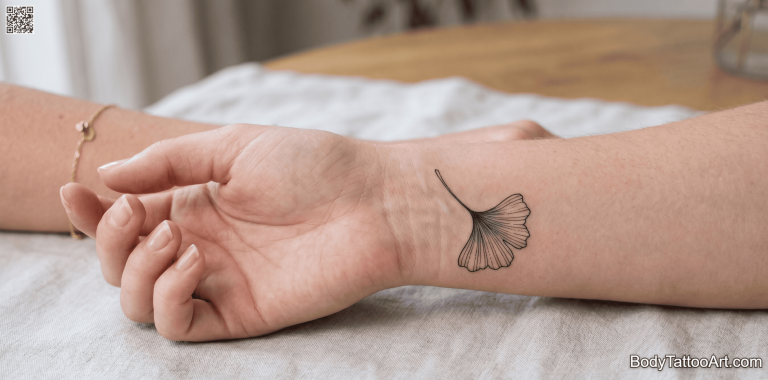
A single tiny wildflower — a miniature daisy with a round yellow center and eight small white petals — sits just behind the ear. The petals are drawn with hair-thin lines. A short stem with one small leaf extends downward. Nothing more.
Placement: Behind the ear
Style: Fine line micro Wildflower Tattoos
Why it stands out: Sometimes the best tattoo is the quietest one. The scale forces precision — every line matters, and there’s nowhere to hide imprecision.
Ideal for: First-timers, people wanting discreet placement, those building a tattoo collection who want a sentimental small piece.

Not a flower in sight — just wild grasses. Long, thin stems drawn in fine line, with various grass seed heads at the tops: some feathery, some compact, some with individual seeds visible. The stems move in slightly different directions as if caught in a breeze.
Placement: Inner forearm / outer ankle
Style: Fine line / minimalist botanical Wildflower Tattoos
Why it stands out: Grass is almost never the star of a botanical tattoo, which is exactly what makes this interesting. The composition is all about line, rhythm, and negative space.
Ideal for: True minimalists, people who want something unusual and understated, those drawn to overlooked natural details.

A precise hexagon drawn in fine line, with wildflowers — Queen Anne’s lace, chamomile, small daisies — growing organically from its base and spilling out through its open top edge. The geometric frame is clean and controlled. The flowers break free from it.
Placement: Upper arm / thigh
Style: Geometric fine line Wildflower Tattoos
Why it stands out: The contrast between contained geometry at the bottom and organic botanical overgrowth at the top creates a visual story: structure giving way to nature.
Ideal for: Architecture or design-minded tattoo enthusiasts, people who like balance between order and organic shapes.

Wildflower shapes — petals, seed heads, and leaf forms — arranged in a circular mandala pattern, built entirely from dotwork. The design radiates outward from a central seed-head form. Moving outward, petals from multiple wildflower species become the repeating units of the mandala’s rings.
Placement: Sternum / upper back
Style: Dotwork mandala Wildflower Tattoos
Why it stands out: Taking organic, asymmetrical wildflower shapes and using them as mandala units creates something that feels both natural and architectural at once.
Ideal for: Sacred geometry fans, people who want something spiritual in aesthetic but grounded in nature, dotwork enthusiasts

A full illustrative bouquet-style cluster of wildflowers on the outer thigh — poppies in deep red, cornflowers in muted blue, and daisies in pale yellow, surrounded by dark green leaves and stems. The color palette is rich but not saturated. The style sits between botanical illustration and neo-traditional.
Placement: Outer thigh
Style: Illustrative color / neo-traditional Wildflower Tattoos
Why it stands out: The muted, earthy color palette separates this from typical bright floral tattoos. It looks like a botanical print from a 19th-century field guide.
Ideal for: Color tattoo fans who prefer sophisticated, vintage palettes, people ready for a larger, statement thigh piece.

One four-leaf clover on a simple curved stem, done in the American traditional style — bold black outlines, flat green fill, and a small red-tipped bloom. Clean, iconic, and uncluttered. It’s a traditional tattoo motif done without irony or reinvention, just executed well.
Placement: Inner ankle / hand
Style: American traditional Wildflower Tattoos
Why it stands out: Sometimes the classic version is the best version. A well-executed traditional clover tattoo has a clarity and confidence that more elaborate interpretations often lose.
Ideal for: Traditional tattoo enthusiasts, people wanting something timeless and immediately readable, those drawn to the history of tattoo culture.

This isn’t a full sleeve — it’s a single striking section: a dense, layered tangle of wildflowers in abstract realism, covering the lower half of the forearm. Multiple flower species are layered on top of each other with leaves and stems weaving between them. Some flowers are rendered in photographic detail, others are slightly impressionistic.
Placement: Lower forearm / half sleeve
Style: Abstract realism Wildflower Tattoos
Why it stands out: The inconsistency in rendering — some parts ultra-detailed, others looser — is a deliberate design choice. It creates visual rhythm and keeps the eye moving across the piece.
Ideal for: Tattoo collectors building toward a sleeve, people who appreciate avant-garde tattoo artistry, bold statement-piece seekers.

Wildflower tattoos cover an enormous range — from a two-centimeter daisy behind the ear to a full forearm composition of layered botanicals. What holds them all together is the spirit of the wildflower itself: unforced, adaptable, and quietly beautiful.
Before booking anything, it’s worth taking the reference images to a trusted artist and talking through what will hold up well at the chosen scale and placement. Good wildflower tattoos tend to be the ones designed for the specific body they’ll live on — not just copied from a reference sheet.
For more floral inspiration, check out the Lotus, Hibiscus and Lavender Tattoos that covers everything from single-stem designs to large botanical compositions across different styles