Physical Address
304 North Cardinal St.
Dorchester Center, MA 02124
Physical Address
304 North Cardinal St.
Dorchester Center, MA 02124

Oak tree tattoos have been around for a long time, and for good reason. The oak is one of the most recognizable trees in the world — wide canopy, rugged bark, deep roots. Whether someone wants a bold full-back piece or a tiny wrist tattoo, the oak tree fits into almost any tattoo style with ease. From fine line to blackwork, from realistic to abstract, oak tree tattoos work across all kinds of skin tones, body placements, and personal aesthetics.
This blog covers 28 different oak tree tattoo designs, each one built around a different visual idea. No two are the same in style, structure, or feel. Before moving forward, check out this Leaf Tattoo blog for a holistic exploration.
The oak tree has symbolized strength, endurance, and wisdom across cultures for thousands of years. In Celtic tradition, the oak was considered sacred — a gateway between worlds. In Greek mythology, the oak was associated with Zeus, the king of gods. The Romans linked it to Jupiter. Norse mythology tied it to Thor.
Beyond mythology, the oak tree represents stability and longevity. An oak can live for hundreds of years, weathering storms while growing stronger. For many people, oak tree tattoos carry that same idea — surviving hardship and still standing tall.
For a deeper look into the cultural and historical roots of the oak tree, check out the Wikipedia page on Oak.
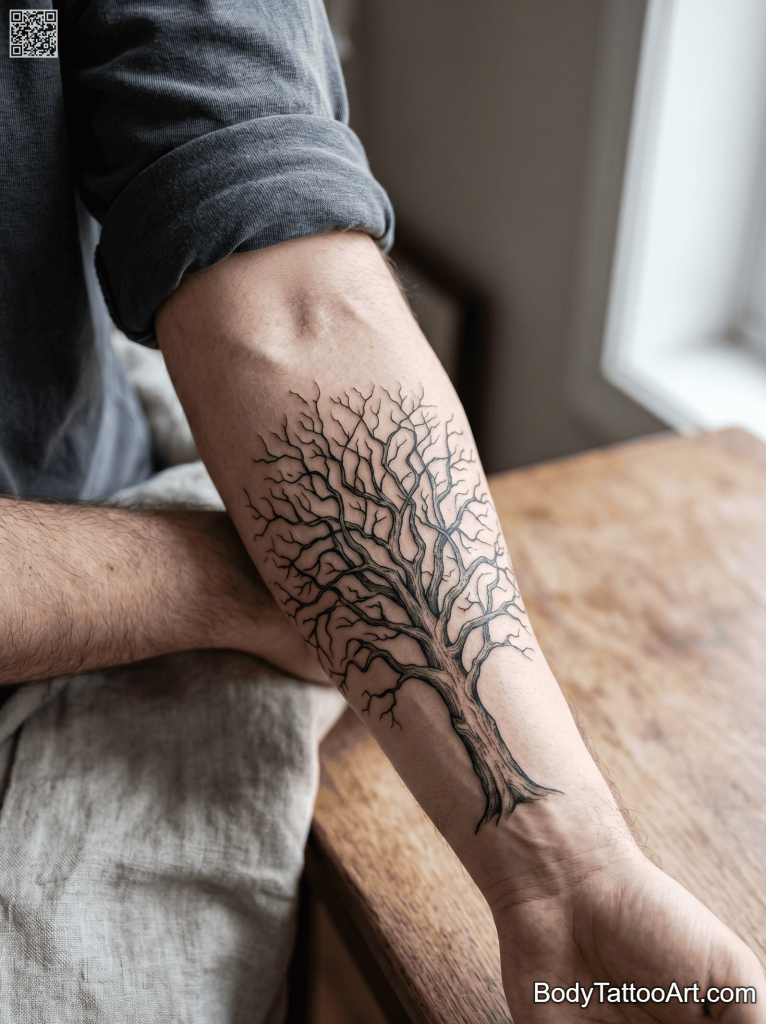
A leafless oak tree with sprawling bare branches fills the forearm from wrist to elbow. The branches split into dozens of fine, spidery lines that taper at the tips. There are no leaves — just the raw structure of the tree in winter. The trunk has subtle bark texture with thin parallel lines, giving it a weathered look without being overly detailed.
Placement: Forearm
Style: Fine line blackwork Oak Tree Tattoos
Why it stands out: The empty branches create a dramatic silhouette that looks almost architectural. It’s minimal but never boring.
Ideal for: Minimalists, fine line fans, people who want something striking without heavy ink coverage.
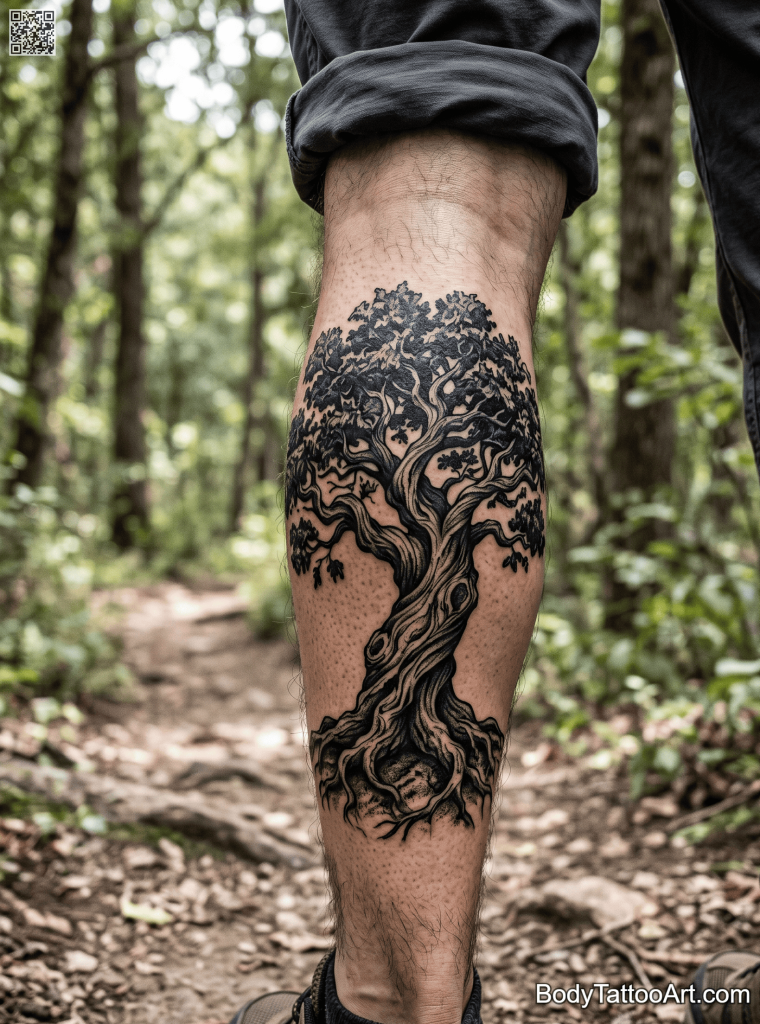
This design shows an old, gnarled oak trunk — twisted and wide, with deep crevices in the bark. The roots dig into the ground beneath it and the canopy fills with dense foliage above. Heavy black shading makes the bark look almost three-dimensional. The whole piece has a dark, aged quality to it.
Placement: Calf
Style: Blackwork with heavy shading Oak Tree Tattoos
Why it stands out: The bark detailing is the centerpiece here. Every groove and shadow gives this tattoo a sense of time and age.
Ideal for: People who love bold, heavy pieces with strong visual weight.
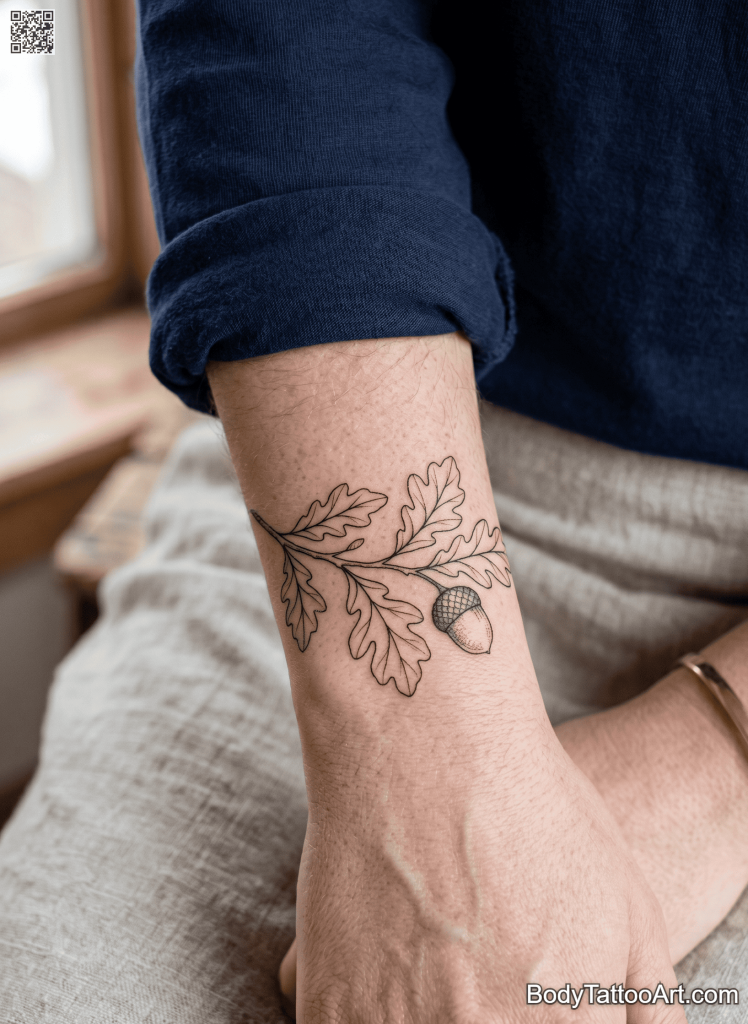
A single oak branch stretches diagonally across the wrist with one acorn hanging from it. The linework is clean and delicate — barely thicker than a thread. The acorn has tiny dotwork shading that gives it texture without making it heavy.
Placement: Wrist
Style: Fine line with dotwork Oak Tree Tattoos
Why it stands out: The simplicity is intentional. The acorn becomes the entire focus, and the branch gives it natural direction and balance.
Ideal for: First-timers, minimalist lovers, people who prefer subtle tattoos.
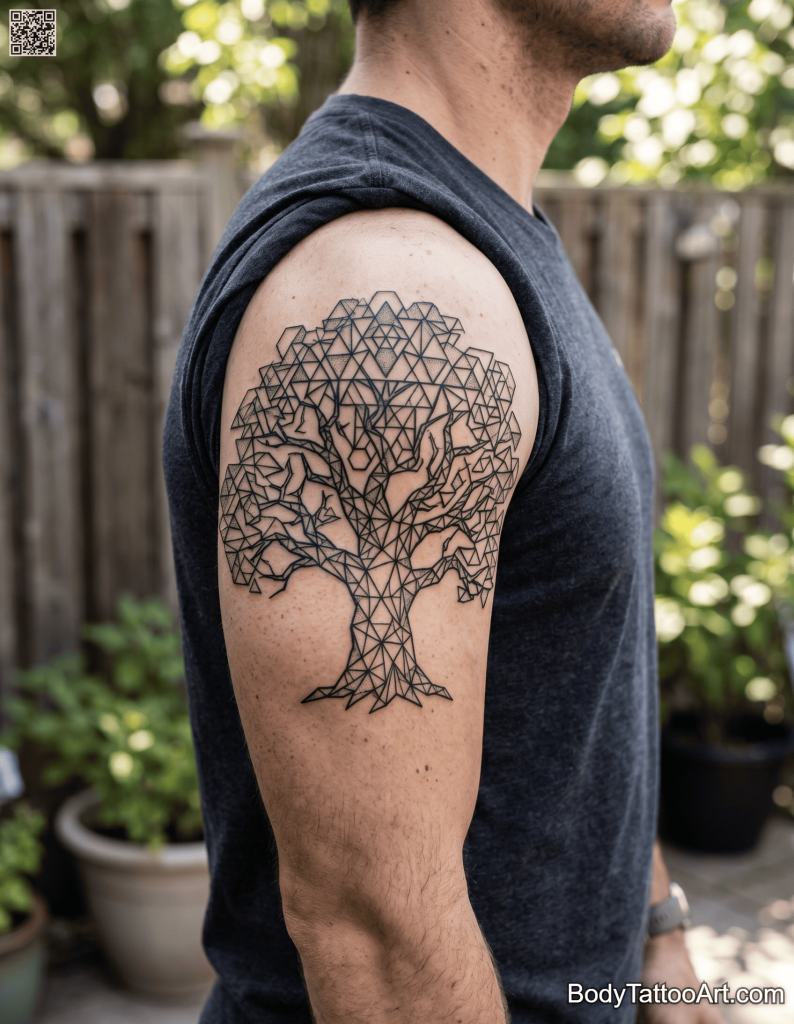
The full silhouette of an oak tree is built entirely out of geometric shapes — triangles, hexagons, and thin connecting lines. The tree form is clear from a distance, but up close it reads as a mosaic of shapes. No organic lines are used anywhere in the design.
Placement: Upper arm / bicep
Style: Geometric blackwork Oak Tree Tattoos
Why it stands out: The contrast between the natural subject and the rigid geometric execution makes this design feel modern and intentional.
Ideal for: Fans of geometric tattoos, people who want something unconventional with a structured look.
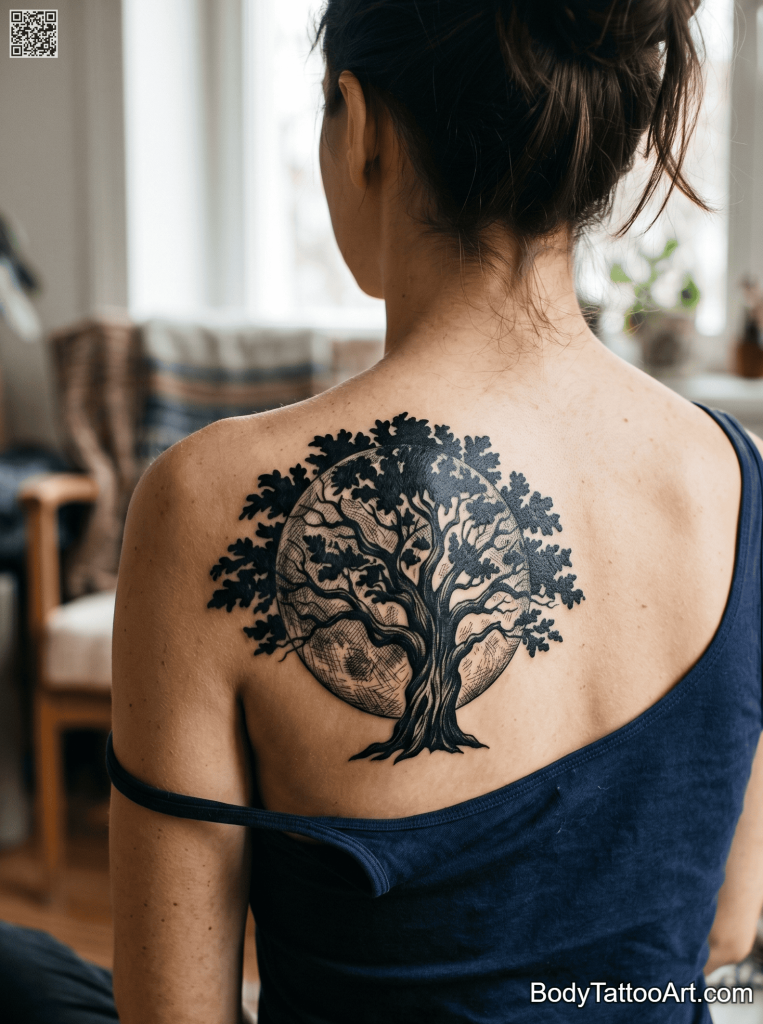
A full moon sits behind an oak tree, with the tree’s canopy spreading wide across the circular shape of the moon. The branches grow outward and overlap the moon’s edge. The moon is filled with fine cross-hatching and the tree is solid black, creating a bold contrast between the two.
Placement: Shoulder blade
Style: Illustrative blackwork Oak Tree Tattoos
Why it stands out: The circular framing of the moon gives the design a natural boundary, and the tree breaking through that boundary creates tension and visual interest.
Ideal for: People who love bold, illustrative pieces with a classic feel.
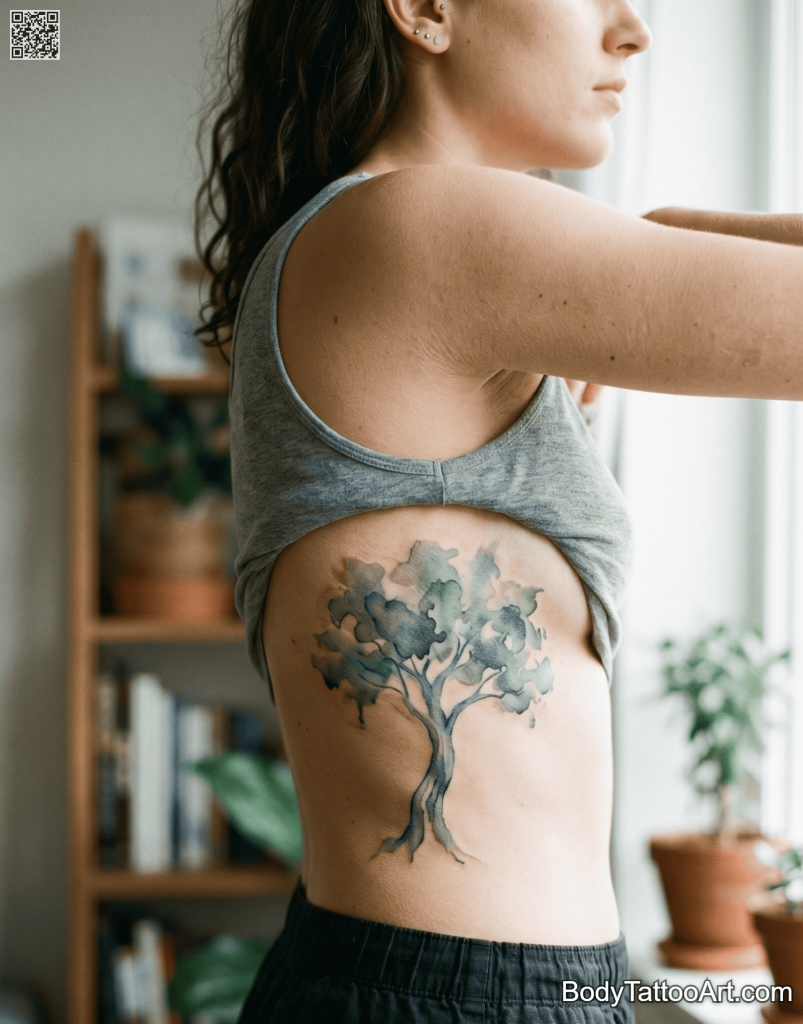
This oak tree tattoo skips the outlines entirely. Instead, loose washes of blue, green, and grey bleed into each other to form the tree’s shape. The trunk is suggested rather than defined, and the canopy dissolves into color at the edges.
Placement: Ribcage
Style: Watercolor Oak Tree Tattoos
Why it stands out: Without hard outlines, the whole piece looks like a painting dropped onto skin. It’s fluid, soft, and unlike most tree tattoos.
Ideal for: People who love color tattoos, art lovers, those who want something that feels painterly.
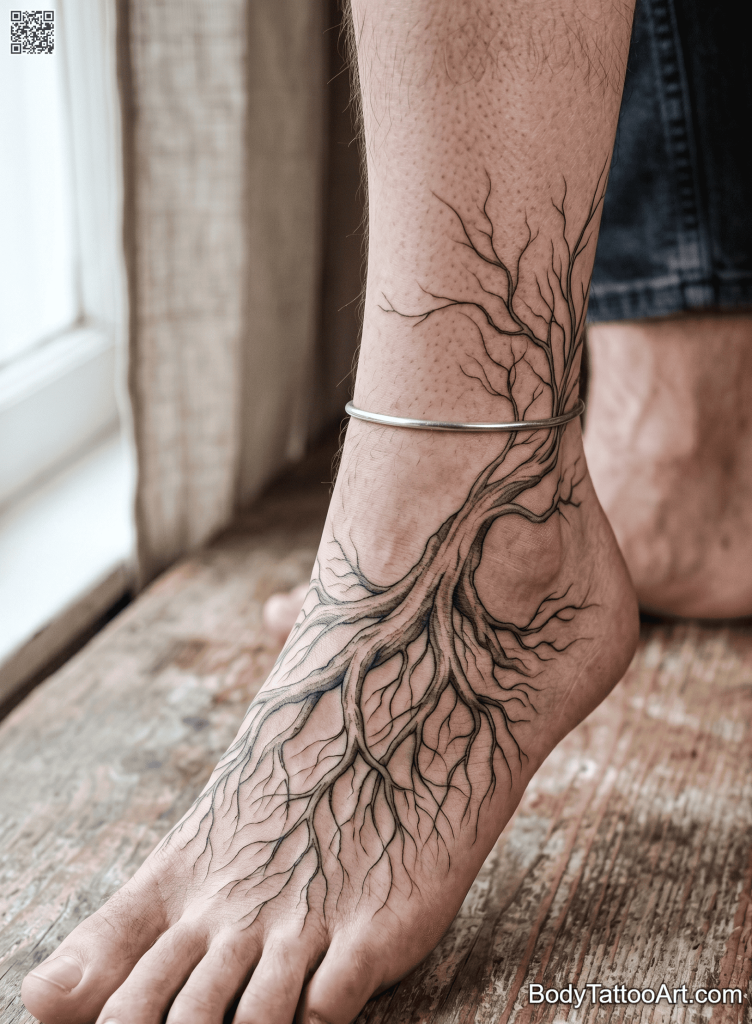
Only the root system of an oak tree is tattooed here — spreading wide and deep, with thick main roots splitting into finer tendrils. There are no branches or canopy. Just the underground structure of the tree, rendered in fine line with subtle grey shading.
Placement: Foot and ankle
Style: Fine line grey wash Oak Tree Tattoos
Why it stands out: Flipping the usual tree tattoo upside down — showing only the roots — makes this design unexpected and quietly powerful.
Ideal for: People who want something understated with a different visual angle.
An entire oak tree — trunk, roots, and canopy — is built only from dots. No lines are used anywhere. The density of dots changes to create shading and depth — tighter in the shadows, more spread out in the light areas.
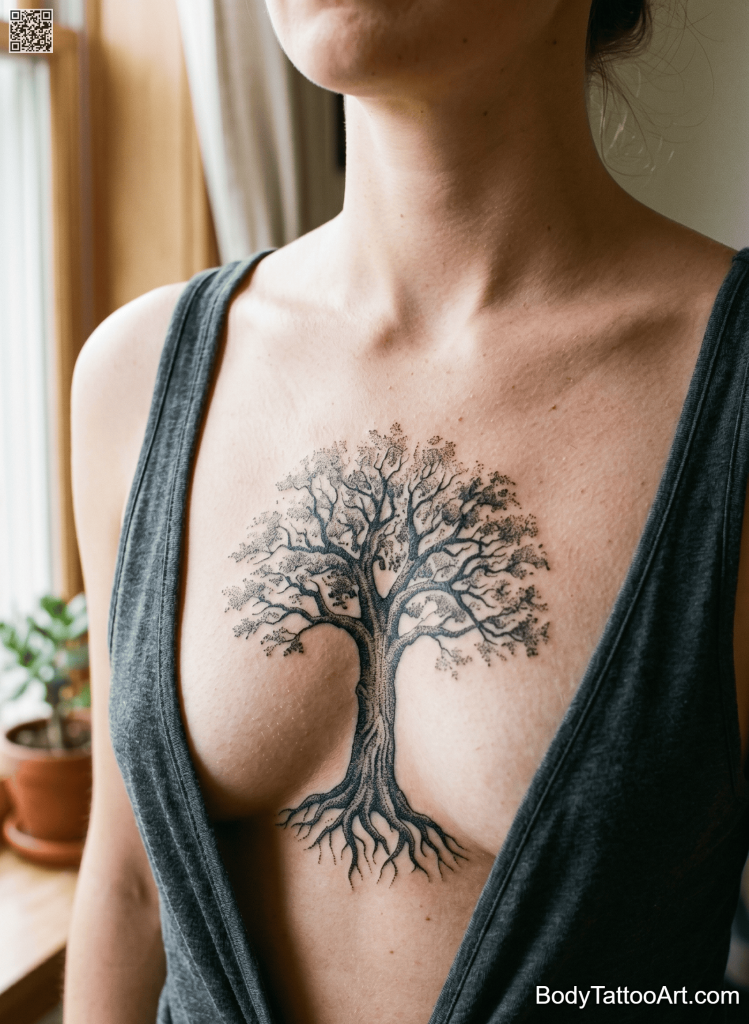
Placement: Sternum
Style: Dotwork Oak Tree Tattoos
Why it stands out: Dotwork gives the whole piece a textured, almost etched quality. The tree looks like it was stamped into skin one dot at a time.
Ideal for: Dotwork fans, people who appreciate meticulous detail work.
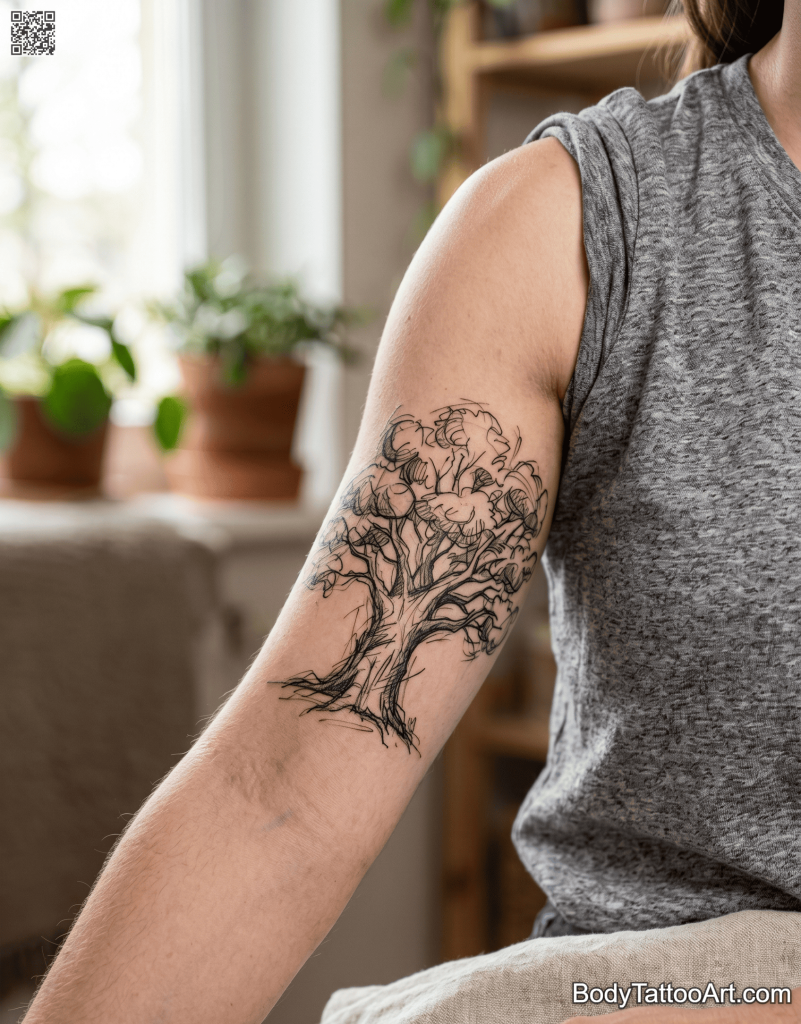
This oak tree looks like it was drawn quickly in a sketchbook — loose lines, overlapping strokes, and rough edges. The trunk has visible sketch marks and the leaves are suggested with fast, overlapping clusters of short curved lines.
Placement: Inner upper arm
Style: Sketch / illustrative Oak Tree Tattoos
Why it stands out: The intentional imperfection makes this tattoo look alive. It feels spontaneous and personal, like a drawing someone carried around in their notebook.
Ideal for: Creative types, people who like raw, expressive aesthetics.
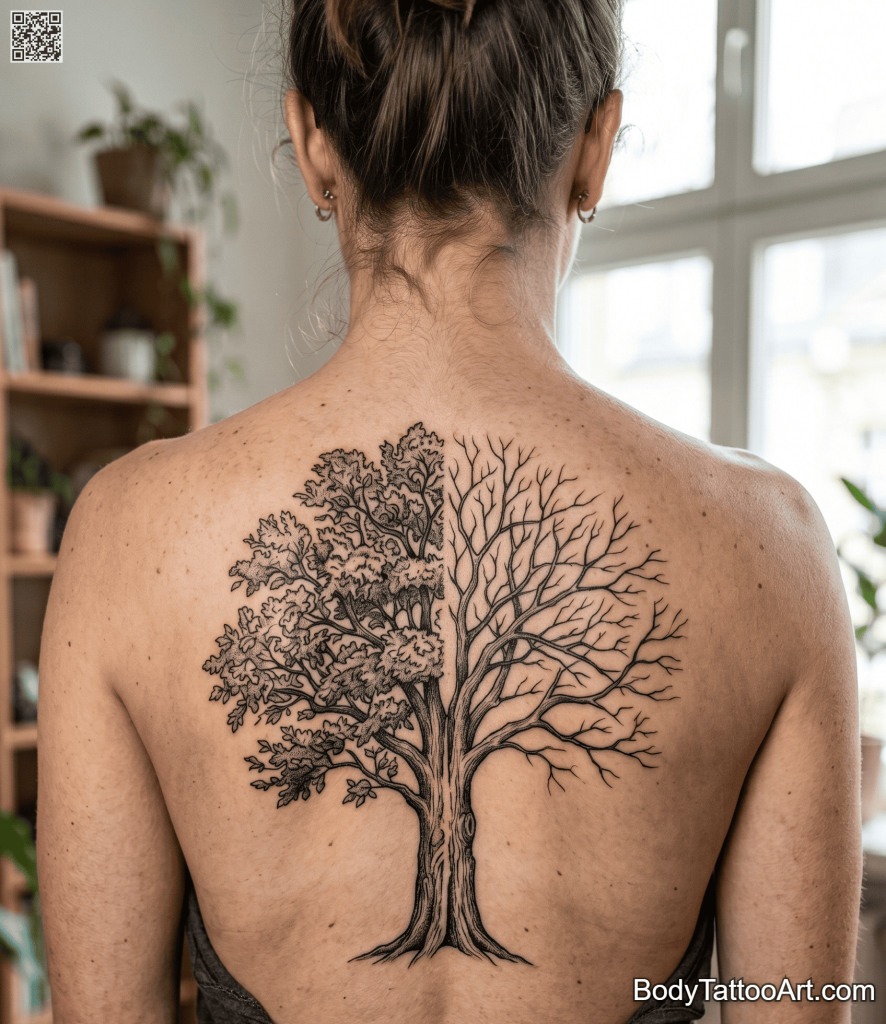
The oak tree here is split down the middle — the left half is a leafy, full-canopy summer oak, and the right half is the bare winter version with empty branches. Both halves share the same trunk. A clean, invisible line divides them.
Placement: Spine / back centerline
Style: Fine line blackwork Oak Tree Tattoos
Why it stands out: The duality built into one tree is visually clever without being heavy-handed. The contrast between both sides keeps the eye moving.
Ideal for: Conceptual tattoo lovers, people who like designs that reward a second look.
If oak tree tattoos feel too bold, there are softer botanical options to explore too. A well-designed fern tattoo or a delicate eucalyptus tattoo can carry a similar natural energy with a lighter visual weight.
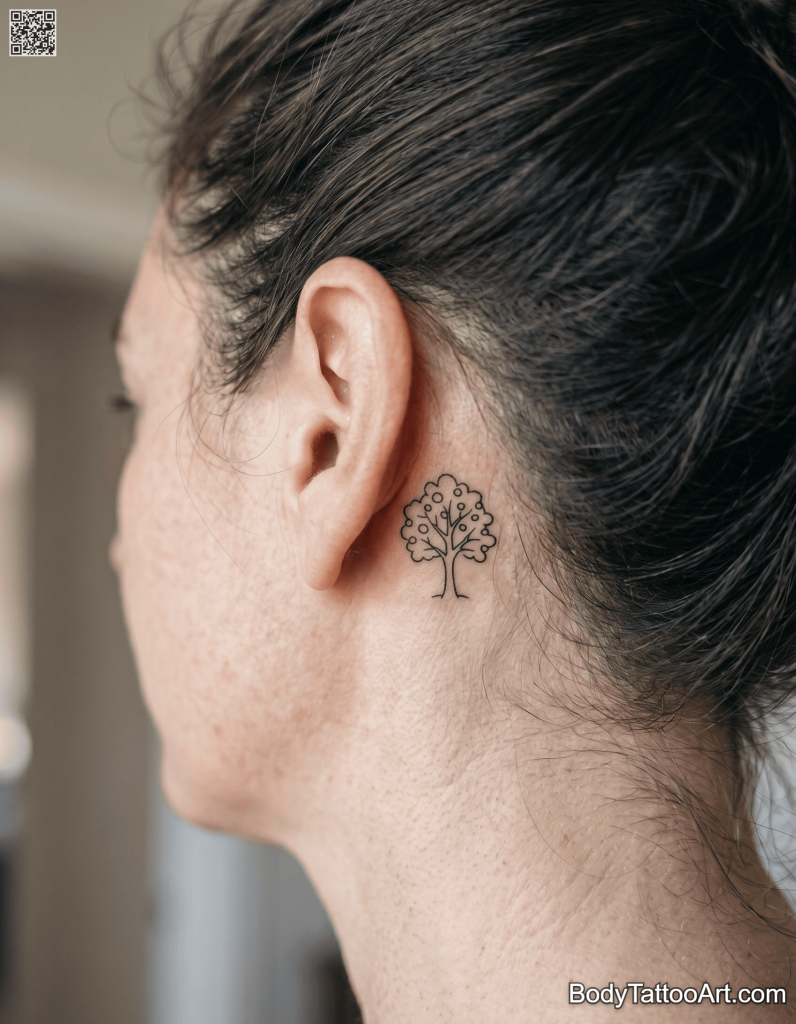
A tiny, perfectly compact oak tree sits alone on the skin. The whole design is no bigger than a coin. Every element — trunk, branches, and a small round canopy — is simplified to its most basic form. Clean outlines, no shading.
Placement: Behind the ear
Style: Minimalist fine line Oak Tree Tattoos
Why it stands out: Everything is stripped back to just the essential shape. Tiny but instantly recognizable.
Ideal for: First-timers, people who want a discreet but meaningful tattoo.
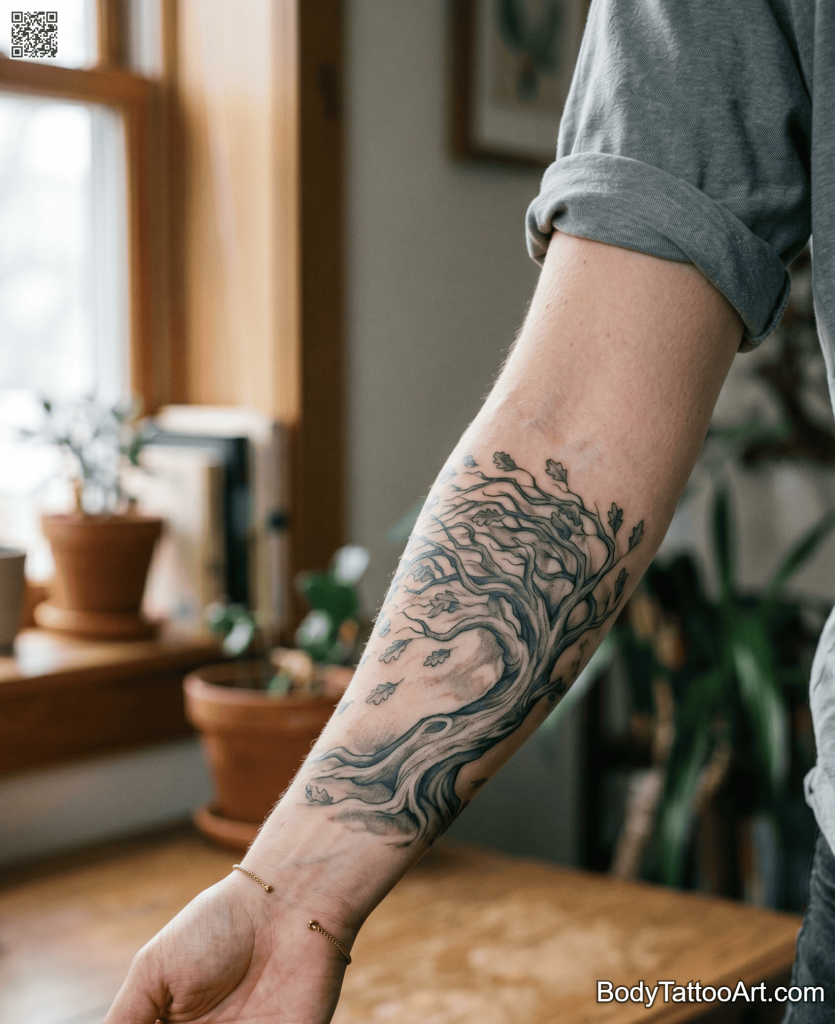
An oak tree is bent sharply to one side, as if caught in a heavy wind. The trunk curves dramatically and the branches all trail in the same direction, with leaves scattered behind them. The whole tree looks like it’s mid-storm.
Placement: Forearm
Style: Illustrative grey wash Oak Tree Tattoos
Why it stands out: Movement is hard to capture in a tattoo, but this design does it well. The bend and scatter of leaves read as motion without needing any extra effects.
Ideal for: People who want something with visual energy and narrative tension.
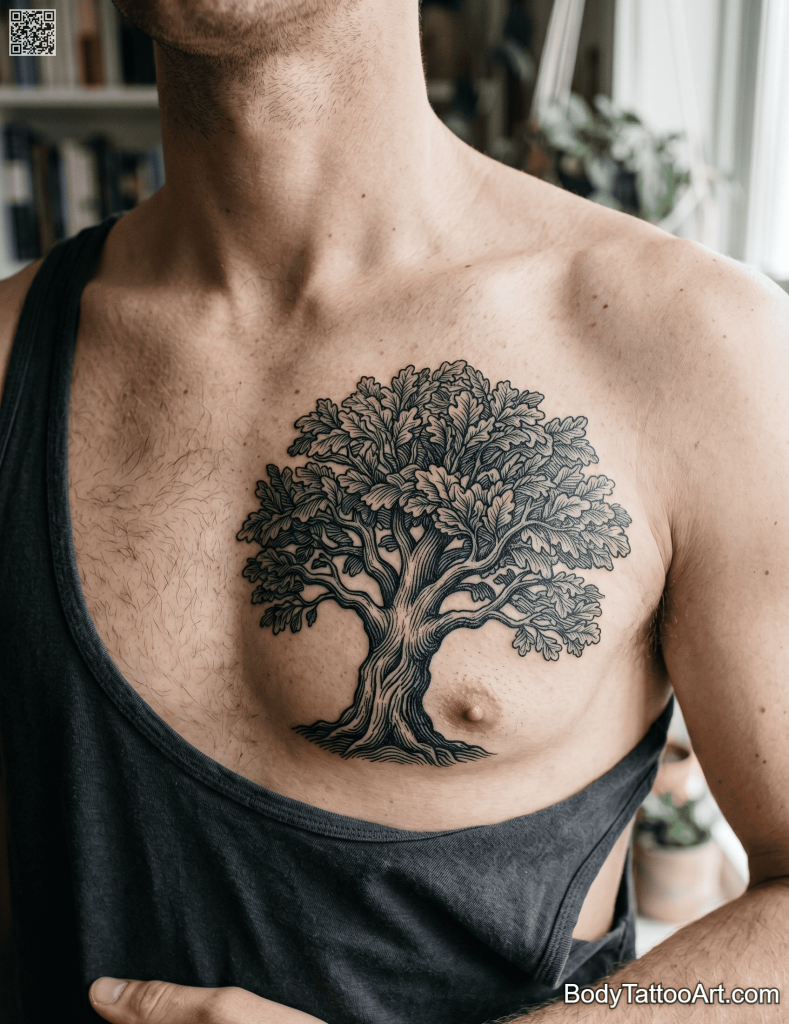
This design mimics the look of an old woodblock or engraving. Parallel lines of different thicknesses fill the shadows, and the overall style looks like something out of a 17th-century botanical illustration.
Placement: Chest
Style: Engraving / etching Oak Tree Tattoos
Why it stands out: The historical reference elevates this beyond a simple tree tattoo. It looks like a piece of art pulled from a very old book.
Ideal for: History lovers, collectors, people who like vintage aesthetics.
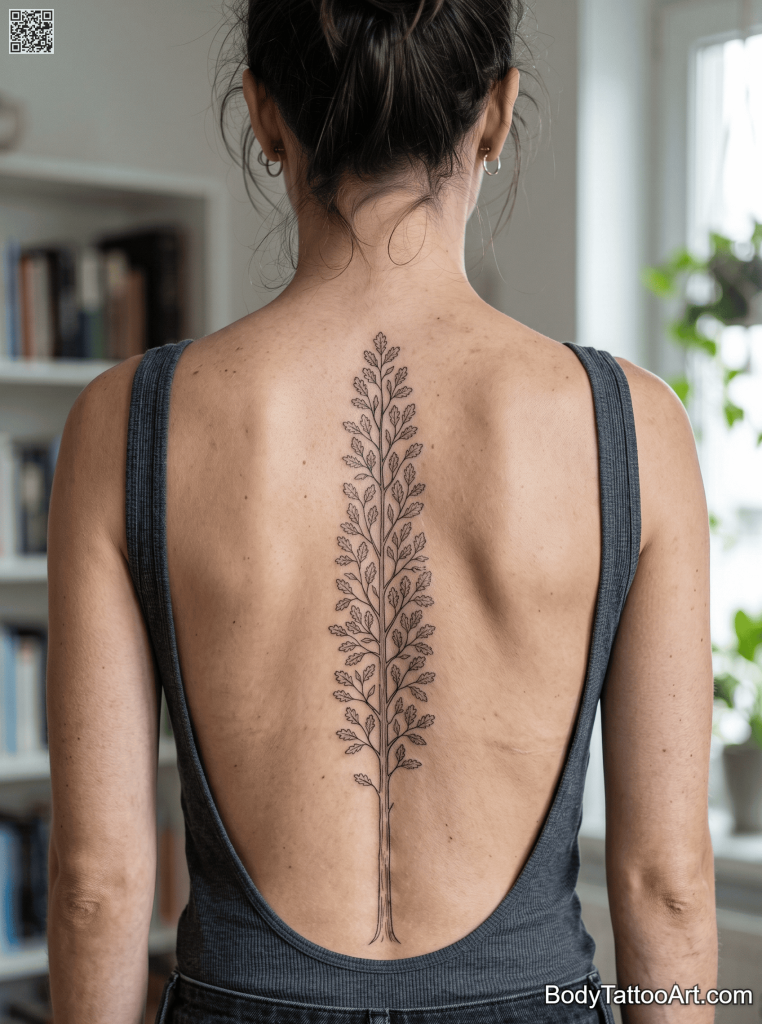
This oak tree grows tall and narrow — branches reaching straight up instead of spreading wide. The trunk is thin and the branches stretch vertically, giving the whole design a cathedral-like feel.
Placement: Spine
Style: Fine line Oak Tree Tattoos
Why it stands out: Most oak tree tattoos go wide. This one goes tall, which makes it feel completely different in shape and energy.
Ideal for: People who want a spine tattoo that feels vertical and elegant.
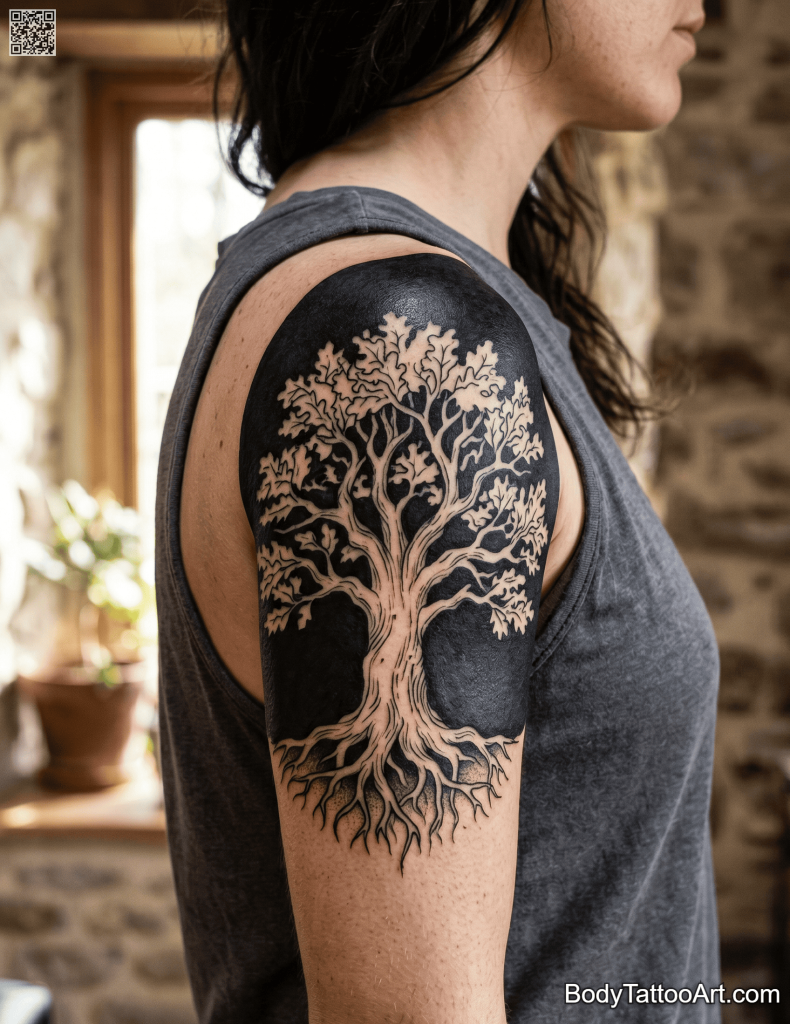
The oak tree is formed entirely in negative space — the background is filled with solid black ink, and the tree shape is left as bare skin. The trunk, branches, and some leaf clusters appear as untattooed skin within the black field.
Placement: Upper arm / sleeve section
Style: Negative space blackwork Oak Tree Tattoos
Why it stands out: The reversal of ink and skin creates a striking visual that takes a moment to read. The tree is absence, not presence — which is an interesting flip on expectation.
Ideal for: Bold tattoo lovers, people who want something visually challenging.
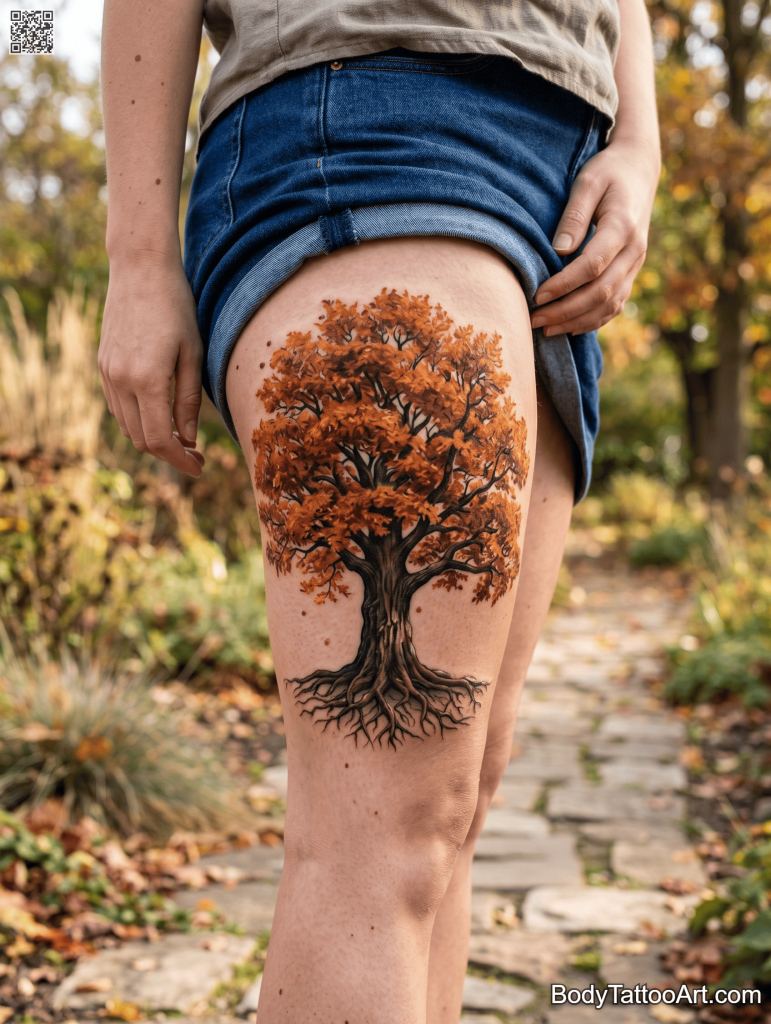
This oak tree tattoo is in full autumn color — leaves in deep orange, burnt sienna, and golden yellow. The trunk is tattooed in dark brown and the roots dig into the ground at the base. It’s rich in color and warmth.
Placement: Thigh
Style: Color realism Oak Tree Tattoos
Why it stands out: The color range here is warm and deep — nothing neon or pastel. It feels like walking past a real oak tree in October.
Ideal for: People who love color tattoos with a natural, earthy palette.
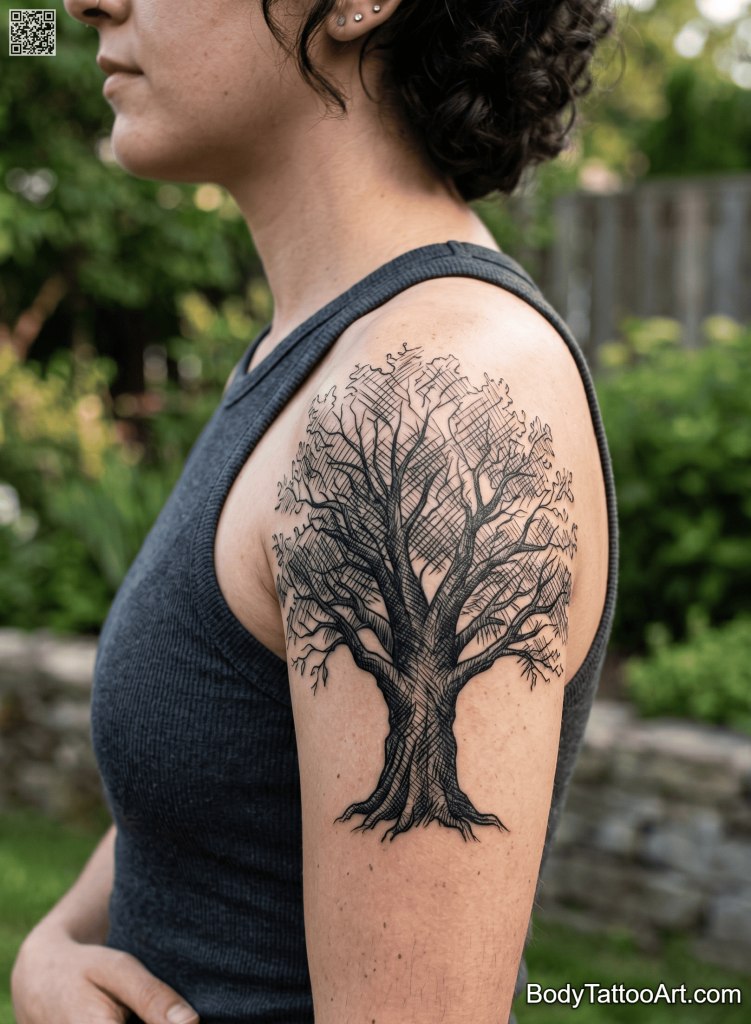
Every shadow and texture in this oak tree tattoo is created using crosshatching — overlapping diagonal lines that build up into tonal areas. The trunk is dense with crosshatch marks and the canopy gets lighter toward the edges.
Placement: Shoulder
Style: Pen and ink / crosshatch Oak Tree Tattoos
Why it stands out: Crosshatch creates a completely different texture than shading or dotwork. It gives the tree an almost hand-drawn pen-on-paper quality.
Ideal for: People who love detailed, meticulous tattoo work.
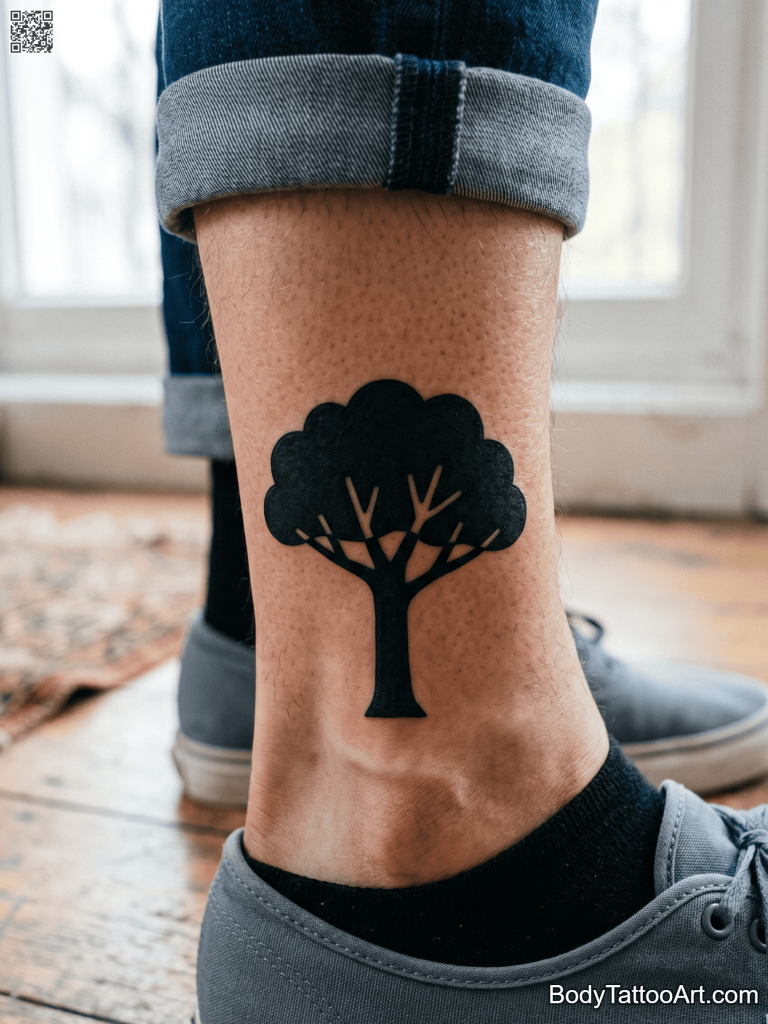
This oak tree is bold, flat, and graphic — solid black shapes with no shading or texture at all. The trunk is a simple dark form, the branches are flat lines, and the canopy is a solid black cloud shape.
Placement: Ankle
Style: Bold graphic / flat design Oak Tree Tattoos
Why it stands out: The total absence of shading makes this feel modern and design-forward. It looks almost like a logo or a stamp.
Ideal for: People who like graphic design, bold simple tattoos, modern aesthetics.
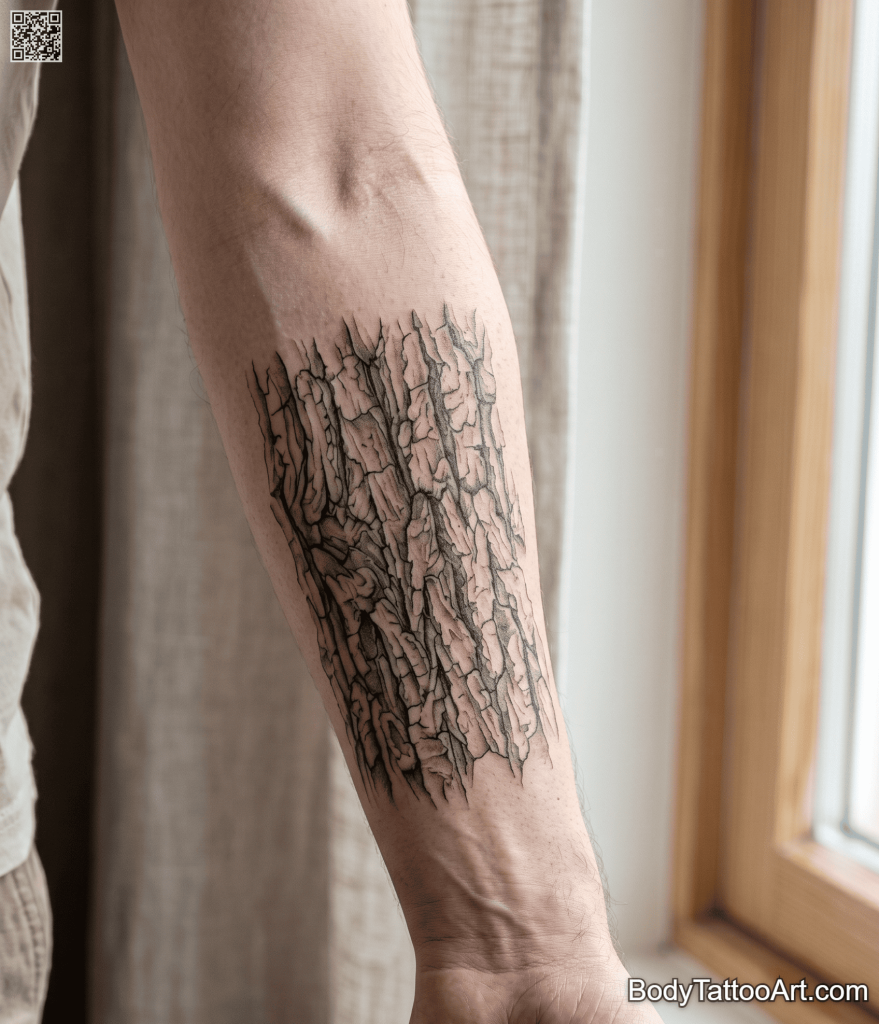
This tattoo zooms in on just a section of the oak trunk — no canopy, no branches, just the bark in extreme close-up. The grain and texture of the bark are rendered in fine line with grey shading, showing every split and ridge of the wood.
Placement: Inner forearm
Style: Hyper-realistic fine line Oak Tree Tattoos
Why it stands out: The close-up perspective is unusual and unexpected. It turns a part of the tree into a full composition on its own.
Ideal for: Realism lovers, people who want something different from the typical full-tree composition.
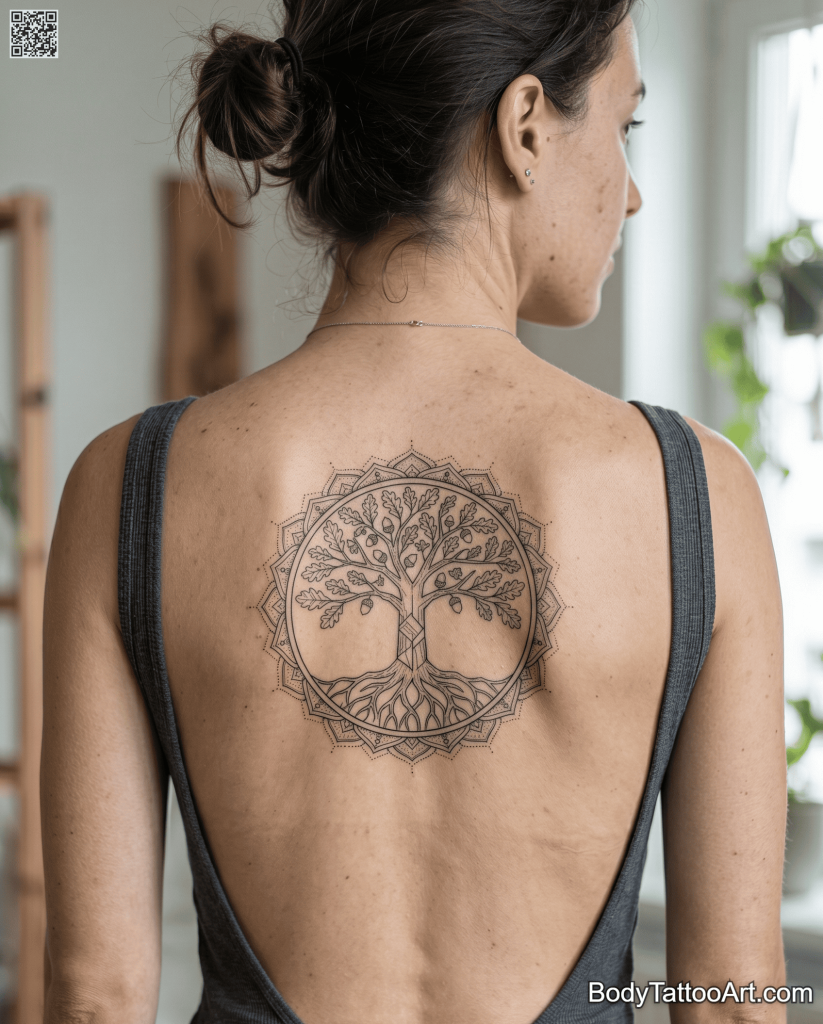
The oak tree is placed inside a perfect circle, with its branches filling the upper arc and its roots filling the lower arc. Thin geometric border lines wrap the circle. The tree itself is in fine line and the border has a delicate mandala-inspired pattern.
Placement: Upper back
Style: Fine line geometric Oak Tree Tattoos
Why it stands out: The combination of organic tree form inside a rigid geometric circle creates a satisfying visual tension. Neither element overwhelms the other.
Ideal for: People who want structured, symmetrical tattoos with a natural subject.
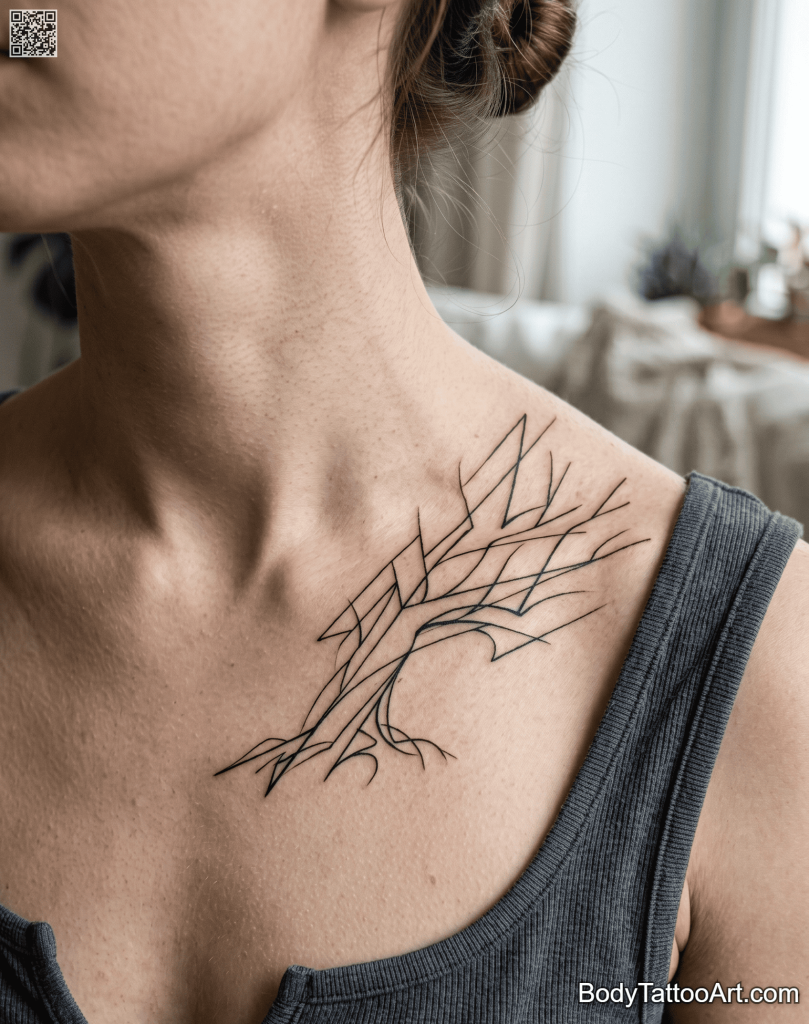
This oak tree is broken down into abstract lines — not a realistic tree at all, but a series of angled lines and curves that suggest the form of an oak without literally drawing one. Negative space plays a major role in defining the shape.
Placement: Collarbone
Style: Abstract fine line Oak Tree Tattoos
Why it stands out: It requires the viewer to participate — to complete the image in their mind. Not everyone will read it as a tree right away, and that’s the point.
Ideal for: People who love abstract art and want a tattoo that sparks conversation.
For those exploring nature-inspired tattoos beyond oak tree tattoos, a palm leaf tattoo brings a completely different mood — lighter, coastal, and sun-soaked.
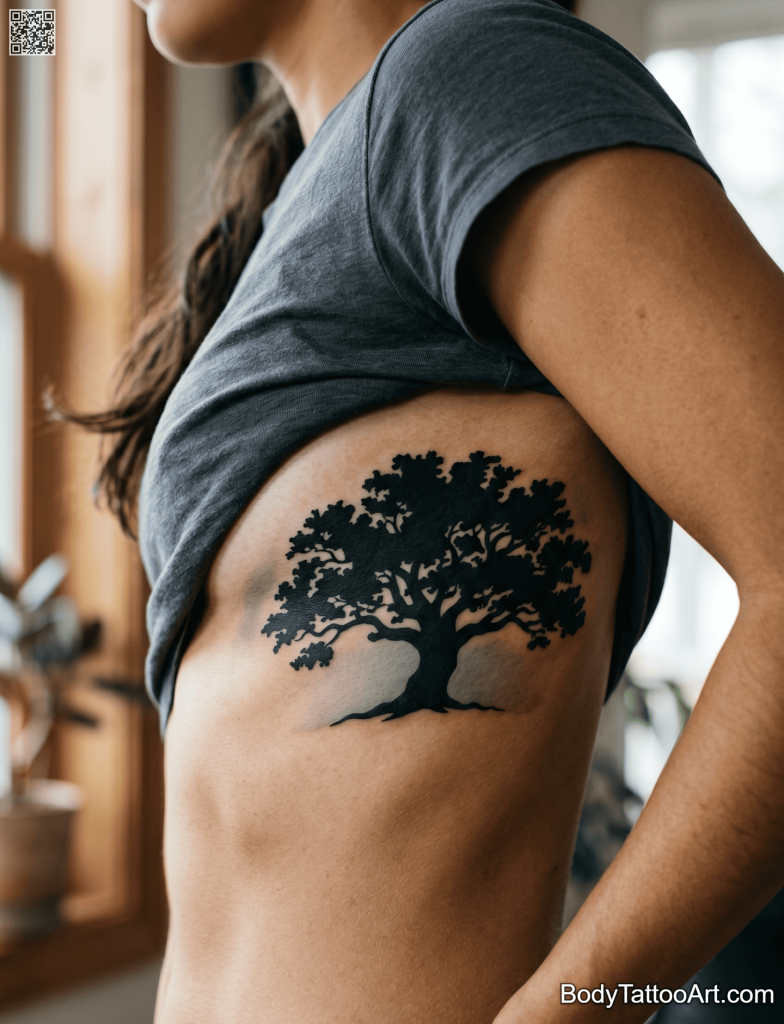
The oak tree is a solid black silhouette placed in front of a faded gradient background — pale grey fading to skin tone — that suggests a sunset sky. The tree is dark and flat, the sky behind it is soft and open.
Placement: Ribcage
Style: Silhouette with gradient shading Oak Tree Tattoos
Why it stands out: The interplay of solid black against the soft gradient makes the tree feel like it’s in a landscape, even without any ground detail.
Ideal for: People who want something with atmosphere but not too much detail.
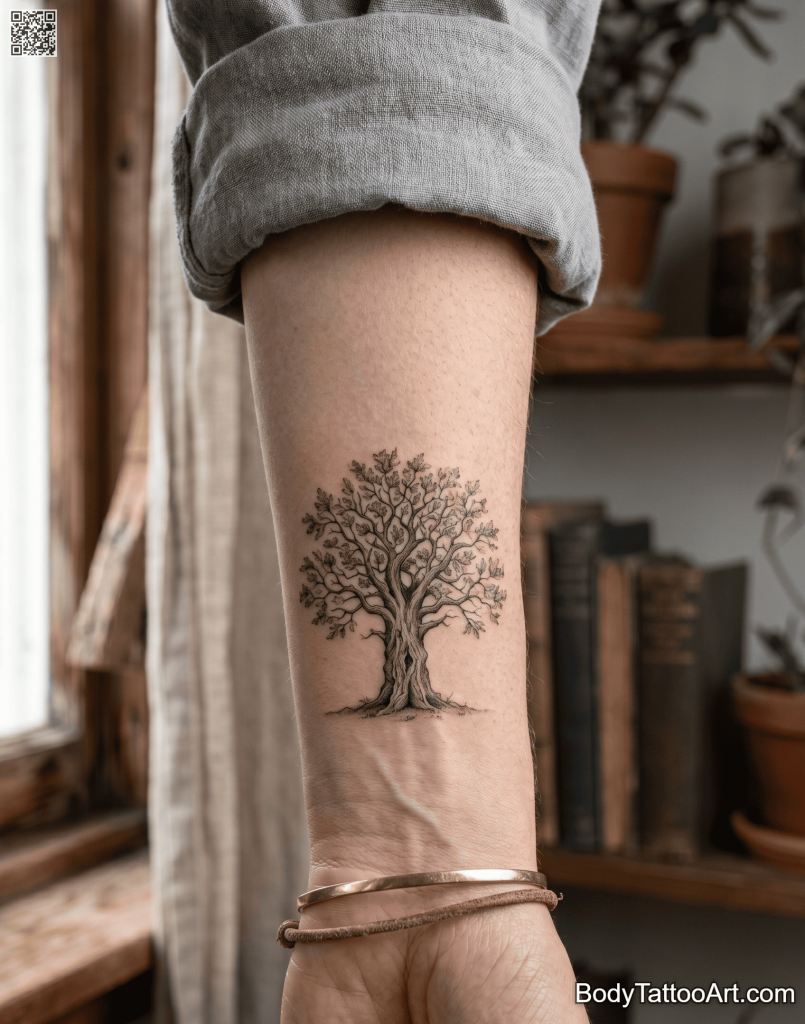
This is a tiny realistic oak tree — no bigger than a matchbox — with fully detailed bark texture, fine branches, and tiny leaf clusters, all packed into a miniature scale.
Placement: Inner wrist
Style: Micro realism Oak Tree Tattoos
Why it stands out: The level of detail packed into such a small space is what makes this one impressive. It rewards close inspection.
Ideal for: People who love fine detail work and want something subtle but technically impressive.
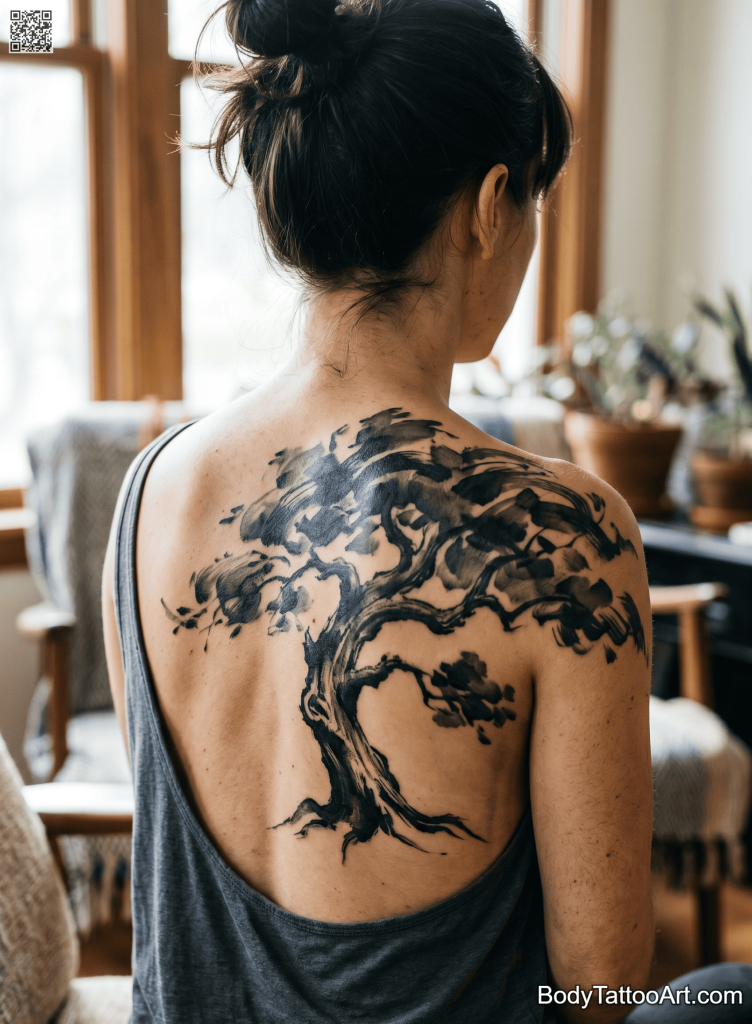
The oak tree is rendered in a loose, expressive Japanese sumi-e brushwork style. The strokes are wide and gestural — the trunk made with one broad brushstroke and the canopy with overlapping sweeping marks. Ink wash fills the shadows.
Placement: Upper back / shoulder
Style: Japanese brush / sumi-e Oak Tree Tattoos
Why it stands out: Brushwork tattoos have a freedom to them that linework doesn’t. The tree feels like it was made in one breath.
Ideal for: People who love East Asian art styles, expressive and painterly tattoos.
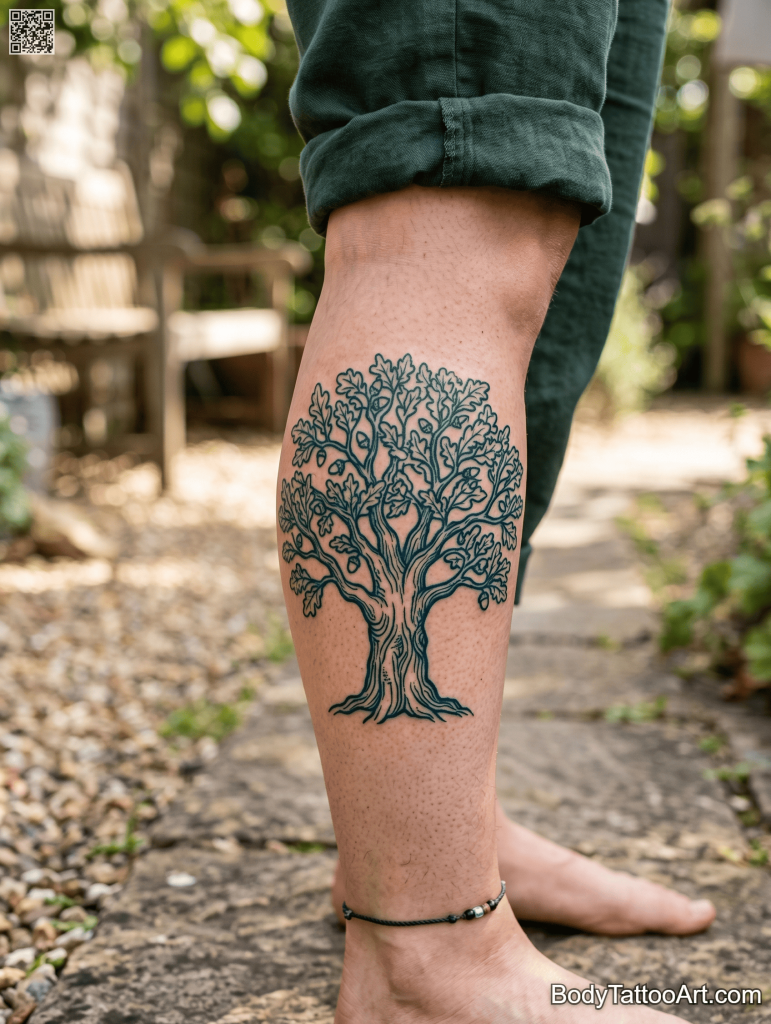
The oak tree outline glows — tattooed in a single bright color (deep teal or electric blue) against pale skin, with no black ink at all. The lines are slightly thick and the whole tree reads as a bold outline drawing in color.
Placement: Outer calf
Style: Color line work / neon Oak Tree Tattoos
Why it stands out: Most tree tattoos default to black. A single vivid color outline completely changes the energy — younger, bolder, more graphic.
Ideal for: People who want color tattoos that are minimal but not boring.
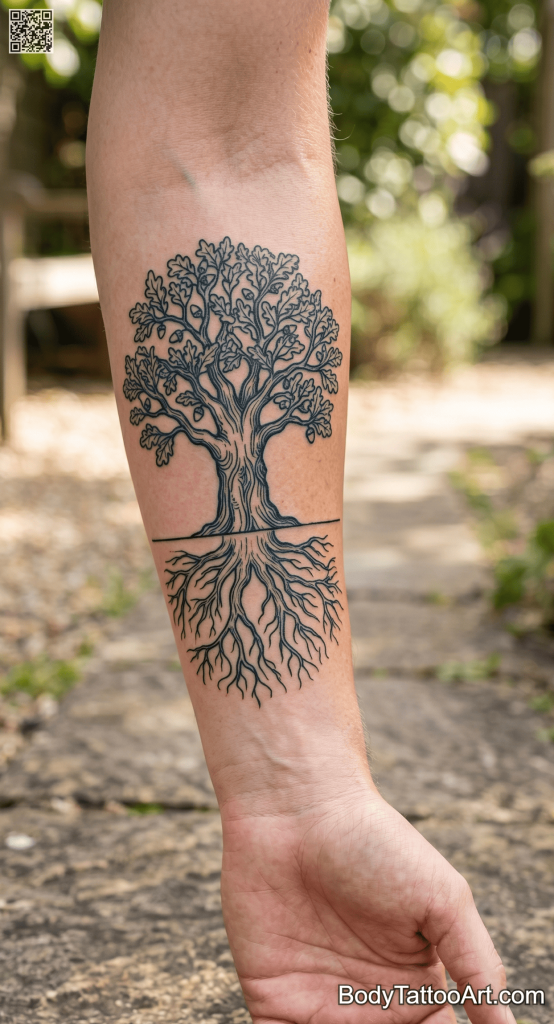
This tattoo shows equal focus on what’s above and below the soil line. A horizontal line runs across the middle of the design — above it, the oak’s canopy; below it, the root system mirroring the branches in size and spread. The two halves are almost symmetrical.
Placement: Forearm
Style: Fine line blackwork Oak Tree Tattoos
Why it stands out: The symmetry between roots and canopy makes this design feel complete in a way most tree tattoos don’t. It shows the whole tree, not just the visible part.
Ideal for: People who want a more thoughtful, structural composition.
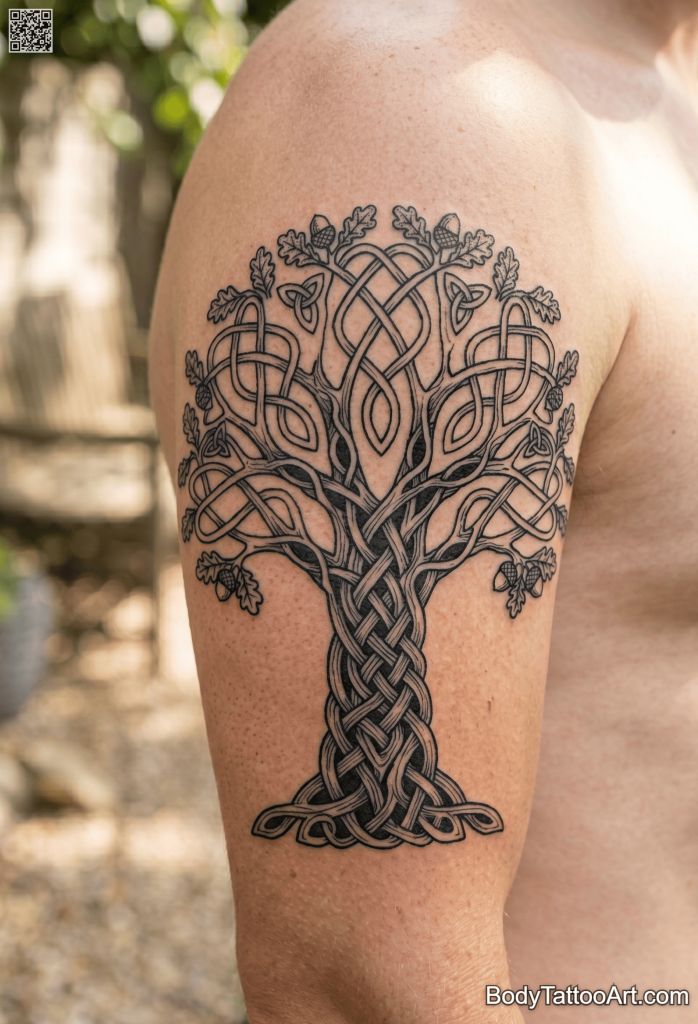
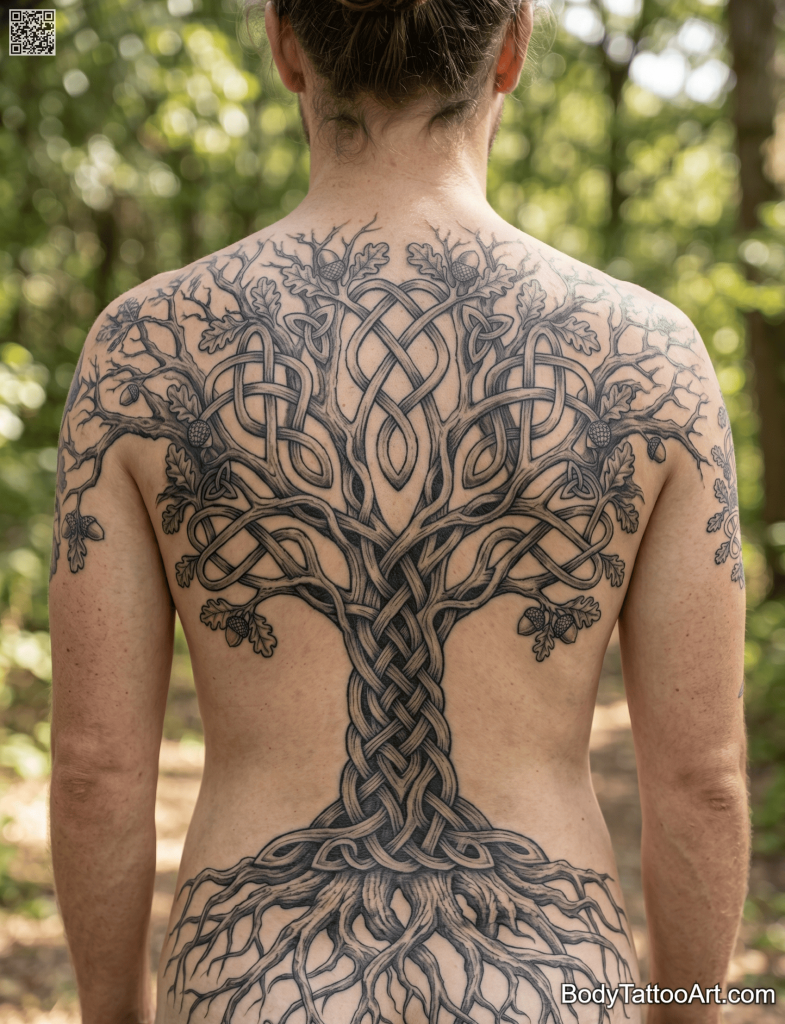
The trunk and main branches of this oak tree are made from interlocking Celtic knot patterns. The knotwork flows naturally through the tree’s form — tighter in the trunk, spreading looser through the branches.
Placement: Upper arm / sleeve section
Style: Celtic blackwork Oak Tree Tattoos
Why it stands out: Celtic knotwork and the oak already have deep historical ties, but seeing the knotwork become the tree itself — not just surround it — is a fresh take.
Ideal for: People with Celtic heritage or an affinity for interlaced pattern work.
The entire back is the canvas here. An oak tree fills the space from the lower back up through the shoulders, with the root system spreading across the lower back and the canopy sprawling across the upper back. It’s a full masterpiece piece with grey wash shading and incredibly detailed bark.
Placement: Full back
Style: Grey wash realism Oak Tree Tattoos
Why it stands out: At full-back scale, every detail of the oak — bark texture, individual branch splits, root tendrils — gets the space it deserves. There’s no compression, no simplification. Just the whole tree.
Ideal for: Collectors, experienced tattoo enthusiasts, people committed to large statement pieces.
Oak tree tattoos are genuinely one of the most versatile subjects in tattoo design. There is no single way to do one. From a tiny minimalist stamp behind the ear to a full-back grey wash masterpiece, oak tree tattoos adapt to every scale and every style.
The design choices above cover a wide range — from bare winter branches to Celtic knotwork, from negative space to watercolor. Each one is a different visual answer to the same subject.
Anyone thinking about their next piece should consider what style fits their skin and their life, and let the oak tree do the rest. It has been a meaningful image for thousands of years — and it will continue to be for good reason.
Looking for more botanical tattoo inspiration? The Bamboo Tattoos collection is a great next stop for anyone who loves plant-based designs with a bold edge. And for something lighter and more delicate, the lavender tattoo ideas roundup covers one of the most requested floral tattoos right now.