Physical Address
304 North Cardinal St.
Dorchester Center, MA 02124
Physical Address
304 North Cardinal St.
Dorchester Center, MA 02124

There’s something magnetic about octopus tattoos. Maybe it’s the tentacles that seem to move even when the ink is dry. Maybe it’s how effortlessly the design wraps around the body. Whatever the reason, octopus tattoos have become one of the most searched tattoo ideas for good reason — they offer endless creative flexibility across styles, sizes, and placements.
Whether someone wants a delicate fine line piece on the wrist or a full blackwork sleeve, the octopus as a subject holds up. It works in realism, in abstract art, in geometric compositions, and even in watercolor washes. Few tattoo subjects are this versatile.
This blog rounds up 24 distinct octopus tattoo ideas — each one different from the last in terms of design approach, composition, and style. If you’ve been sitting on the idea of getting an octopus tattoo, this list is a solid place to start.
For those still building out their tattoo research, lotus tattoo designs and tiger tattoo ideas are popular reads that offer similarly wide variation in style and composition.
The octopus has deep roots in myth and symbolism across many cultures. In Hawaiian mythology, the octopus is considered a survivor from a previous world. In Japanese culture, it appears in art dating back centuries, most famously in Hokusai’s woodblock prints. In Celtic and Nordic traditions, sea creatures of this kind are associated with mystery, the deep unknown, and adaptability.
What makes the octopus symbolically rich is how many different qualities it represents at once. Its ability to change colour signals transformation. Its intelligence — it’s one of the few invertebrates that uses tools — connects it to wisdom and problem-solving. The eight arms are often linked to the number eight in numerology, which represents cycles, balance, and regeneration.
For a deeper look at the biology and natural history of the octopus, Wikipedia’s article on Octopoda is a solid starting point.
Across most interpretations, octopus tattoos carry themes of adaptability, intelligence, mystery, and strength. That said, most people who get octopus tattoos choose them purely for the visual — and the visual case is extremely strong.
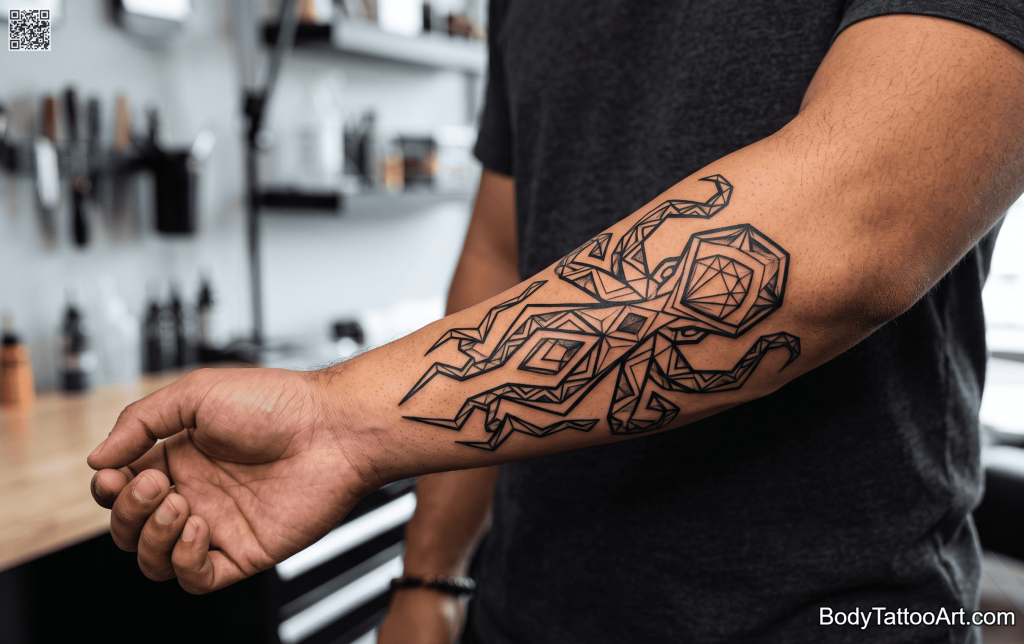
A precise geometric octopus built from interlocking triangles, hexagons, and clean lines. The body sits at the center as a structured polygon while the tentacles radiate outward in angular zigzag patterns. There’s no shading here — only crisp black linework on bare skin. The contrast between empty space and dense geometric shapes gives the piece a graphic design quality that’s uncommon in tattoo art.
Placement: Forearm
Style: Geometric blackwork Octopus Tattoos
Why it stands out: The complete absence of organic curves in an inherently flowing subject creates visual tension that makes this tattoo genuinely eye-catching.
Ideal for: Minimalist fans, architecture lovers, and those drawn to structured, modern tattoo aesthetics.
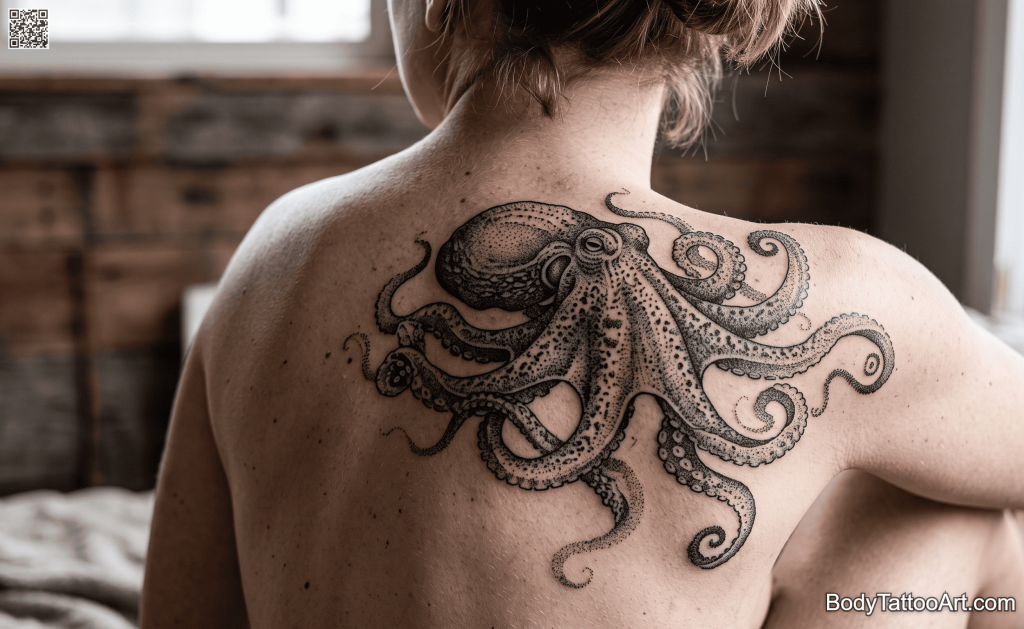
This design uses thousands of tiny dots to build up the entire octopus form — no solid lines, just point stippling that gradually thickens toward the body and fades at the tips of the tentacles. The result looks almost like the creature is materializing out of the skin. The texture is incredibly intricate up close, but from a distance, the form reads cleanly.
Placement: Upper back / shoulder blade
Style: Dotwork / stippling Octopus Tattoos
Why it stands out: The density gradient created through dot spacing alone gives this piece a three-dimensional quality that solid line tattoos rarely achieve.
Ideal for: Detail-obsessed collectors, people who appreciate slow-burn craftsmanship, and fans of fine art illustration.
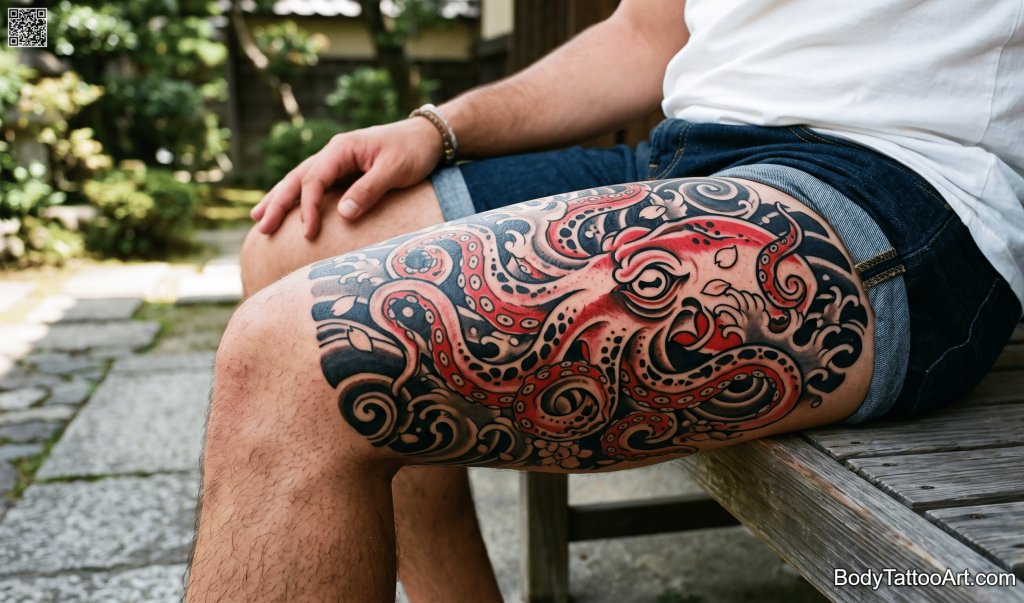
Inspired by traditional Japanese ukiyo-e prints, this octopus tattoo features bold outlines, flat colour fills in red and black, and deliberate stylisation. The tentacles curl in dramatic sweeping arcs. The eye of the octopus is exaggerated and expressive. Wave patterns in the background fill the negative space. The overall aesthetic is unapologetically bold and graphic.
Placement: Full thigh
Style: Japanese traditional / tebori-inspired Octopus Tattoos
Why it stands out: The flat colour approach and dramatic line weight make it look as though the skin itself has become a woodblock print — a rare and striking visual.
Ideal for: Japanese art lovers, those drawn to traditional tattoo formats, and people wanting a statement thigh piece.
Those planning octopus designs often explore other sea creature tattoos alongside them. Koi fish tattoos are another popular choice for those drawn to water-themed designs with deep cultural meaning.
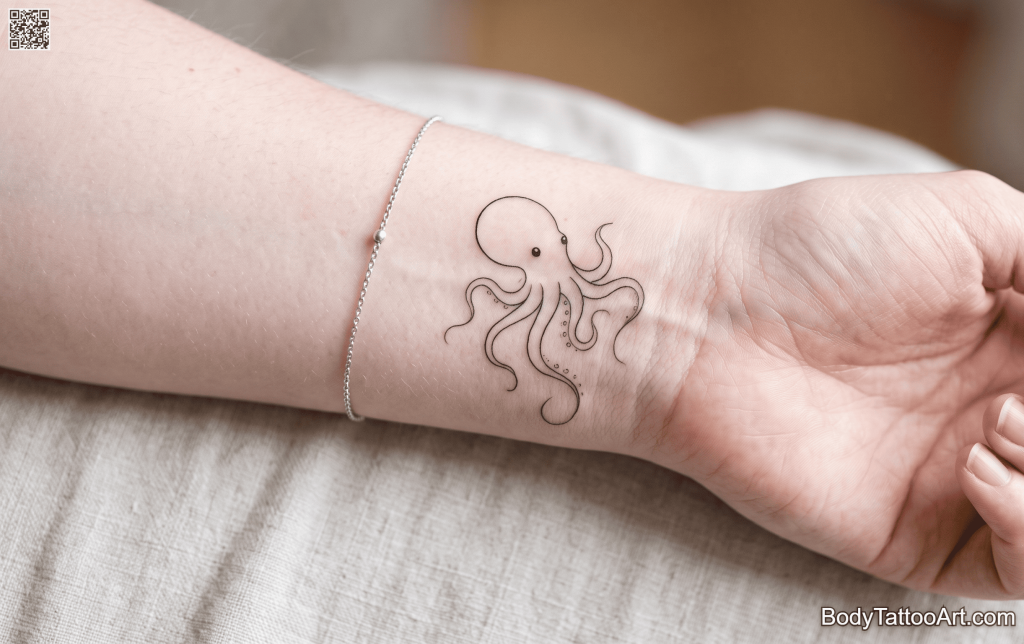
Tiny, delicate, and surprisingly precise — this small octopus is drawn with single-strand fine lines and sits neatly on the inner wrist. The proportions are simplified: a round body, eight wispy tentacles that curl softly downward. There’s no fill, no shading, just the outline and a faint suggestion of suckers along two of the tentacles.
Placement: Inner wrist
Style: Fine line minimalist Octopus Tattoos
Why it stands out: The restraint in this design is what makes it striking. Everything unnecessary has been removed, and what’s left is clean and quietly elegant.
Ideal for: First-timers, minimalists, and those who want something subtle but intentional.
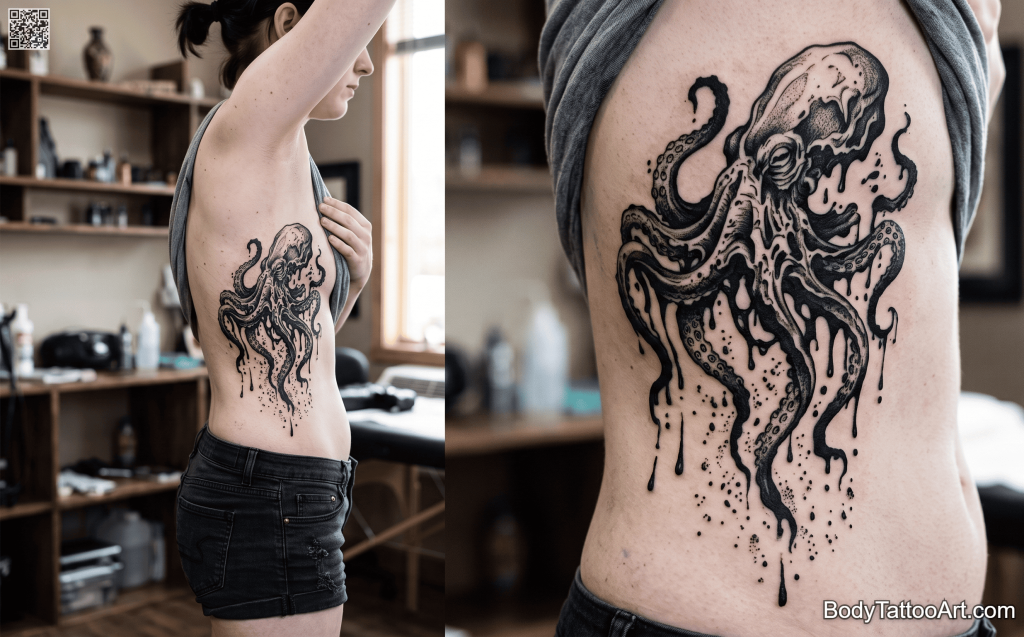
This design takes an artistic detour — the octopus looks like it’s made of liquid, with its body appearing to melt downward. The tentacles drip rather than flow, and the sucker rows dissolve into scattered droplets midway down. It’s part creature, part abstract composition, and all attitude.
Placement: Ribcage / side torso
Style: Surrealist blackwork Octopus Tattoos
Why it stands out: The melting concept turns the typical flowing tentacle look into something conceptually unusual and visually memorable.
Ideal for: Fans of avant-garde tattoo art, surrealism, and collectors who want conversation-starting pieces.
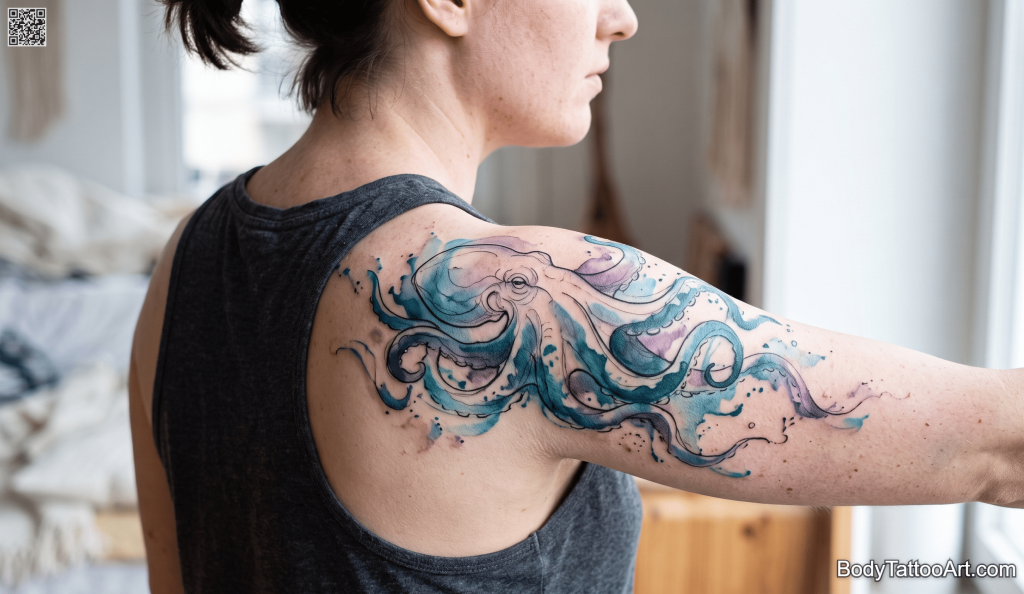
Washes of blue, purple, and deep teal bleed outward from a loosely outlined octopus body. The linework is present but thin, acting more as a guide than a boundary. The watercolour effect makes the tentacles appear to bleed into the surrounding skin. There’s a soft, painterly quality to the whole piece that feels more like fine art than traditional tattooing.
Placement: Shoulder cap / upper arm
Style: Watercolour Octopus Tattoos
Why it stands out: The controlled looseness of the colour fields — neither contained nor chaotic — gives this piece an organic, painted-from-life feeling.
Ideal for: Colour tattoo lovers, fans of abstract art, and people who want something with visual softness.
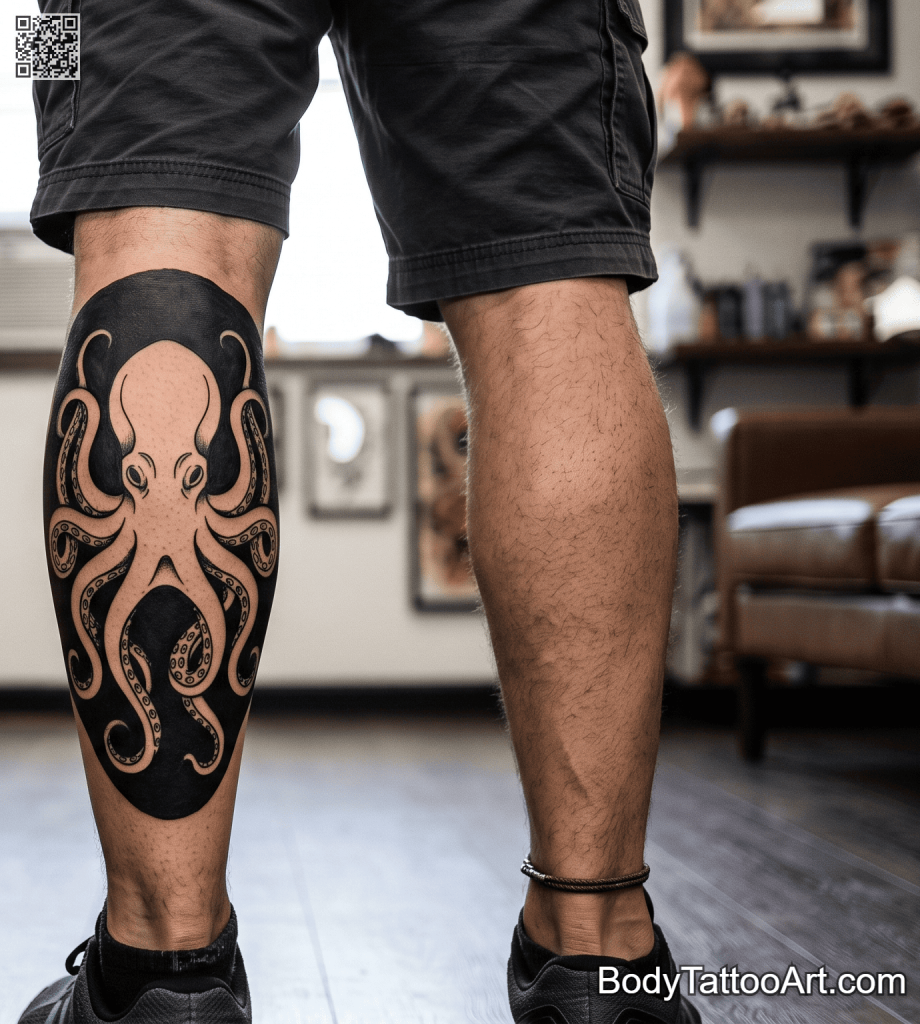
The skin itself does the work here. Instead of filling the octopus shape with ink, the tattoo artist has filled the space around it — leaving the octopus body and tentacles as untouched skin surrounded by dense black fill. The silhouette appears in reverse, which creates an almost optical illusion effect.
Placement: Calf
Style: Negative space blackwork Octopus Tattoos
Why it stands out: Inverting the expectation of where ink belongs flips the design entirely and produces something that looks engineered rather than drawn.
Ideal for: Conceptual tattoo fans, those who want bold visual impact, and anyone who’s done with conventional outlines.
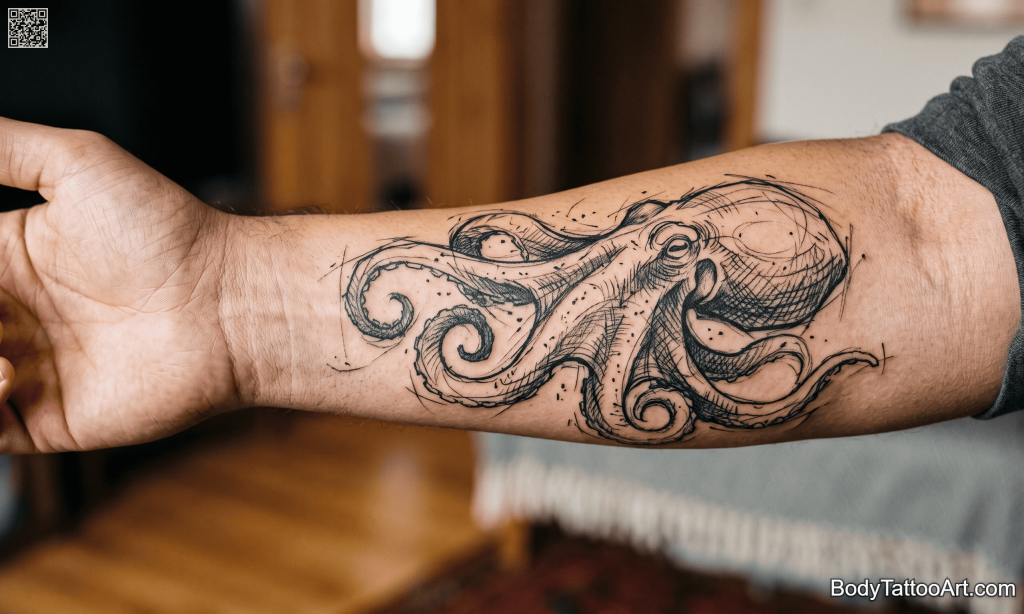
This looks like a tattoo straight out of a sketchbook — rough pencil-like strokes, unfinished edges, hatching for shadow, and visible correction marks that the artist deliberately left in. The octopus is anatomically detailed but the execution looks intentionally loose and hand-drawn. It’s the kind of tattoo that rewards close inspection.
Placement: Inner forearm
Style: Sketch / illustrative Octopus Tattoos
Why it stands out: The deliberate imperfection creates a sense of spontaneity that polished tattoos rarely capture. It wears its process openly.
Ideal for: Illustrators, sketchbook enthusiasts, and tattoo collectors who value artistic personality over precision.
People who love illustrative animal tattoos often also explore wolf tattoos and eagle tattoos, which share that same raw, expressive energy.
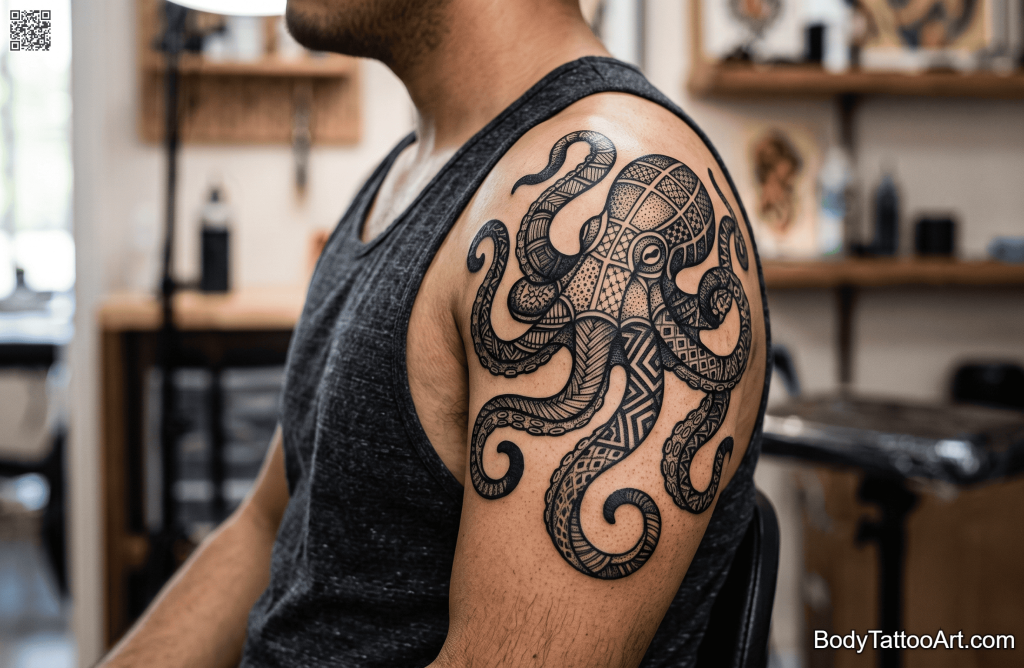
Every section of this octopus — the mantle, each tentacle segment, each sucker — contains a different black pattern: fine cross-hatching, interlocking diamonds, parallel lines, dot fills. The creature is completely black but never boring because the textures shift across every surface. It’s a labour-intensive design that functions like a patchwork quilt in octopus form.
Placement: Full sleeve segment / upper arm
Style: Ornamental blackwork Octopus Tattoos
Why it stands out: The pattern-within-pattern approach makes this tattoo something to study at length. The octopus becomes a vehicle for a dozen different decorative techniques.
Ideal for: Tattoo collectors, lovers of ornamental design, and anyone building a sleeve.
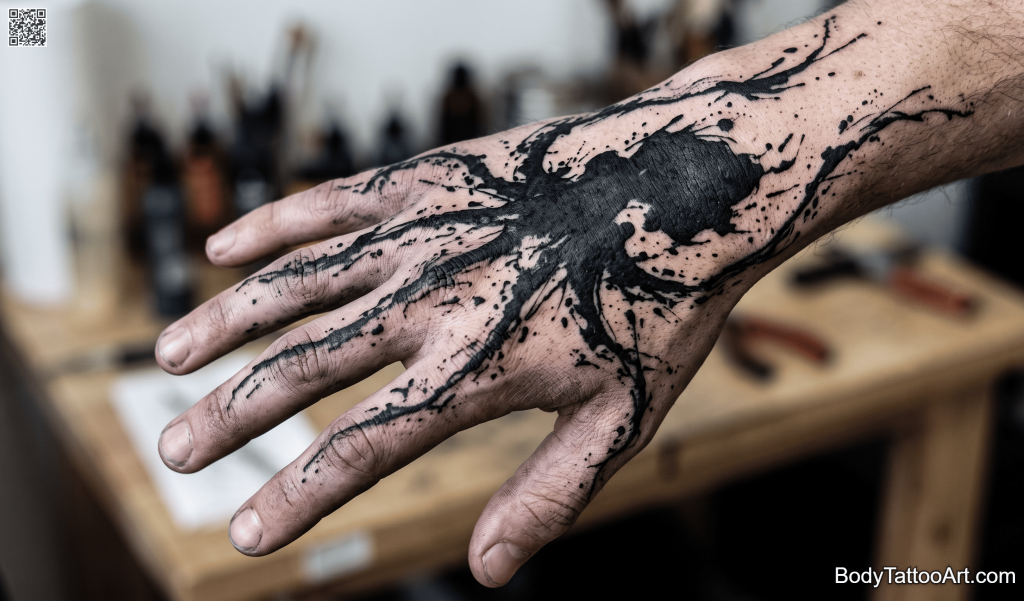
The octopus here isn’t drawn — it’s suggested. Bold, asymmetric ink splashes form the rough shape of an octopus with recognisable elements: a circular blot for the body, radiating ink trails for tentacles. It looks like the artist threw ink at the skin and let it land into something alive. The result is raw, energetic, and completely unpredictable.
Placement: Back of the hand / wrist
Style: Abstract expressionist blackwork Octopus Tattoos
Why it stands out: The controlled chaos approach makes every viewing slightly different — the eye finds new shapes each time it looks.
Ideal for: Risk-takers, fans of abstract art, and experienced collectors comfortable with unconventional designs.
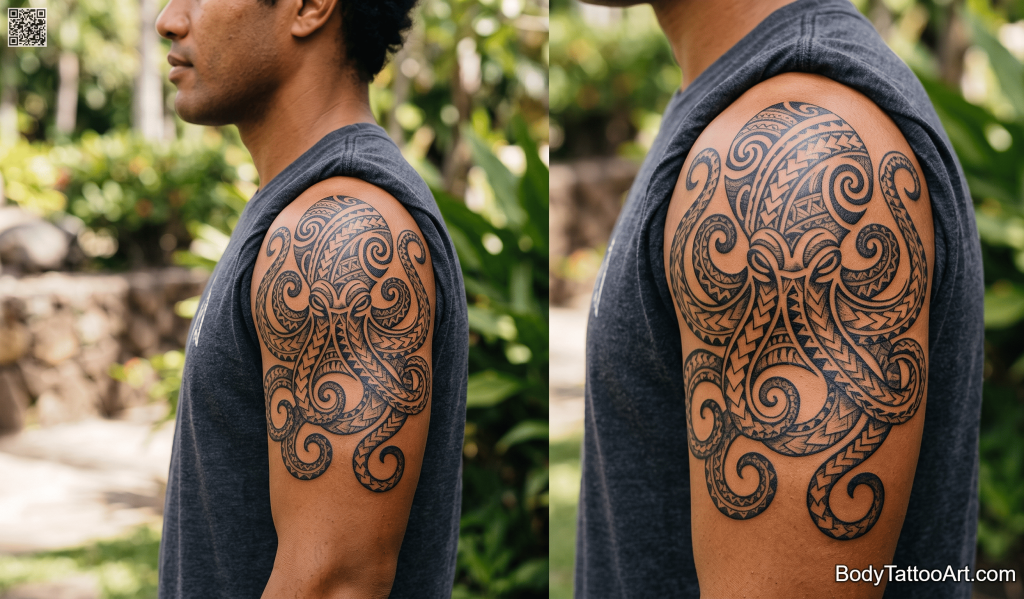
Drawing from Polynesian and Māori tattoo traditions, this design uses bold triangular forms, Māori koru spirals, and Pacific-style band patterns to compose an octopus. The creature is entirely built from traditional tribal motifs layered and arranged into the familiar silhouette. It doesn’t use a single curved organic line — every element is a traditional geometric tribal unit.
Placement: Shoulder and upper arm
Style: Polynesian / tribal Octopus Tattoos
Why it stands out: The complete construction of an animal form from traditional motifs alone is a feat of design logic that honours both the creature and the cultural tradition.
Ideal for: Those with Pacific heritage, fans of cultural tattoo traditions, and collectors seeking tattoos with heritage weight.
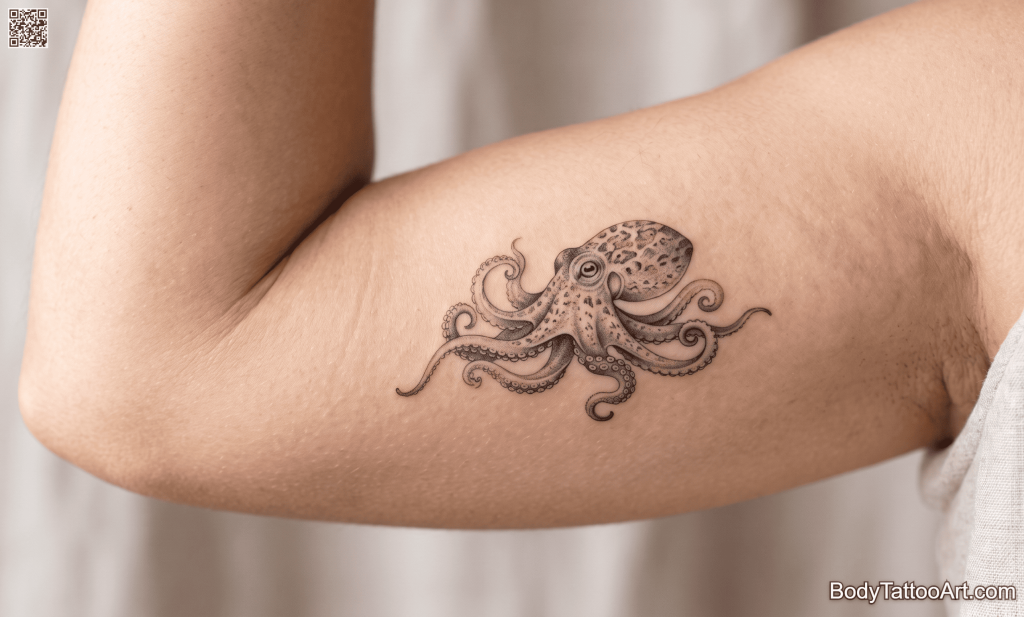
Astonishingly small for its level of detail, this tiny octopus sits on the inside of the upper arm and contains every anatomical feature of the real animal: textured skin with chromatophore spots, precisely rendered suckers along curved tentacles, and a soft grey-wash body with realistic highlights. The miniature scale is the entire point.
Placement: Inner upper arm
Style: Micro realism Octopus Tattoos
Why it stands out: The gap between the subject’s complexity and the scale it’s rendered at is genuinely impressive. This is the kind of tattoo that makes people look twice.
Ideal for: Perfectionists, collectors who prefer subtle but high-craft pieces, and those with limited real estate on the body.
Snake tattoos are another subject with a similar level of design versatility to octopus tattoos — if the serpentine form appeals to you, it’s worth looking at snake tattoo designs before booking the session.
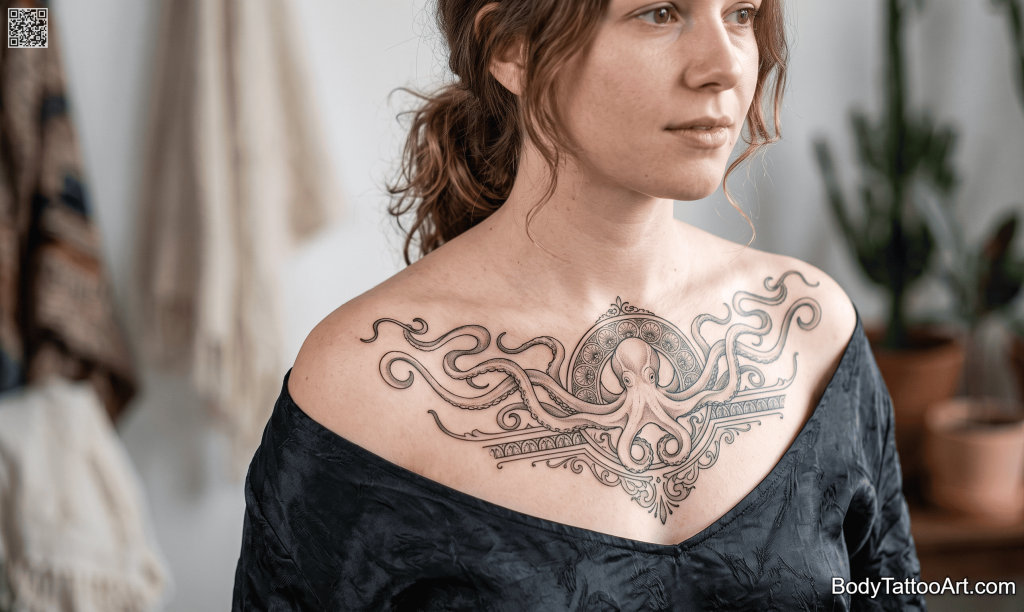
Elongated, elegant, and ornate — this design takes its cues directly from Art Nouveau illustration. The tentacles curl in long fluid S-curves that echo the decorative flourishes of Mucha and Klimt. Fine-line borders frame the composition. The octopus body sits within a circular ornamental cartouche. Every line has purpose and beauty.
Placement: Upper chest / collarbone area
Style: Art Nouveau illustrative Octopus Tattoos
Why it stands out: The rare marriage of fine art historical style with tattoo format produces something that looks like it belongs in a gallery poster rather than a flash sheet.
Ideal for: Art history lovers, collectors with maximalist aesthetic sensibilities, and those wanting a tattoo that looks like an illustration.
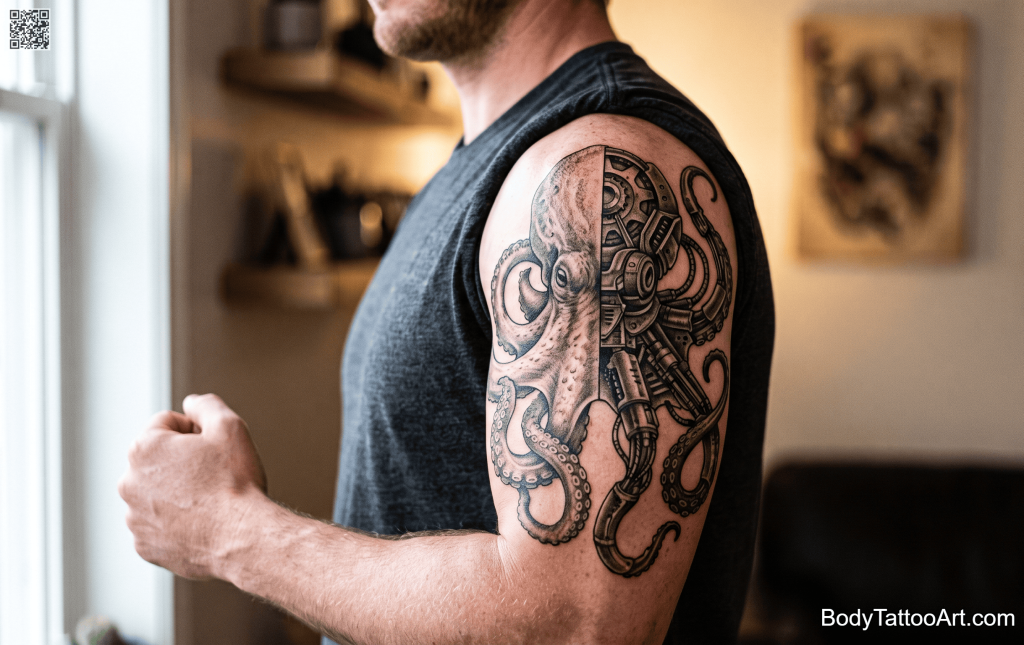
The octopus here is only partially biological. One side of the creature is organic — soft, realistic flesh and tentacles. The other side is mechanical — gears, pistons, wiring, and panels. The division runs clean down the centre of the body. The contrast between living tissue and metal hardware is precise and unsettling in the best way.
Placement: Bicep / arm
Style: Biomechanical realism Octopus Tattoos
Why it stands out: The hard left-right split between organic and mechanical creates an internal tension that keeps the eye moving back and forth across the composition.
Ideal for: Science fiction fans, collectors who appreciate conceptual tattoo narratives, and those who already have mechanical elements elsewhere in their ink.
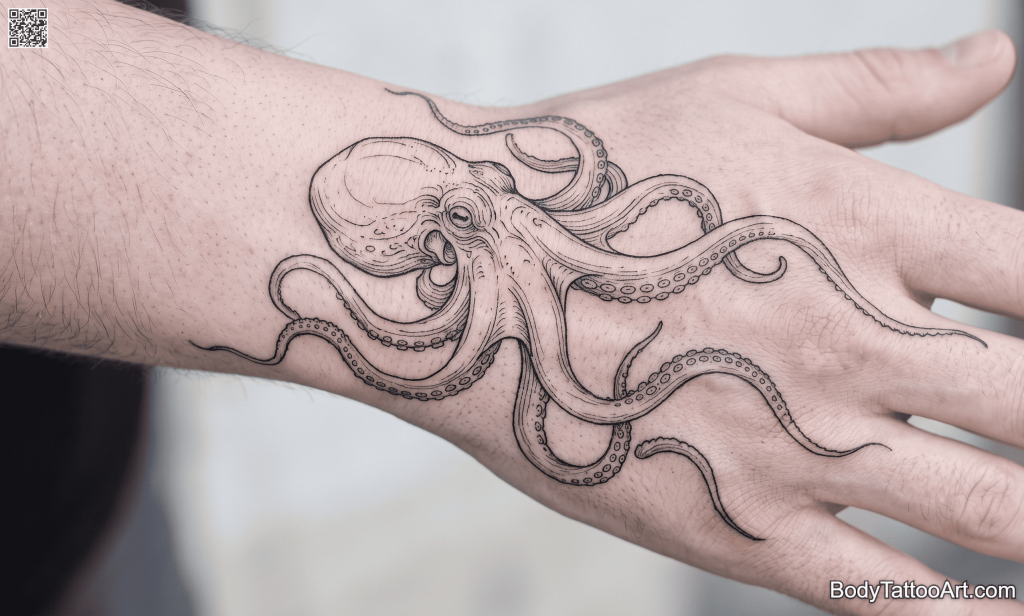
Executed with a single needle in ultra-fine black ink, this octopus tattoo prioritises line quality above all else. The tentacles have a hand-etched quality, and the sucker rows are drawn with obsessive precision. No shading, no fill — just clean, confident linework that trusts the anatomy of the subject to carry the design.
Placement: Back of the wrist / hand
Style: Single needle fine line Octopus Tattoos
Why it stands out: When shading is removed entirely, the quality of the line itself becomes the art. A design like this is only as good as the steadiness of the artist’s hand.
Ideal for: Minimalists with an eye for craft, those wanting a delicate but grown-up tattoo, and people drawn to the etching aesthetic.
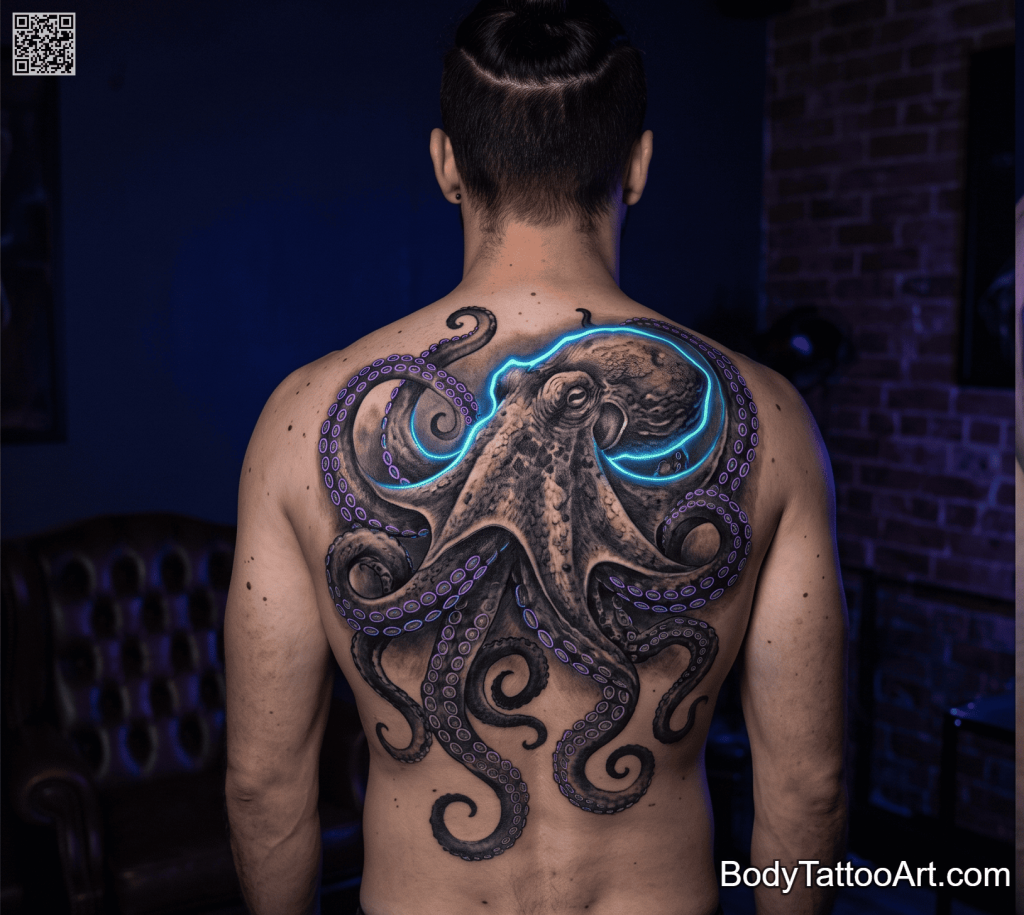
This tattoo brings the deep ocean to mind. Rendered in black and grey with strategic UV-reactive ink accents, the octopus appears to glow from within at its sucker edges and mantle border. The UV areas are invisible under normal light — in black light, they transform the tattoo entirely. The base layer looks like any sophisticated grey-wash piece, but under UV it becomes something otherworldly.
Placement: Full back
Style: Black and grey with UV reactive ink accents Octopus Tattoos
Why it stands out: The dual-layer design means the wearer carries two tattoos in one. The transformation under black light is a reveal moment that most tattoos can’t offer.
Ideal for: Adventurous collectors, night-out personalities, and those who want their tattoo to hold a secret.
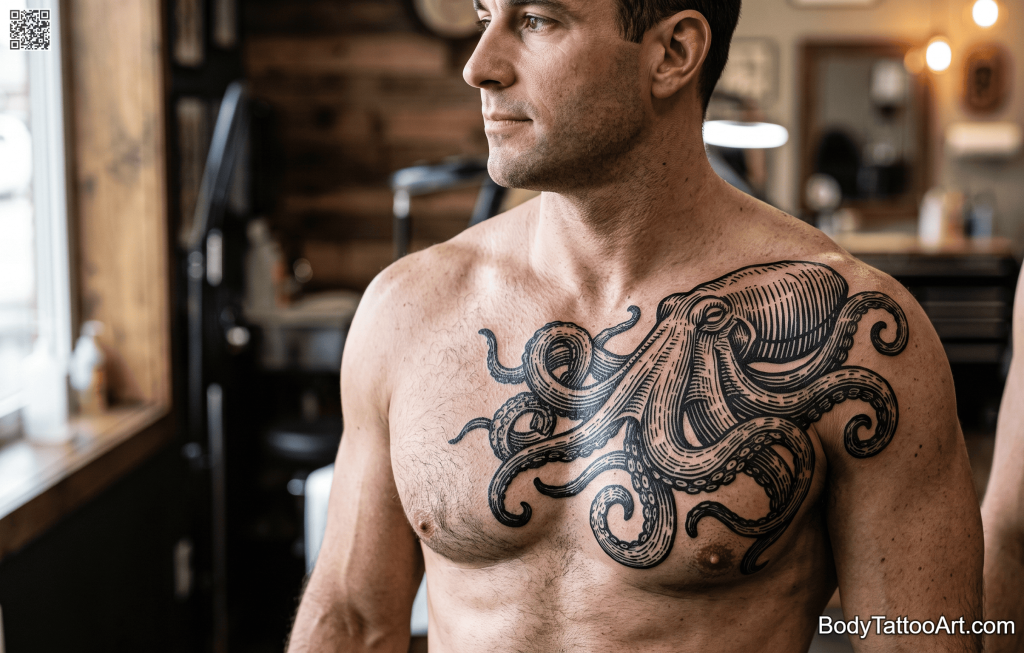
This tattoo is modelled after vintage woodcut engravings — thick parallel lines cut through the form to suggest light and dark, curved hatch marks define volume, and the texture is deliberately coarse. The octopus looks like it was carved into a block of wood and pressed onto skin. There’s a nostalgic, almost antique quality to the finish.
Placement: Chest / pectoral
Style: Woodcut / engraving blackwork Octopus Tattoos
Why it stands out: The deliberate roughness of the texture is the opposite of what most people expect from a tattoo, which makes it memorable and visually distinctive.
Ideal for: Printmaking fans, vintage aesthetic lovers, and collectors who want something that looks unlike digital tattoo art.
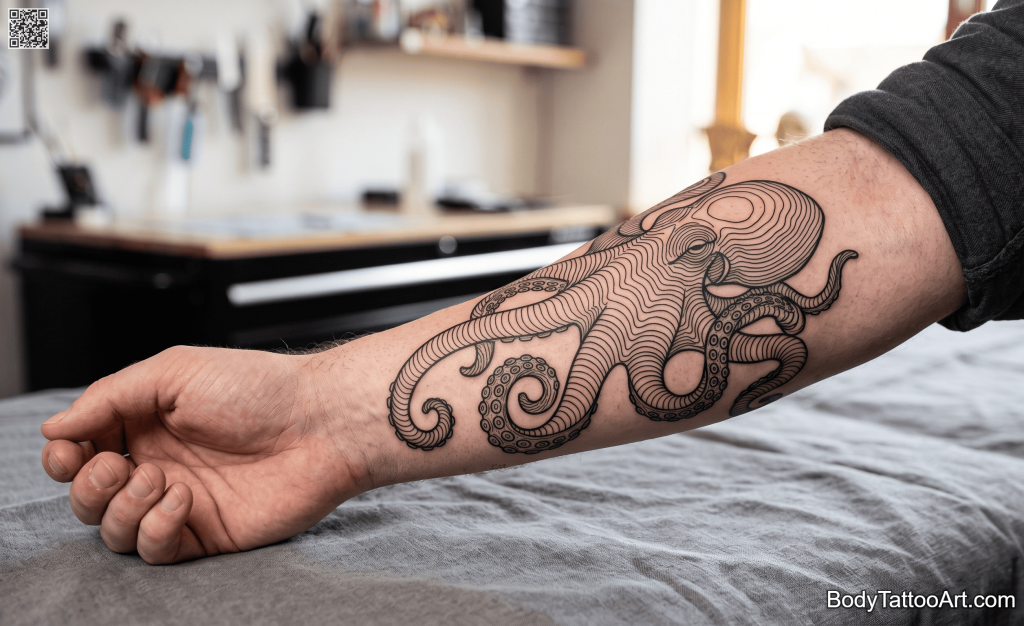
Topographic contour lines wrap around the octopus body and tentacles, treating the creature’s form like a landscape. The raised sucker areas are represented as concentric rings like a hilltop on a map. The tentacles undulate with altitude lines that follow the natural curves of the design. It’s scientific, graphic, and unexpected.
Placement: Forearm
Style: Illustrative / graphic art Octopus Tattoos
Why it stands out: Taking a cartographic technique and applying it to an organic creature turns the expected into something analytical and fresh.
Ideal for: Geography enthusiasts, data visualisation lovers, and those who appreciate conceptual tattoo thinking.
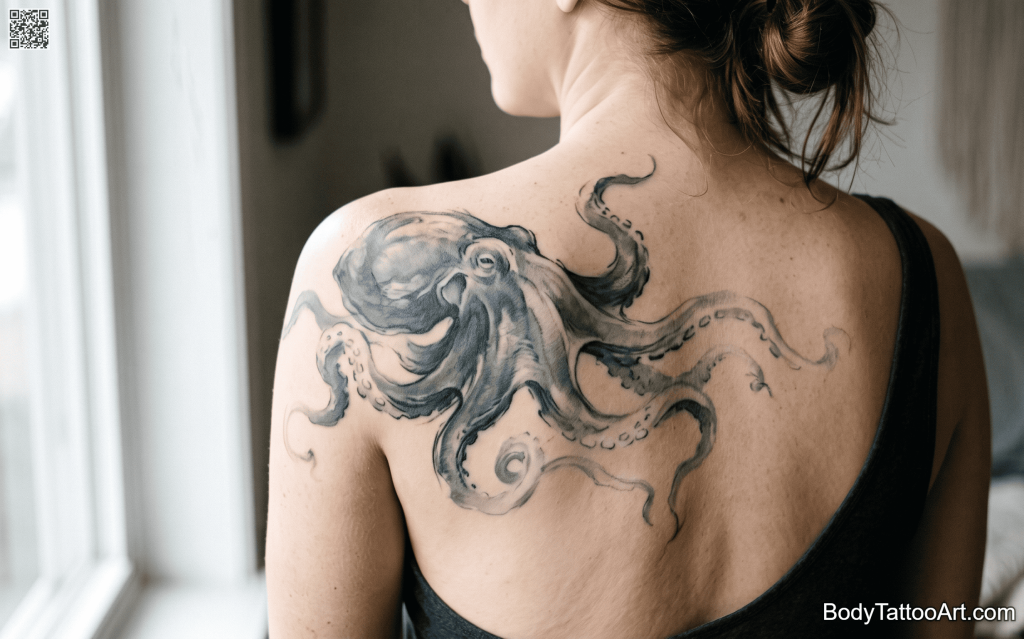
Looser and more expressive than strict realism, this grey-wash tattoo blends wet-looking ink passages with areas of near-white skin. The octopus body has visible brushstroke-like texture in the shading, and the tentacles soften into grey mist at their tips. It looks painted — genuinely painted, not just shaded.
Placement: Shoulder blade to mid back
Style: Grey wash / painterly Octopus Tattoos
Why it stands out: The painterly approach makes this feel like a study from a natural history illustrator — part specimen drawing, part fine art.
Ideal for: Lovers of greyscale art, those building a back piece, and people drawn to soft, organic aesthetics.
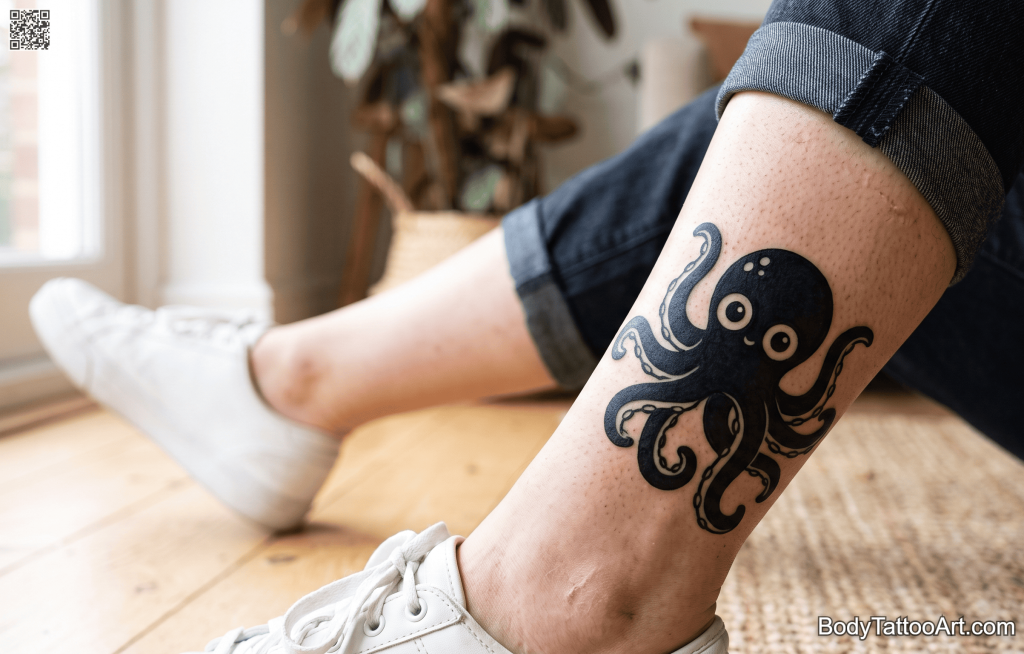
Friendly, round, and cartoonish — this design looks like it jumped off the pages of a picture book. The octopus has oversized circular eyes, chunky evenly-spaced tentacles, and clean bold outlines filled with flat ink. It’s playful without being childish, and the scale and placement make it genuinely charming as a tattoo.
Placement: Ankle / lower leg
Style: Illustrative / cartoon Octopus Tattoos
Why it stands out: The unashamed warmth of the style makes it stand apart in a space dominated by dark and serious octopus tattoos. It wears personality openly.
Ideal for: People who want a tattoo that reflects a playful side, fans of illustration art, and those who want something genuinely joyful.
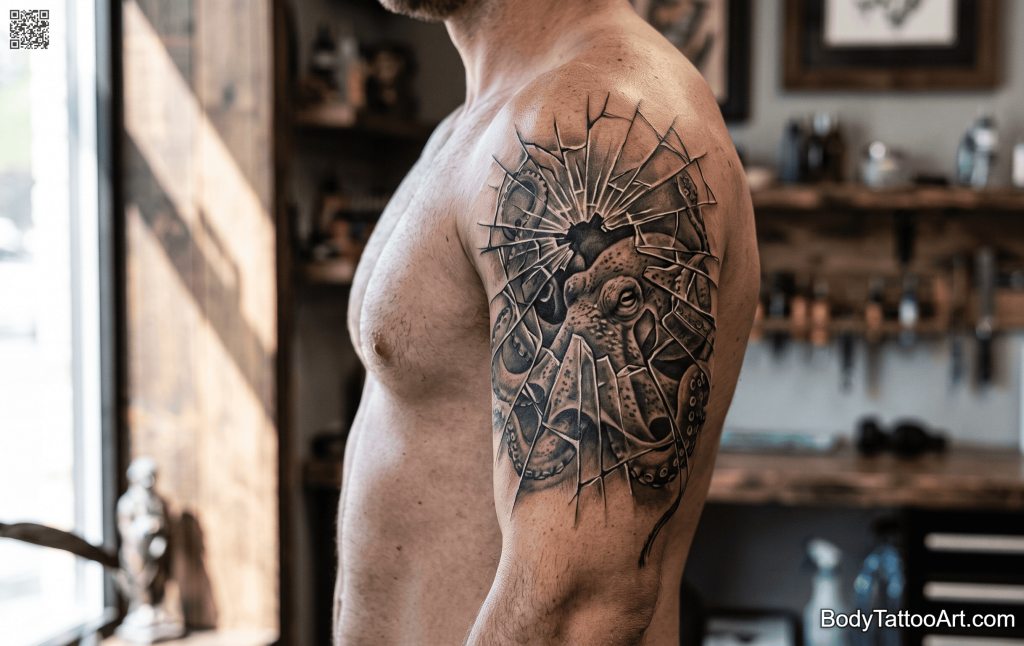
The octopus appears through the illusion of cracked glass — as though the skin has shattered like a mirror, and behind the broken surface is an octopus looking through. The crack lines are precise and sharp-edged. The octopus behind them is rendered in grey wash realism. The two layers — broken glass overlay and realistic creature beneath — create a compelling depth illusion.
Placement: Upper arm / bicep
Style: Trompe l’oeil realism Octopus Tattoos
Why it stands out: The visual trick of broken glass over a realistic creature plays with depth perception in a way that makes the tattoo genuinely confusing at first glance — which is exactly the point.
Ideal for: Realism collectors, fans of optical illusion tattoos, and experienced ink enthusiasts.
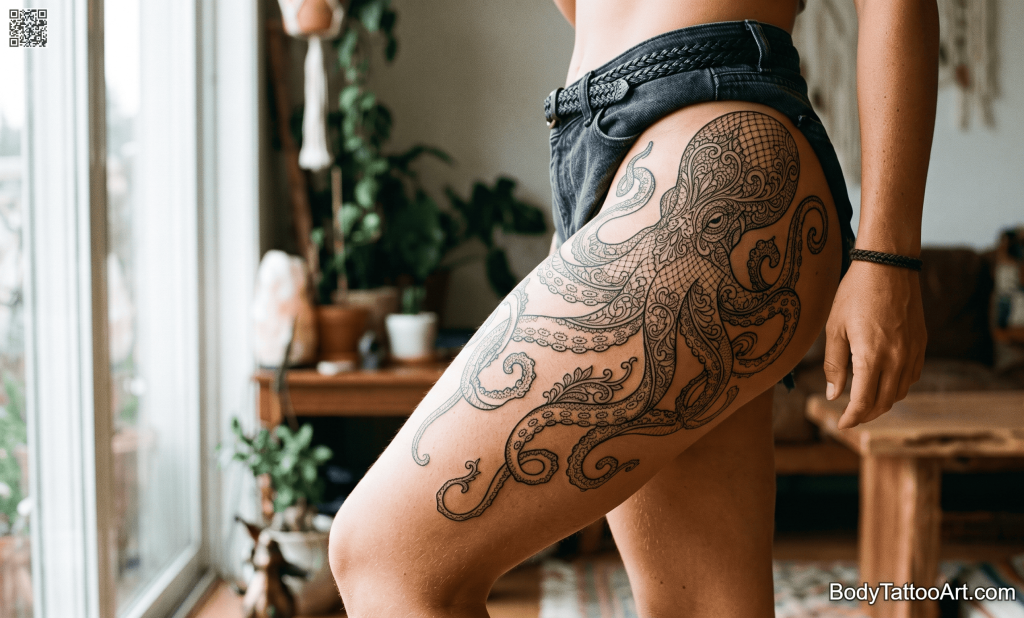
Delicate lace patterns fill every surface of this octopus — the mantle is covered in lace lattice, the tentacles are threaded through with floral lace border detail, and the suckers are represented as small lace eyelets. The effect is somewhere between embroidery and tattoo art, and it’s deeply ornate without feeling heavy.
Placement: Hip to upper thigh
Style: Ornamental / lace linework Octopus Tattoos
Why it stands out: The application of traditionally feminine textile craft to a sea creature subject creates a contrast that feels both elegant and unexpected.
Ideal for: Those who love ornamental tattoos, fans of lace and textile aesthetics, and people building detailed hip or thigh pieces.
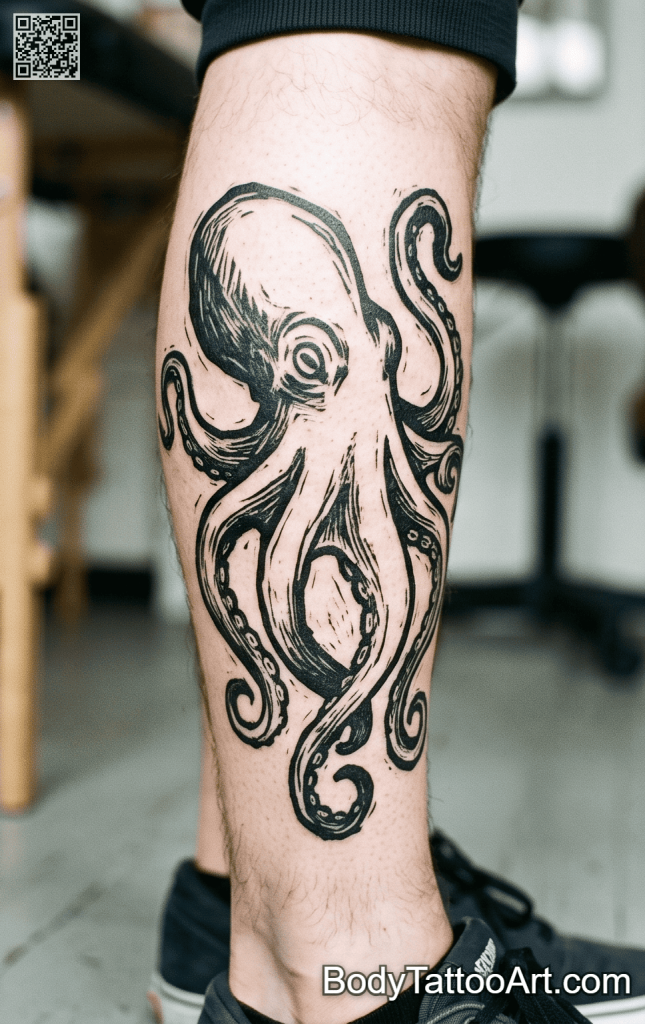
Taking inspiration directly from linocut printmaking, this tattoo has the rough-cut texture of a hand-carved block print. Thick outlines, visible tool marks in the shading, areas of stark white left completely blank. The octopus looks bold and coarse in the most deliberate way — like something printed in a limited edition run of 50.
Placement: Shin / lower leg front
Style: Linocut blackwork Octopus Tattoos
Why it stands out: The visible hand of the maker is preserved in this style — the deliberate roughness is not an error but an aesthetic choice that honours the printmaking tradition.
Ideal for: Artists and makers, printmaking enthusiasts, and those who want a tattoo that doesn’t try to look perfect.
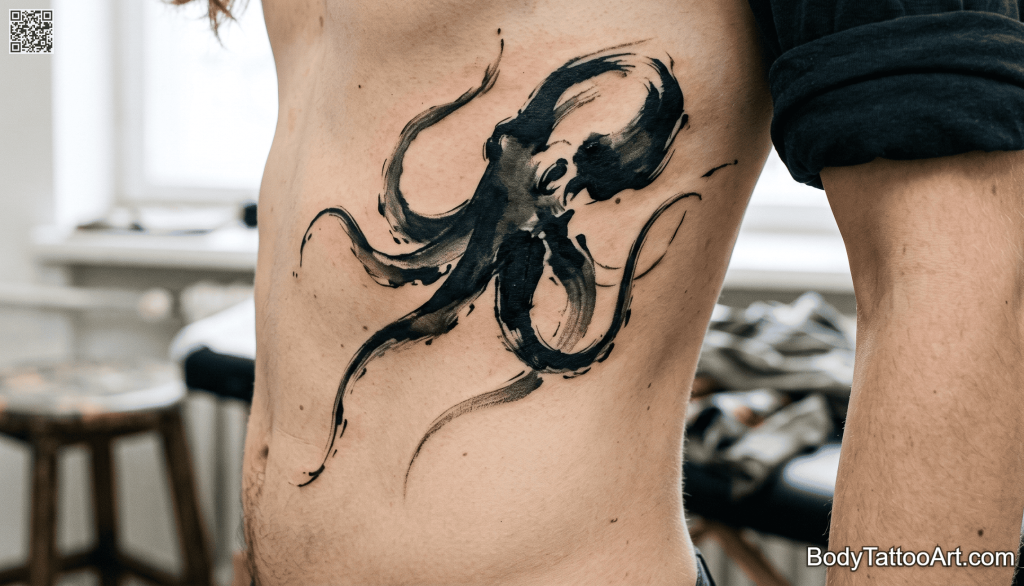
The final entry is pure zen. Inspired by Japanese sumi-e ink painting, this tattoo consists of a few sweeping brushstroke marks that loosely suggest an octopus. The ink is wet and pooled in places, thin and wispy in others. There’s extensive empty space that forms as much of the composition as the ink itself. It communicates the creature without fully drawing it.
Placement: Ribs / side
Style: Sumi-e / ink wash Octopus Tattoos
Why it stands out: The emphasis on suggestion over statement makes this the most confident tattoo on this list. It takes real restraint to leave this much skin empty and trust the marks to do the work.
Ideal for: Those drawn to Zen aesthetics, lovers of East Asian ink painting, and collectors who understand that less can carry enormous weight.
Octopus tattoos reward creativity more than almost any other subject. The form is flexible enough to carry any style — from microscopically precise to sweepingly abstract — and the creature itself brings enough symbolic depth to give whatever design is chosen some weight behind it.
The 24 ideas above span everything from fine line wrist tattoos to full back grey-wash pieces, from tribal pattern work to Art Nouveau illustration. No two of them read the same way.
If an octopus tattoo has been on the shortlist for a while, these designs are proof that the subject hasn’t been overdone — it’s just been waiting for the right approach.